This website uses cookies to ensure you get the best experience on our website.


- Table of Contents
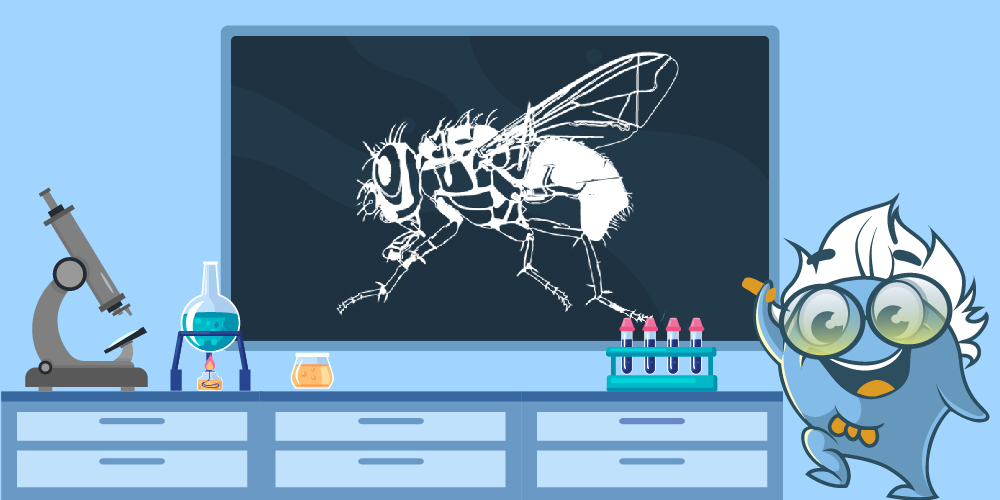
Drosophila melanogaster, commonly known as the fruit fly, has long been a cornerstone of genetic research. Its simplicity, rapid life cycle, and genetic tractability make it an invaluable model organism for scientists worldwide.
If you’re considering using Drosophila for your research studies, this guide is for you. In this blog, we delve into key breakthroughs that used Drosophila in research, explore the advantages and limitations of using Drosophila for research, and highlight the research areas where the fruit fly has made significant contributions. Additionally, we provide some resources and funding supporting Drosophila research, along with reflective questions to help you decide if this model organism is right for your studies.
Feel free to jump to a specific section about Drosophila:
Immunotherapy, a treatment that uses someone’s own immune system to target and attack cancer cells is the next and best frontier of cancer treatment. CAR-T stands for Chimeric Antigen Receptor T-cell. It refers to a type of immunotherapy where T-cells are engineered to produce special receptors on their surface that help them target and kill cancer cells. Like all immunotherapy, CAR-T cell therapy harnesses the p


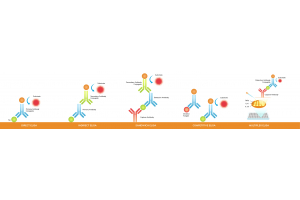
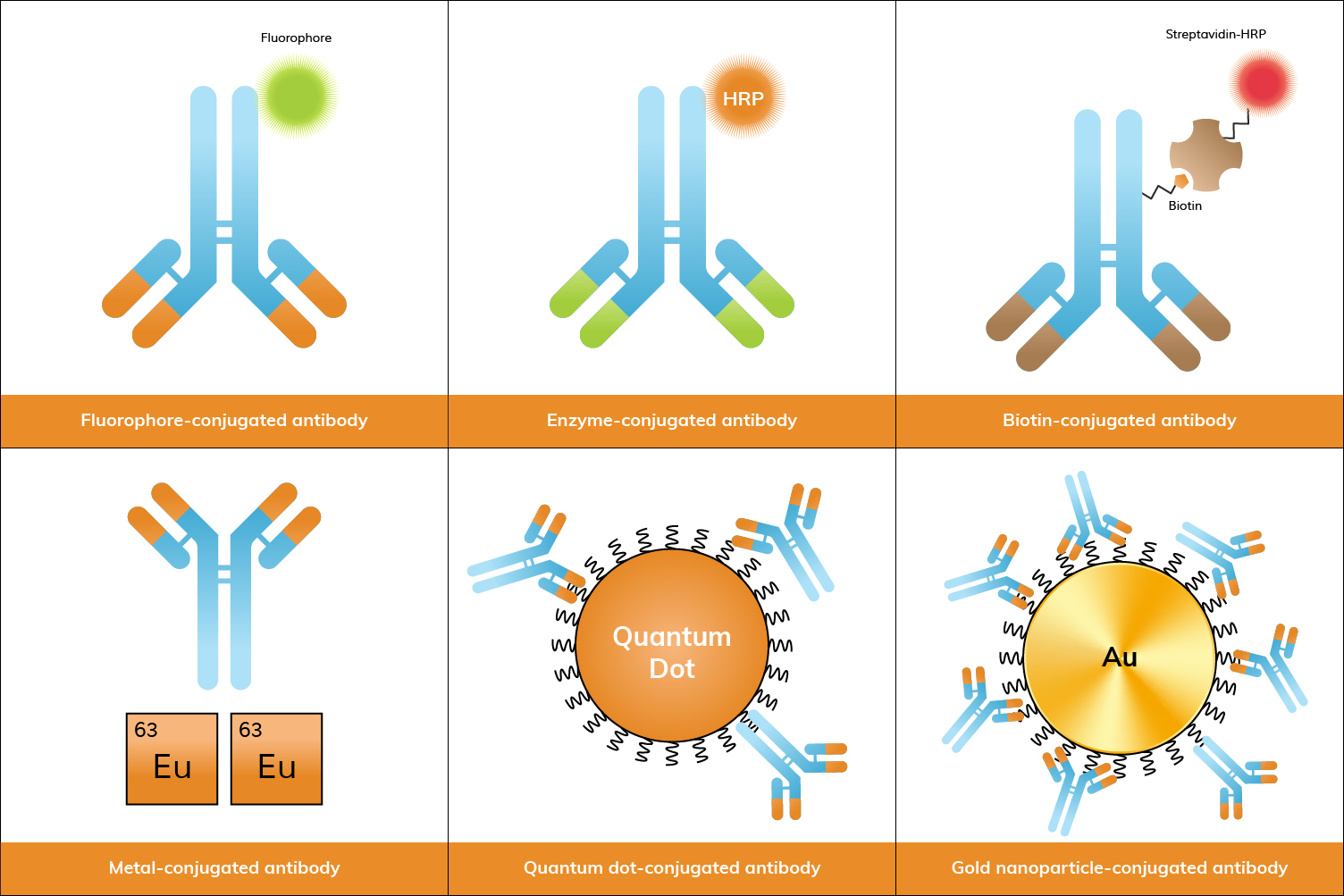
Antibody conjugates are essential tools in biological research, offering both specificity and sensitivity for detecting and quantifying proteins, cells, and other molecules. Below, we explore the most common types of antibody conjugates, their examples, applications, and popularity in research.
Antibody conjugation is the process of chemically linking an antibody to another molecule, such as a fluorescent dye, enzyme, biotin, or nanoparticle. This process enhances the antibody’s ability to detect specific targets by enabling visualization or measurement in various assays. Conjugated antibodies are widely used in research for applications like flow cytometry, ELISA, and immunofluorescence, where they facilitate the detection and analysis of specific proteins or cells in complex samples. In some experimental setups, especially those involving gene delivery or expression studies, related tools such as AAV Packaging Service may also be employed to introduce genetic material efficiently into target cells. These conjugates are often produced as part of comprehensive antibody production services, where antibodies are not only generated but also tailored with the appropriate labels to suit specific experimental needs.
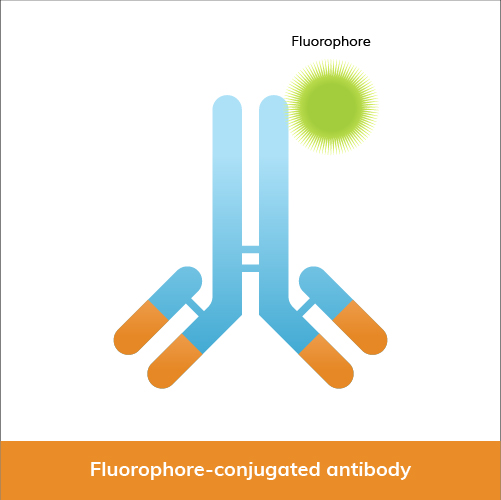
Among the most commonly used are fluorophore conjugates, which include dyes like fluorescein isothiocyanate (FITC), cyanine dyes, DyLight® dyes, allophycocyanin (APC), phycoerythrin (PE), R-phycoerythrin (R-PE), and iFluor® dyes.
Fluorophore-conjugated antibodies are widely used in:
Below, we have provided a table comparing key characteristics and uses of some of the most common fluorophore conjugates in research.
| Fluorophore | Color | Max Excitation (nm) | Max Emission (nm) | Extinction Coefficient (M⁻¹cm⁻¹) | Advantages | Applications |
|---|---|---|---|---|---|---|
| FITC | Green | 495 | 519 | 70,000 | Bright, photostable, common filter sets | Flow cytometry, immunofluorescence, microscopy |
| Cy3 | Orange | 552 | 570 | 150,000 | Bright, used in multiplexing | Flow cytometry, immunofluorescence, FISH |
| Cy5 | Red | 650 | 670 | 250,000 | Near-infrared, high sensitivity | Flow cytometry, imaging, FRET |
| DyLight® 488 | Green | 493 | 518 | 70,000 | Bright, photostable | Flow cytometry, immunofluorescence, microscopy |
| DyLight® 550 | Orange | 562 | 576 | 150,000 | High brightness, photostable | Western blotting, fluorescence microscopy, flow cytometry |
| DyLight® 594 | Red | 593 | 618 | 115,000 | Bright, minimal spectral overlap | Multicolor fluorescence imaging, flow cytometry |
| DyLight® 650 | Far-red | 652 | 672 | 250,000 | Near-infrared, reduced background | Flow cytometry, fluorescence imaging |
| DyLight® 800 | Near-IR | 783 | 800 | 270,000 | Near-infrared, minimal autofluorescence | In vivo imaging, Western blotting, NIR fluorescence imaging |
| iFluor® 488 | Green | 491 | 516 | 70,000 | Bright, photostable, FITC alternative | Flow cytometry, immunofluorescence, confocal microscopy |
| iFluor® 555 | Orange | 555 | 565 | 150,000 | High brightness, photostable | Fluorescence microscopy, flow cytometry, multicolor applications |
| iFluor® 594 | Red | 590 | 615 | 115,000 | Bright, minimal spectral overlap | Multicolor fluorescence imaging, flow cytometry |
| iFluor® 647 | Far-red | 650 | 665 | 250,000 | High brightness, photostable | Flow cytometry, fluorescence imaging, super-resolution microscopy |
| iFluor® 750 | Near-IR | 755 | 779 | 270,000 | Near-infrared, minimal autofluorescence | In vivo imaging, NIR fluorescence imaging |
| APC | Red | 650 | 660 | 700,000 | High quantum yield, photostable | Flow cytometry, imaging |
| PE | Orange | 480-565 | 575-590 | 1,960,000 | High brightness, quantum yield | Flow cytometry, fluorescence microscopy |
| R-PE | Red-orange | 488, 546, 565 | 575-585 | 1,960,000 | Extremely bright, multiple chromophores | Flow cytometry, high sensitivity applications |
Fluorophore conjugates are very popular due to their versatility, high sensitivity, and the variety of available dyes that allow multiplexing. When searching for primary antibodies and secondary antibodies at Boster, you’ll be able to select from a range of conjugation options, such as Cy3, DyLight® dyes, FITC, APC, PE, or iFluor® dyes. You can also request custom antibody conjugation with our antibody conjugation service, which offers more conjugate labels.
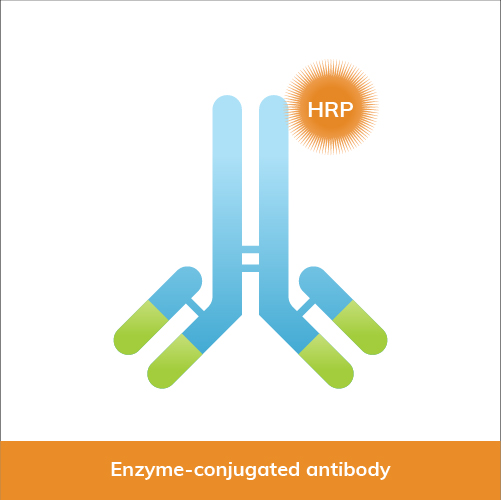
Enzyme conjugates, such as those linked to horseradish peroxidase (HRP) and alkaline phosphatase (AP), are also commonly used in research. These conjugates are crucial in assays like ELISA, WB, and IHC. In particular, enzyme-conjugated antibodies are widely utilized in sandwich ELISA formats, where the precise coordination between the capture and detection antibodies is essential for achieving optimal signal development and minimizing background interference. Antibody Pair Development Service develops matched antibody pairs for these assays involving careful selection to ensure that the antibodies bind to non-competing epitopes with high affinity and stability across varying assay conditions.
Enzyme-conjugated antibodies are used in:
Enzyme conjugates are highly popular in routine laboratory assays due to their robustness and ease of use. However, when assays demand superior specificity and minimal background noise, especially in enzyme-linked applications like ELISA and Western blotting, sourcing antibodies through specialized Rabbit Monoclonal Antibody Services can provide researchers with tailored solutions that consistently deliver reliable signal detection in complex biological samples. At Boster Bio, you can find primary antibodies and secondary antibodies conjugated to HRP, AP, and more. In addition, you can select specific conjugates for your antibodies with our custom antibody conjugation service.
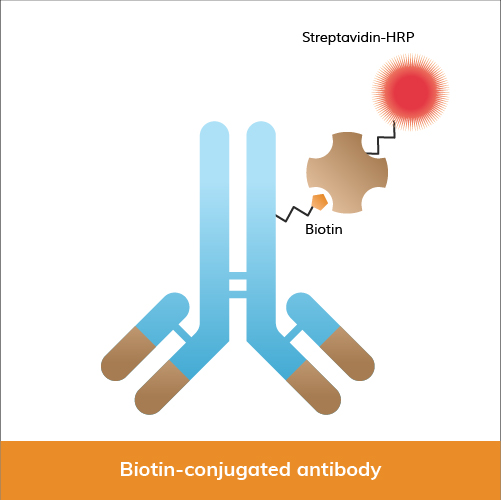
Biotin, a vitamin that can be easily bound by streptavidin, has proven to be another essential antibody conjugate in research. It provides significant advantages due to its amplification capabilities. Biotin-labeled antibodies, often paired with streptavidin-HRP or AP, are used by researchers in ELISA, Western blotting, and immunohistochemistry.
In research, biotin-conjugated antibodies are frequently used in:
Biotin conjugates are widely used due to their ability to provide amplification for applications that require high sensitivity. Boster Bio's catalog contains biotin-conjugated primary antibodies and secondary antibodies, and additional conjugate options. You can also learn more about our custom antibody conjugation service and book a meeting with us to discuss your project, so we can better serve your research needs. Submit an inquiry today!
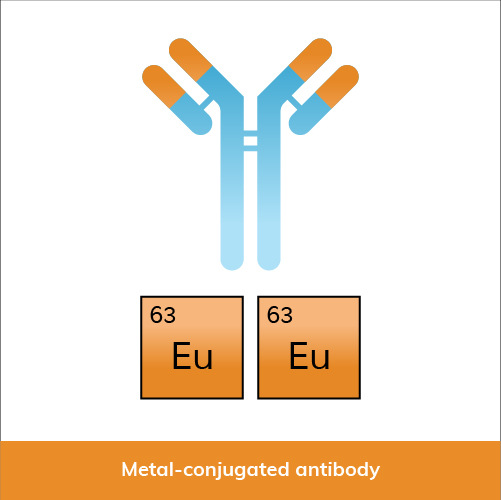
Metal conjugates, including lanthanide-chelated antibodies (e.g., Europium, Terbium) and metal isotope-tagged antibodies for mass cytometry (CyTOF), are gaining traction in advanced applications.
Metal-conjugated antibodies are used in:
Growing popularity of metal conjugates, especially in advanced applications like CyTOF, reflects their capability to provide comprehensive cellular analysis.
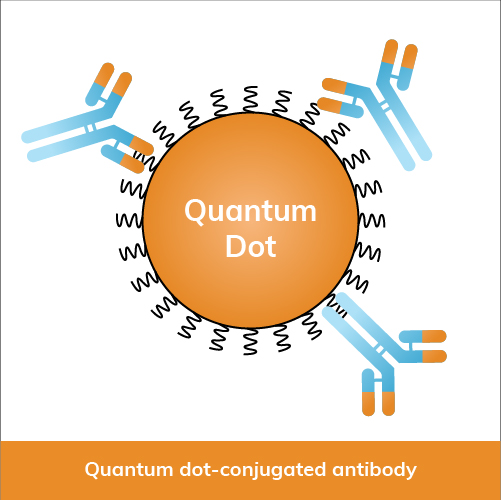
Quantum dot conjugates are semiconductor nanoparticles, including Qdot 525 and Qdot 655, known for their unique optical properties.
Quantum dot-conjugated antibodies are used in:
Although less common than traditional fluorophores, quantum dots (Qdots) are increasingly popular in imaging applications for their photostability and distinct spectral properties.
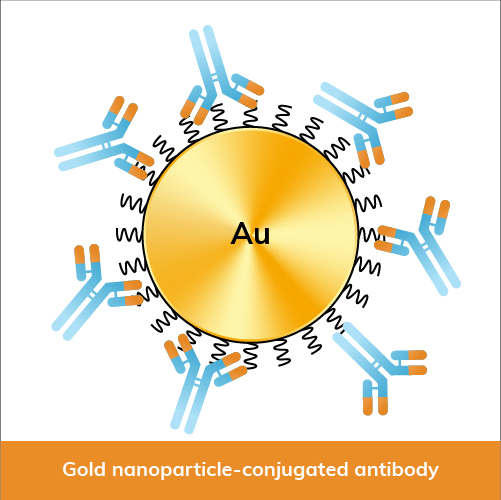
Gold nanoparticles (AuNPs) are widely employed in various diagnostics, biosensing, and imaging applications.
Gold nanoparticle-conjugated antibodies are used in:
Gold nanoparticle-conjugated antibodies are quite popular in diagnostics and increasingly in biosensing applications due to their practical utility and ease of detection.
Antibody conjugates play a vital role in modern research, with each type offering distinct advantages. Fluorophore and enzyme conjugates remain staples due to their broad applications and established protocols. Biotin conjugates are favored for applications requiring high sensitivity, while metal conjugates offer advanced analysis capabilities. Quantum dots and gold nanoparticles, though more specialized, are expanding in use as techniques and technologies improve. Selecting the appropriate conj...
Flow cytometry and Fluorescence-Activated Cell Sorting (FACS) are indispensable tools in biomedical research and clinical diagnostics. Despite their widespread use, confusion often arises regarding their terminology and functionalities. In this article, we identify distinctions between flow cytometry and FACS, and discuss their principles and applications.
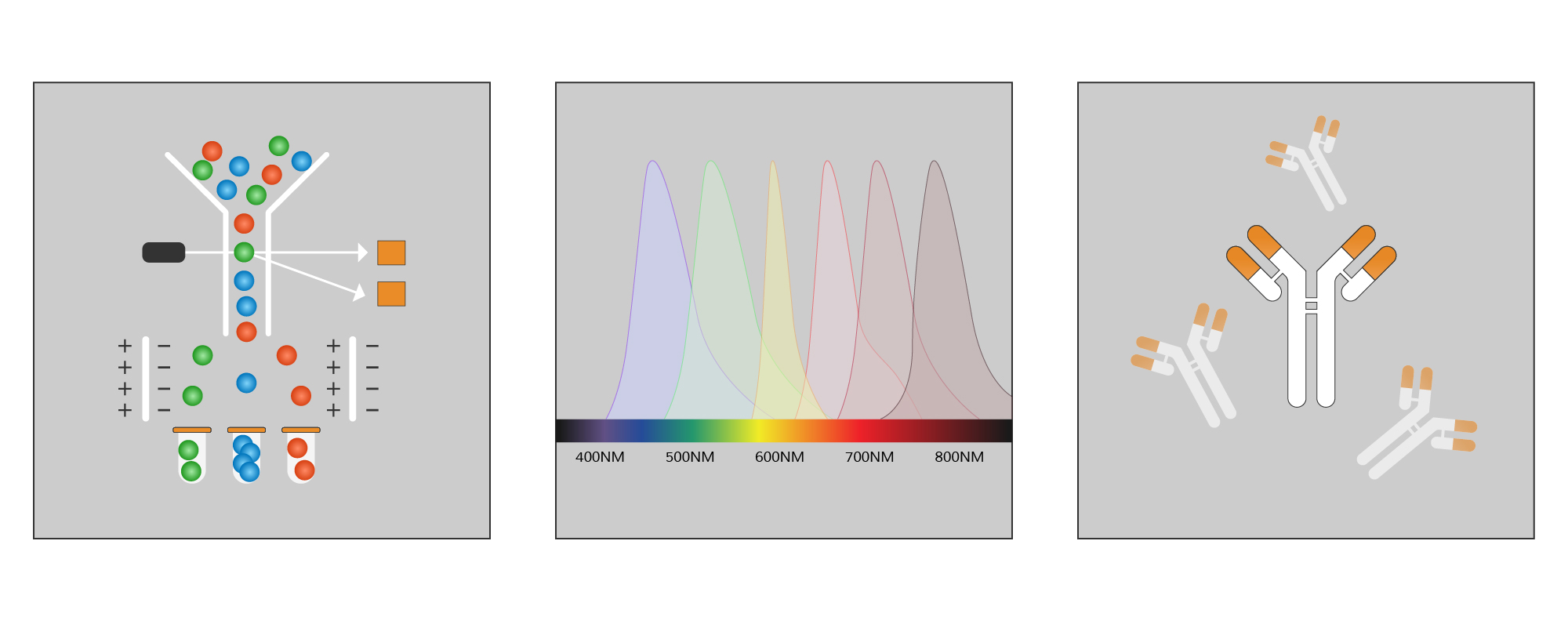
Developed in the 1950s and 1960s, flow cytometry revolutionized cell analysis by allowing rapid, high-throughput measurement of multiple cellular characteristics. This technique analyzes the physical and chemical characteristics of particles or cells in a fluid suspension, and involves passing a cell-containing fluid stream through a laser beam, measuring the scattered and fluorescent light emitted by the cells.
Key aspects of flow cytometry include:

Immunohistochemistry (IHC) is a vital technique in biomedical research and clinical diagnostics, enabling the visualization and localization of specific proteins within tissue samples. In this blog, we outline the different types of IHC staining, including direct and indirect...