This website uses cookies to ensure you get the best experience on our website.


- Table of Contents
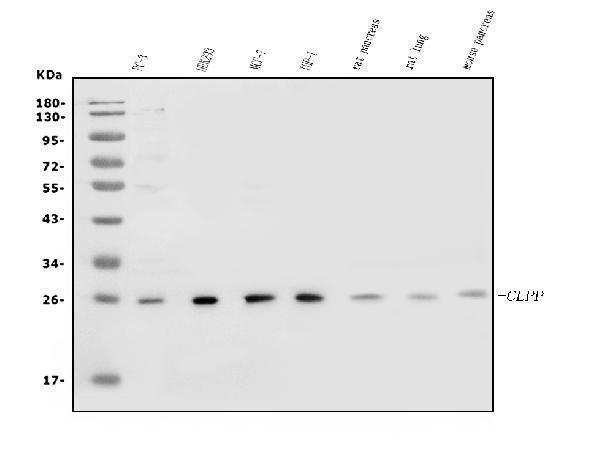
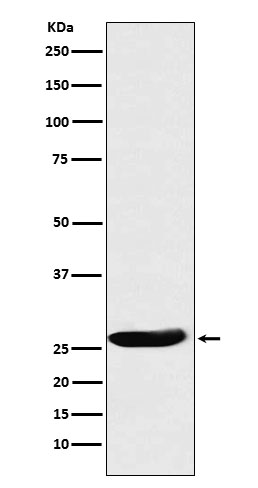
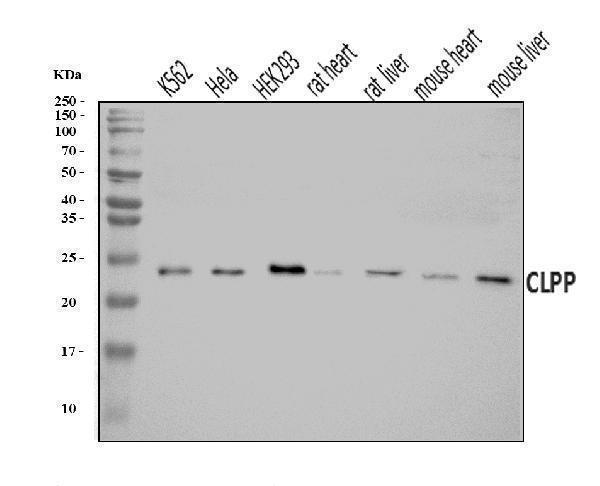
Designing a Western blot for CLPP? The guide has the expected band size, antibodies backed by real blot images, the controls to run alongside, and protocols taken from published papers.
Open the CLPP Western Blot Guide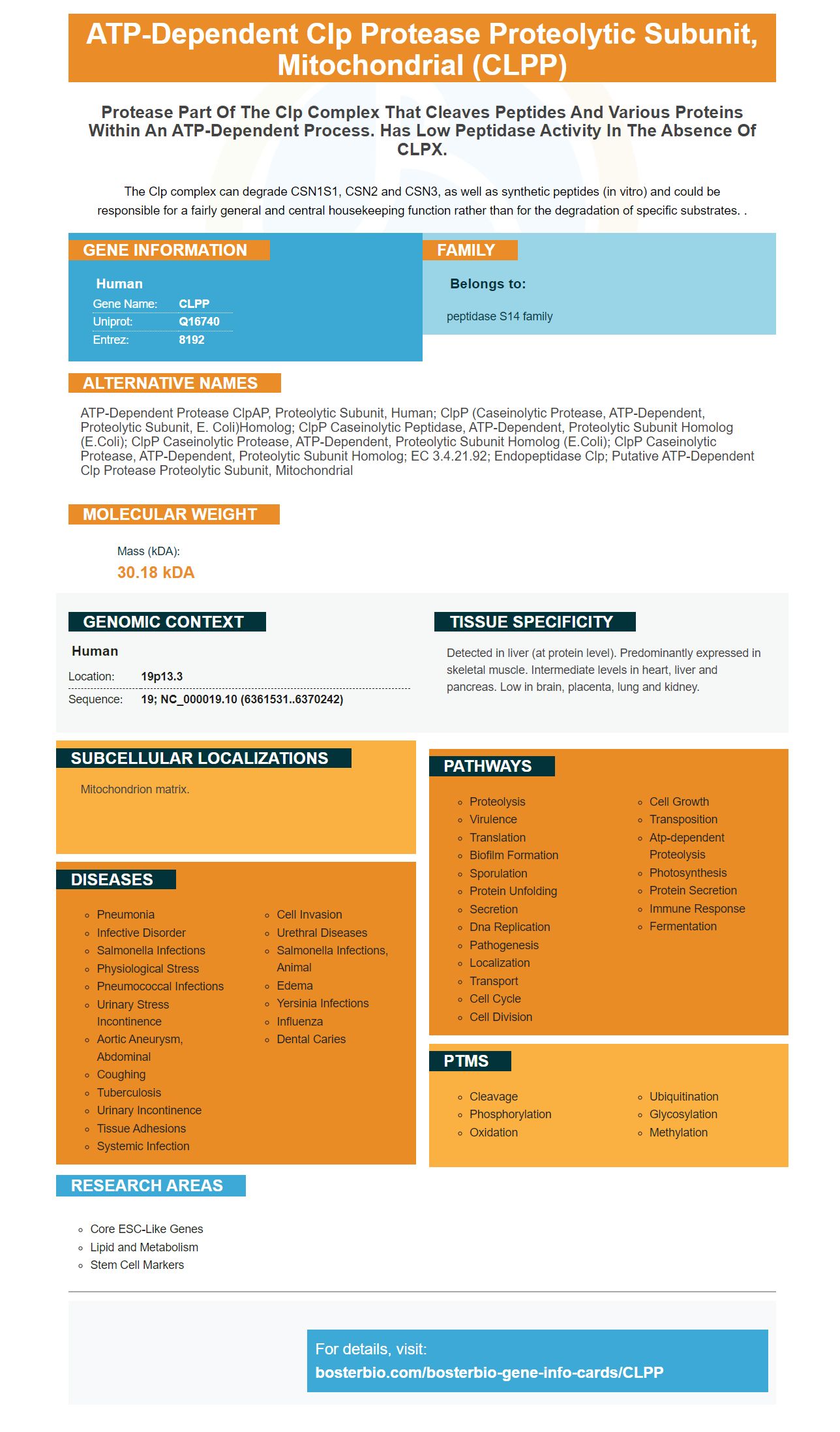
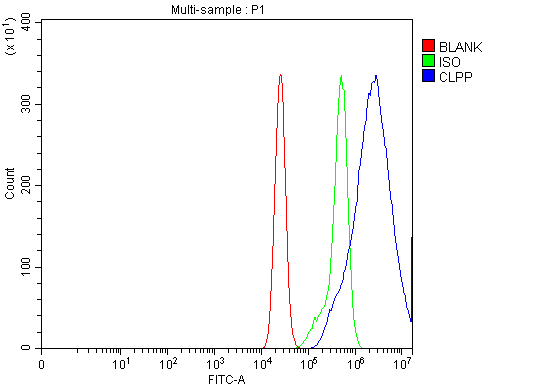
Facts about ATP-dependent Clp protease proteolytic subunit, mitochondrial.
The Clp complex can degrade CSN1S1, CSN2 and CSN3, as well as synthetic peptides (in vitro) and could be responsible for a fairly general and central housekeeping function rather than for the degradation of specific substrates. .
| Human | |
|---|---|
| Gene Name: | CLPP |
| Uniprot: | Q16740 |
| Entrez: | 8192 |
| Belongs to: |
|---|
| peptidase S14 family |

ATP-dependent protease ClpAP, proteolytic subunit, human; ClpP (caseinolytic protease, ATP-dependent, proteolytic subunit, E. coli)homolog; ClpP caseinolytic peptidase, ATP-dependent, proteolytic subunit homolog (E.coli); ClpP caseinolytic protease, ATP-dependent, proteolytic subunit homolog (E.coli); ClpP caseinolytic protease, ATP-dependent, proteolytic subunit homolog; EC 3.4.21.92; Endopeptidase Clp; putative ATP-dependent Clp protease proteolytic subunit, mitochondrial
Mass (kDA):
30.18 kDA

| Human | |
|---|---|
| Location: | 19p13.3 |
| Sequence: | 19; NC_000019.10 (6361531..6370242) |
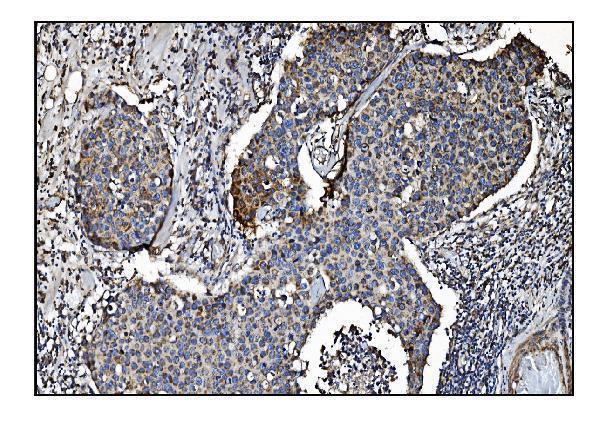
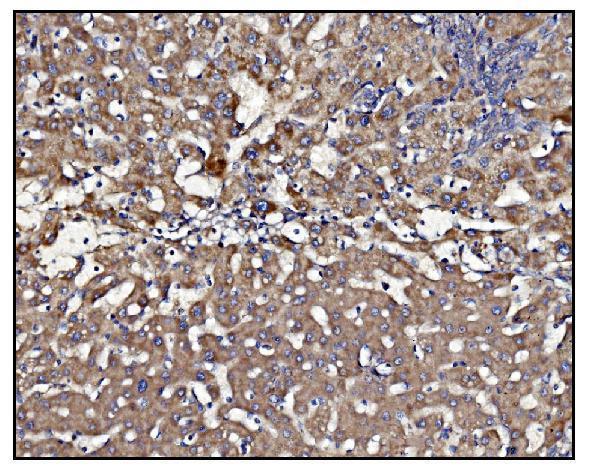
Detected in liver (at protein level). Predominantly expressed in skeletal muscle. Intermediate levels in heart, liver and pancreas. Low in brain, placenta, lung and kidney.
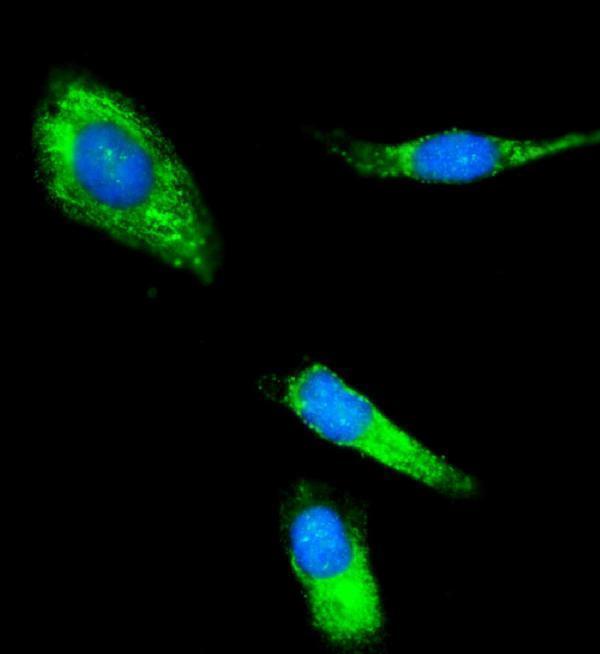
Mitochondrion matrix.




PMID: 8543061 by Bross P., et al. Human ClpP protease: cDNA sequence, tissue-specific expression and chromosomal assignment of the gene.
PMID: 19892738 by Xu G., et al. Global profiling of protease cleavage sites by chemoselective labeling of protein N-termini.