This website uses cookies to ensure you get the best experience on our website.


- Table of Contents
FROM ANTIBODY PAIR TO WORKING ASSAY
Build a custom ELISA when catalog kits or existing reagents are not enough.
Include the target and species, sample matrix and expected concentration range, available antibodies or standards, and intended use.
Email services@bosterbio.com or call (888) 466-3604.
Boster Bio develops custom ELISAs, from antibody pair screening and optimization through matrix testing, fit-for-purpose validation and biomarker assay support. Use this service when no catalog kit fits, existing reagents need optimization, or performance must be confirmed in real biological samples. For other assay formats, see Boster's assay services.
Difficult biomarkers, rare species, modified proteins, or custom targets where no off-the-shelf ELISA kit meets the research goal.
Antibodies, standards, or a prototype assay that needs better sensitivity, lower background, or a stronger standard curve.
Assays that work in buffer but still need testing in serum, plasma, cell culture supernatant, lysate, tissue homogenate, or other samples.
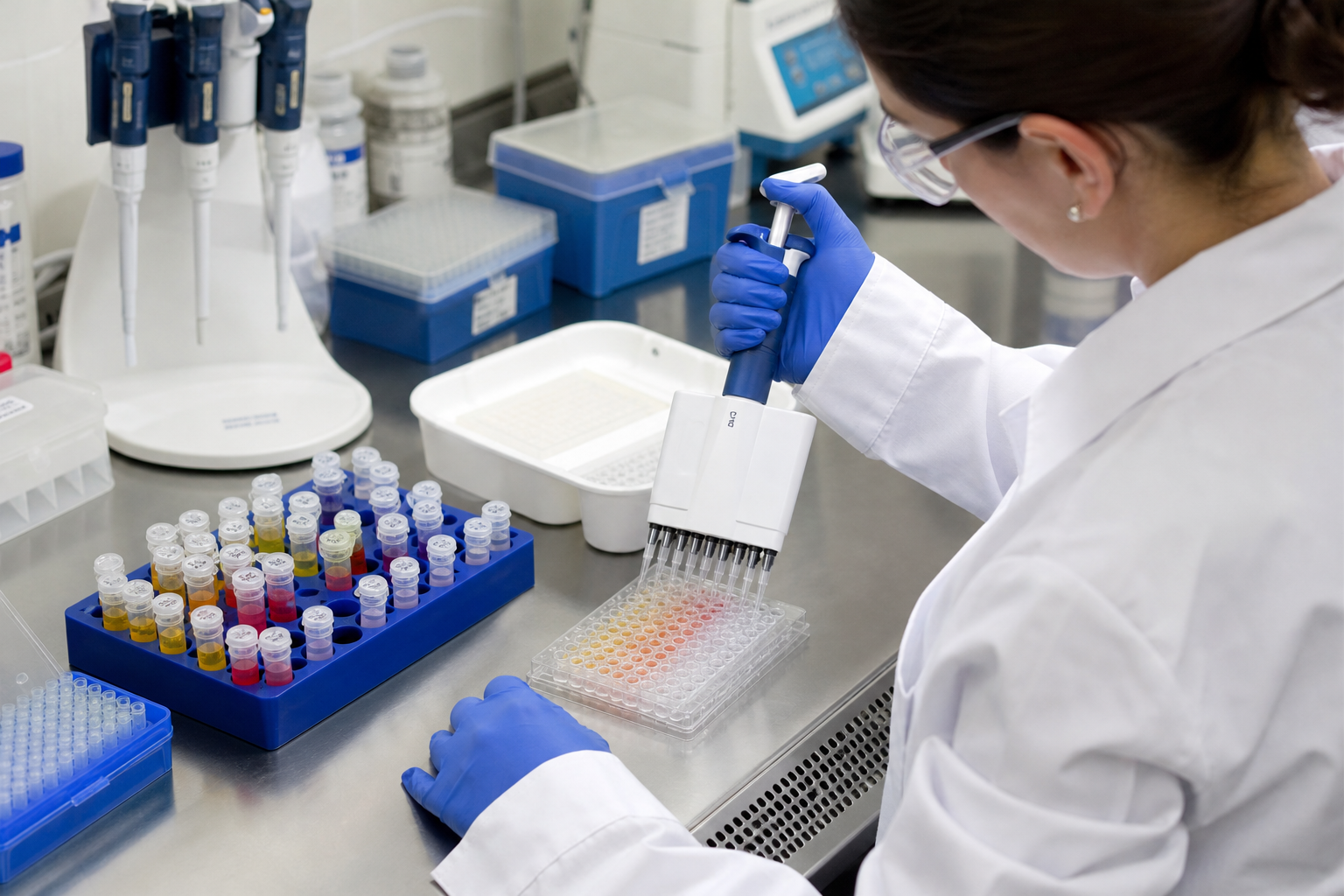
ELISA projects move faster, with less rework, when the scope is clear at the start.
None of this has to be final before the first conversation. Share what you have, and Boster Bio will flag gaps such as missing standards or an undefined matrix.
The steps that decide whether an ELISA is usable, reproducible, and transferable.
Sandwich or competitive format, chosen by target type, analyte, sample matrix, throughput needs, and assay goal. To measure several analytes per sample, see custom multiplex ELISA development.
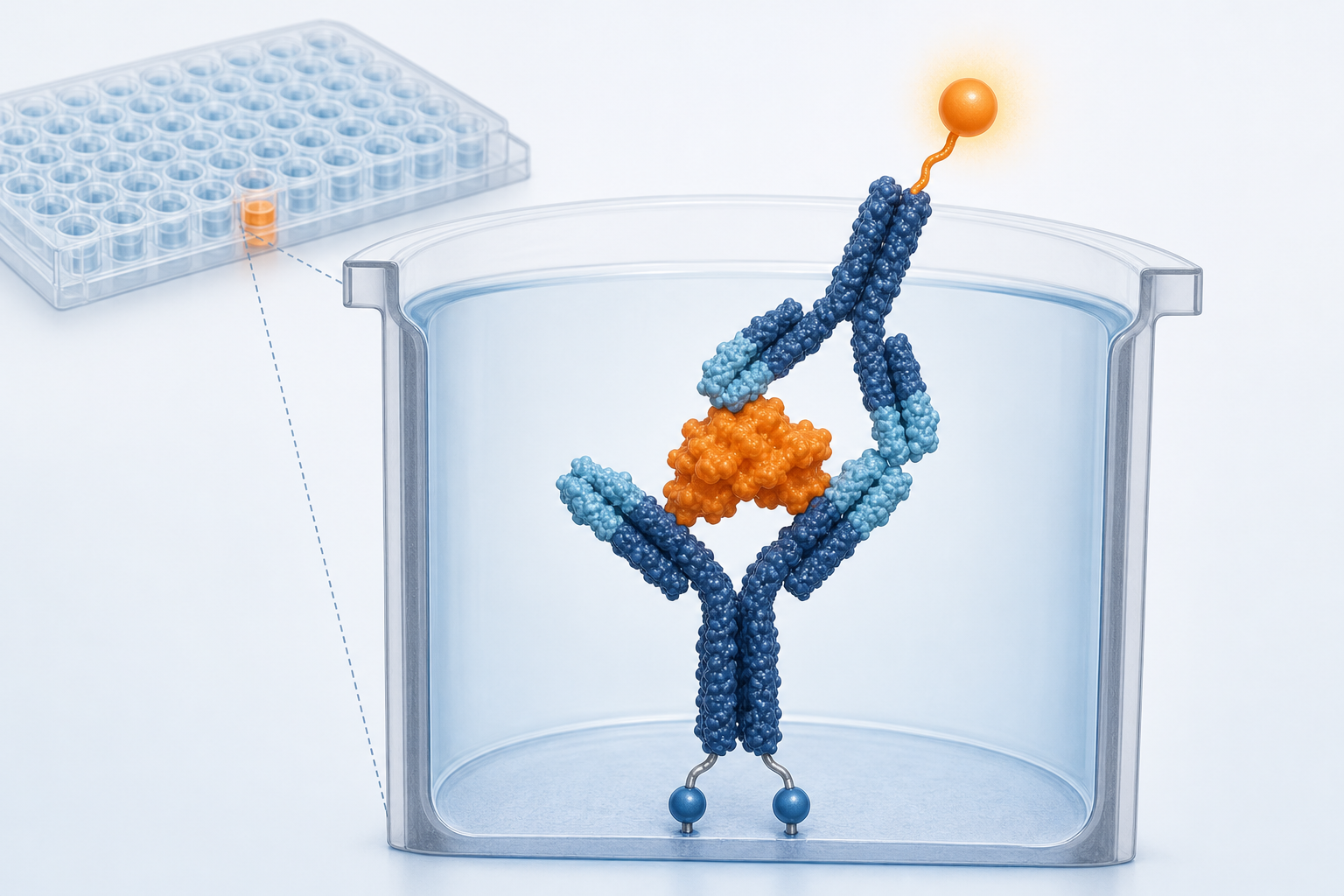
For sandwich assays, capture and detection antibodies are evaluated for compatibility, signal, background and native target recognition.
Coating, blocking, antibody dilution, incubation, detection, and standard curve setup.
Weak signal, high background, poor dynamic range, and unstable standard curves.
Spike recovery, dilution linearity, parallelism and interference testing in relevant biological samples.
Precision, sensitivity, range, background, selectivity, and robustness, scaled to the project scope.
Optimized working protocol, reagent recommendations, and assay setup guidance.
Data summary and transfer-support documentation for RUO or customer-led IVD development workflows.
Not every assay needs the same rigor. We match validation depth to how the data will be used, and agree the tier before optimization begins.
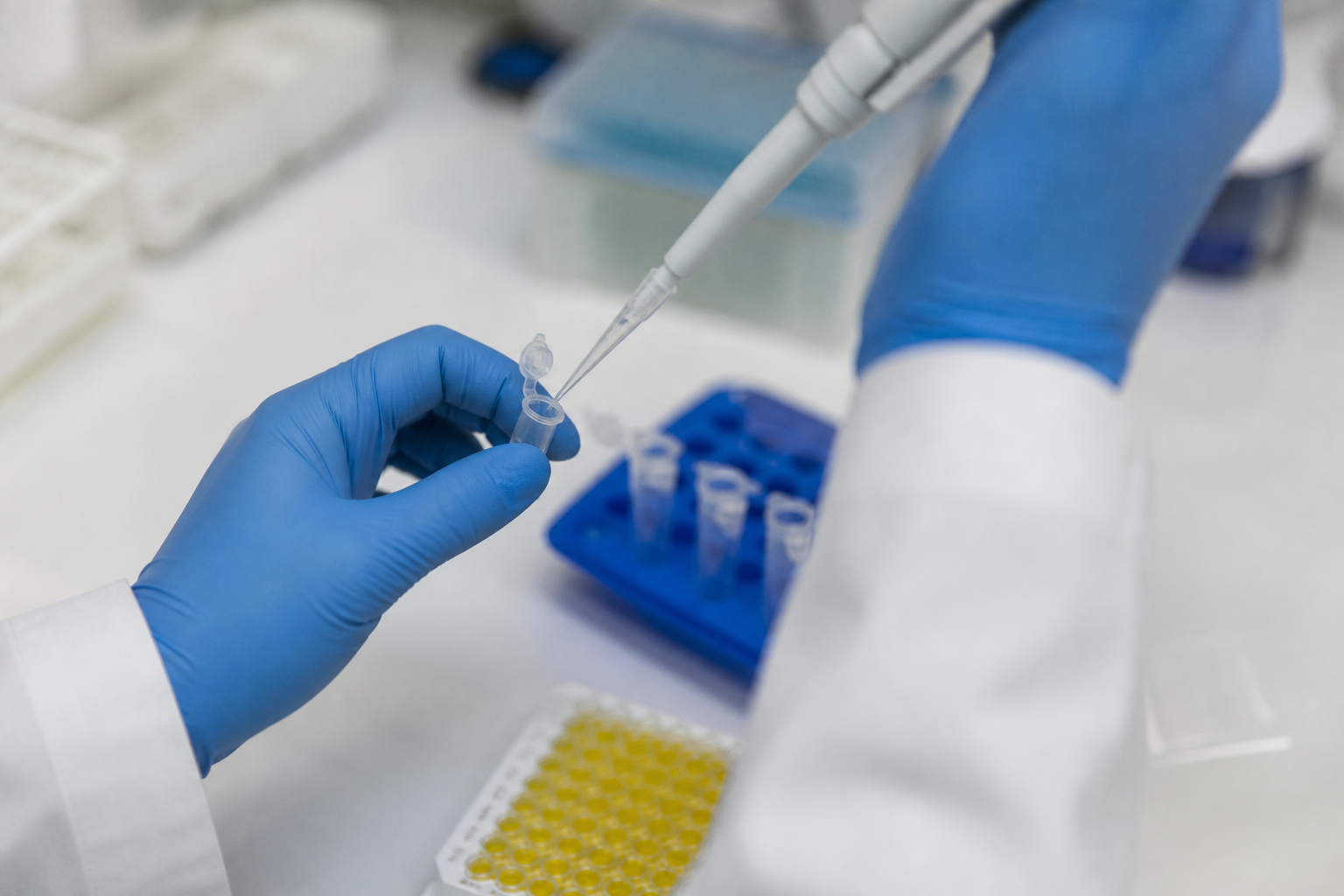
For hypothesis-generating work and early target screening. Initial testing assesses target detection, background and repeatability before further development.
For results that inform internal go/no-go decisions. Accuracy, precision, sensitivity, and linearity are evaluated against defined acceptance ranges, without the documentation load of full validation.
For projects requiring comprehensive, documented validation against agreed performance criteria. Accuracy, precision, selectivity, sensitivity, linearity, and stability are characterized and documented in a validation report.
These tiers describe project scope; acceptance criteria are agreed for each assay.
Ready to Discuss Your ELISA Assay Project?
Send your target, sample type, and current reagents. Boster Bio will review the project and recommend the next development step.
Common development challenges include reagent pairing, assay design and matrix interference. Early feasibility testing helps identify these risks.
Pairs that work on recombinant antigen can fail when the native target is folded, processed, or modified differently.
Assays optimized only in buffer can show high background, poor recovery, or nonlinear dilution in serum, plasma, lysate, or tissue samples.
Low-abundance targets, including many biomarkers, need careful tuning of antibody concentration, detection chemistry, standard curve range, and incubation.
Assays built without attention to reagent consistency, coating conditions, SOP compatibility, or documentation can fail on transfer or repeat production.
Research biomarkers are often low-abundance, structurally complex, or present only in specific disease models, so a catalog ELISA kit often does not exist. We develop research biomarker assays for these targets in research samples.
Track how a marker responds to treatment over time in research models. These assays need reliable sensitivity across a defined range and consistent results across repeated timepoints.
Indicate tissue injury or toxicity in research studies. Development prioritizes selectivity and reliable quantification at low concentrations.
Distinguish subgroups within a research study. These assays must perform consistently across the study's sample types, so matrix testing starts early.
Biomarker projects often start with antibody pair screening, or with custom antibody and antigen development, before optimization begins.
Each phase ends at a checkpoint, so weak designs and technical risks surface before the project moves downstream.
Review target biology, species, sample matrix, expected concentration range, available reagents, intended use, and technical risks to assay performance.
Checkpoint: Confirm assay format, reagent needs, validation tier, and a go/no-go decision before committing further resources.
For sandwich assays, evaluate capture and detection candidates for signal, background, epitope compatibility and native target recognition.
Checkpoint: Select a lead pair, or recommend antibody pair development or custom antigen development if no candidate works.
Optimize coating concentration, blocking, antibody dilution, incubation, detection, and standard curve setup.
Checkpoint: Advance when signal-to-noise, background, and preliminary range meet project targets.
Evaluate recovery, dilution linearity, precision, sensitivity, selectivity, range, and matrix interference at the agreed validation tier.
Checkpoint: Confirm performance meets the acceptance criteria set during planning.
Deliver the optimized protocol and documentation; follow-up support as agreed in the quote.
Deliverables depend on project scope and are confirmed at quote.
| Project Area | Typical Output |
|---|---|
| Planning | Assay requirements review, reagent and matrix gap check, and agreed milestones with acceptance criteria. |
| Feasibility | Target review, reagent assessment, assay format recommendation, and a go/no-go development plan. |
| Screening | Antibody pair screening data and lead pair recommendation. |
| Optimization | Optimized assay conditions, standard curve setup, and working protocol. |
| Validation | Matrix performance data, recovery, linearity, precision, sensitivity, selectivity, and range at the agreed tier, with a validation report for Fully Validated assays. |
| Documentation | Data summary, optimized protocol, reagent recommendations, and transfer-support documentation when requested. |
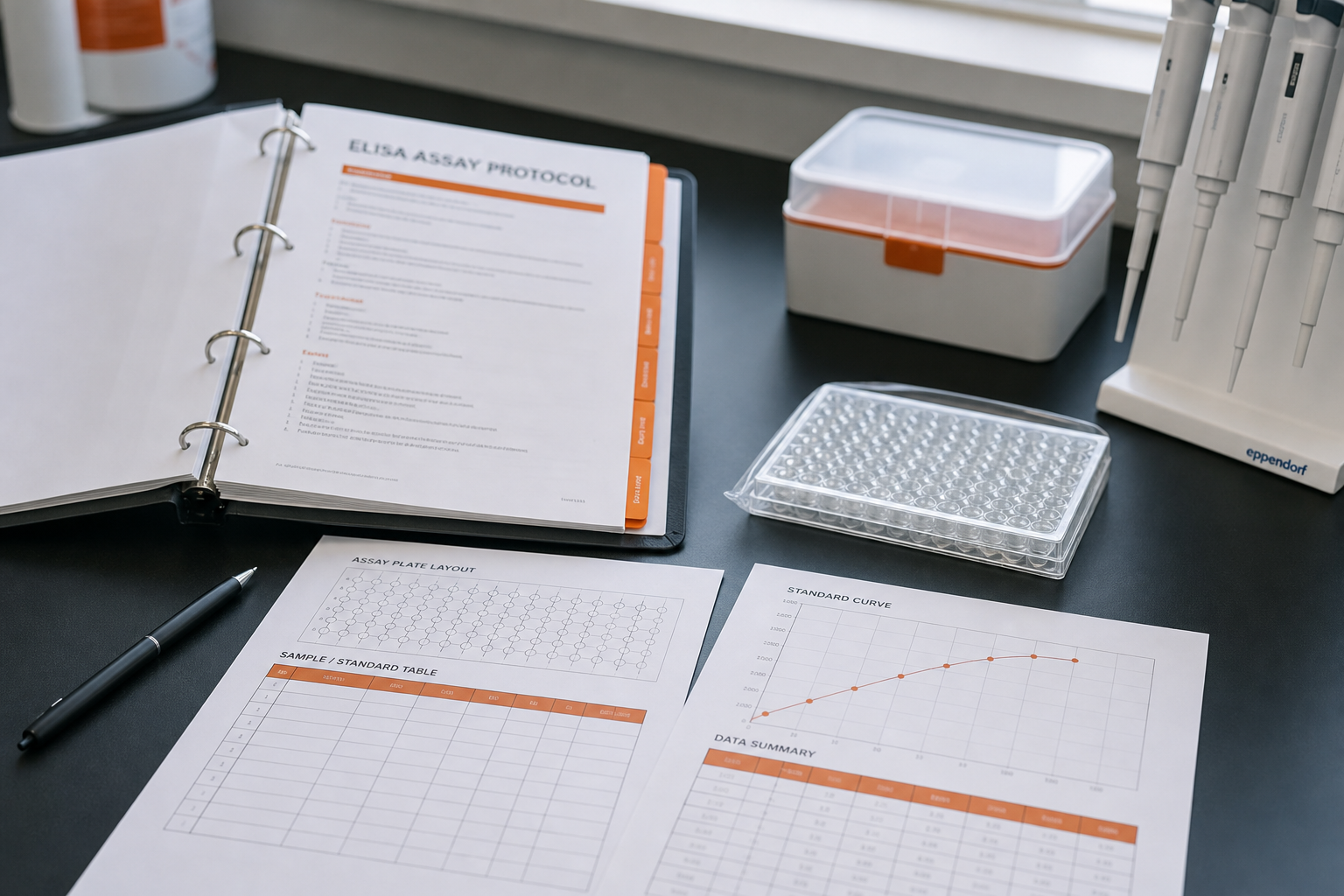
Boster Bio supports structured ELISA development with documentation, traceability, reagent control, and transfer considerations.
Projects can be structured for research use or for a customer-led diagnostic development program, which the customer leads and qualifies.
Boster Bio does not claim FDA approval, GMP certification, or clinical certification for this service. GLP and other quality requirements are confirmed for each project before quotation.
Common questions about custom ELISA development, antibody pair screening, matrix testing, and project requirements.