This website uses cookies to ensure you get the best experience on our website.


- Table of Contents
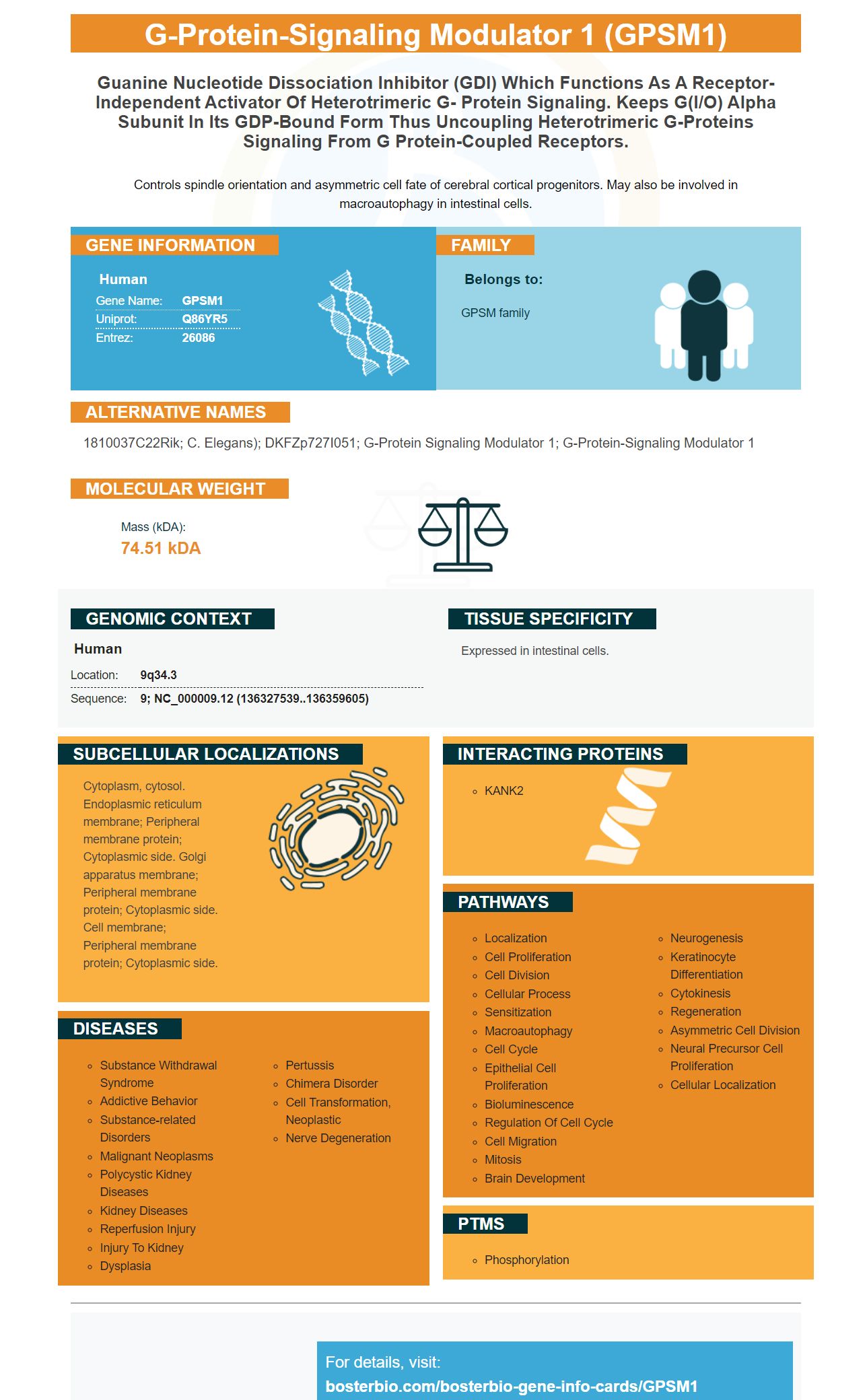
Facts about G-protein-signaling modulator 1.
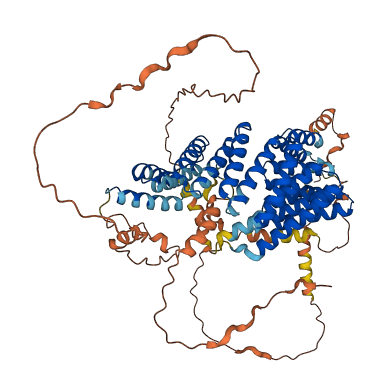
Controls spindle orientation and asymmetric cell fate of cerebral cortical progenitors. May also be involved in macroautophagy in intestinal cells.
| Human | |
|---|---|
| Gene Name: | GPSM1 |
| Uniprot: | Q86YR5 |
| Entrez: | 26086 |
| Belongs to: |
|---|
| GPSM family |

1810037C22Rik; C. elegans); DKFZp727I051; G-protein signaling modulator 1; G-protein-signaling modulator 1
Mass (kDA):
74.51 kDA

| Human | |
|---|---|
| Location: | 9q34.3 |
| Sequence: | 9; NC_000009.12 (136327539..136359605) |
Expressed in intestinal cells.
Cytoplasm, cytosol. Endoplasmic reticulum membrane; Peripheral membrane protein; Cytoplasmic side. Golgi apparatus membrane; Peripheral membrane protein; Cytoplasmic side. Cell membrane; Peripheral membrane protein; Cytoplasmic side.




PMID: 11024022 by Natochin M., et al. AGS3 inhibits GDP dissociation from galpha subunits of the Gi family and rhodopsin-dependent activation of transducin.
PMID: 12642577 by Pattingre S., et al. The G-protein regulator AGS3 controls an early event during macroautophagy in human intestinal HT-29 cells.