This website uses cookies to ensure you get the best experience on our website.


- Table of Contents
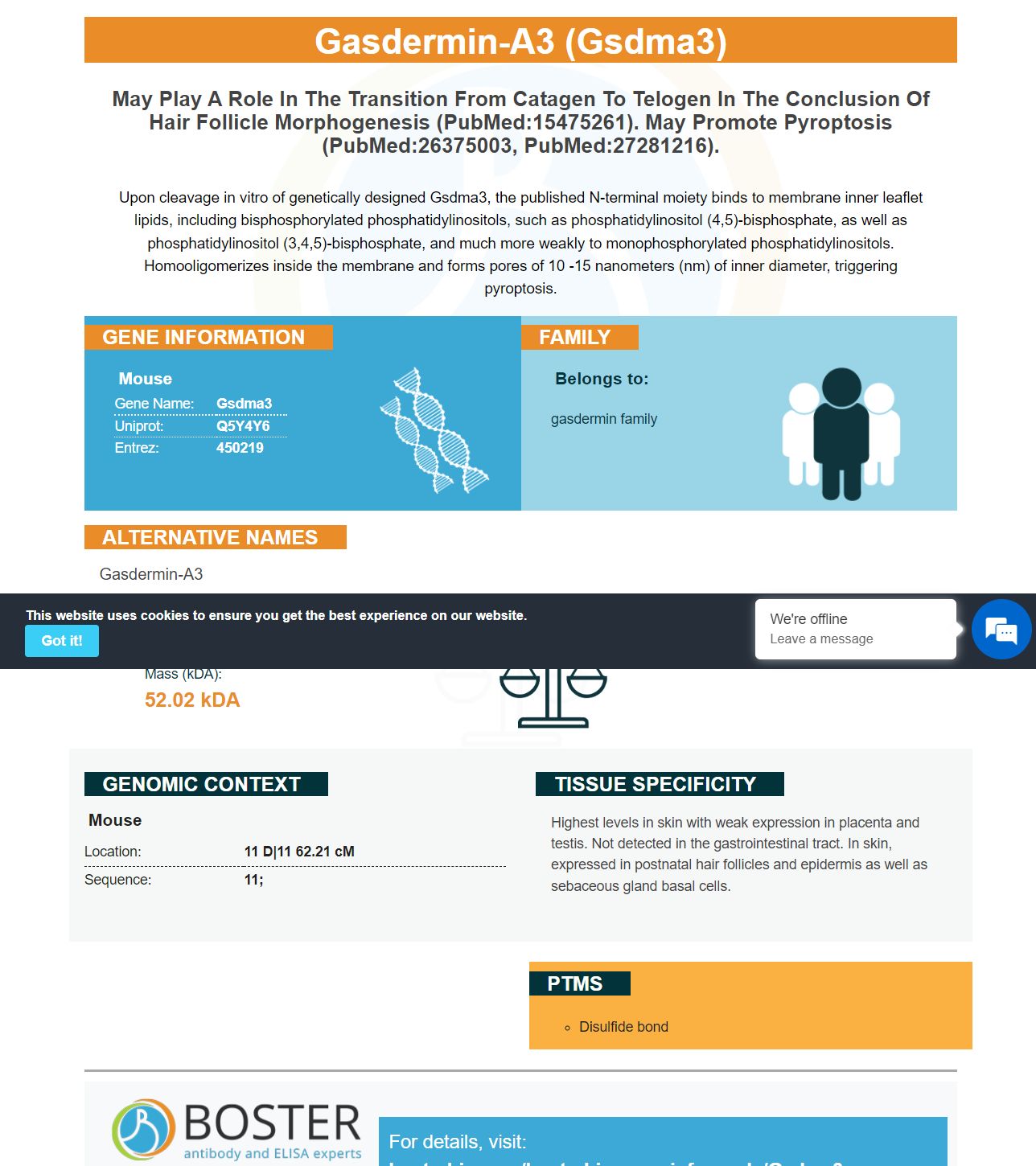
Facts about Gasdermin-A3.
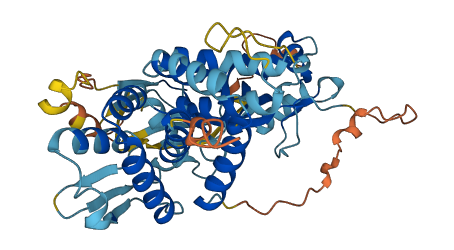
Upon cleavage in vitro of genetically designed Gsdma3, the published N-terminal moiety binds to membrane inner leaflet lipids, including bisphosphorylated phosphatidylinositols, such as phosphatidylinositol (4,5)-bisphosphate, as well as phosphatidylinositol (3,4,5)-bisphosphate, and much more weakly to monophosphorylated phosphatidylinositols. Homooligomerizes inside the membrane and forms pores of 10 -15 nanometers (nm) of inner diameter, triggering pyroptosis.
| Mouse | |
|---|---|
| Gene Name: | Gsdma3 |
| Uniprot: | Q5Y4Y6 |
| Entrez: | 450219 |
| Belongs to: |
|---|
| gasdermin family |

Gasdermin-A3
Mass (kDA):
52.02 kDA

| Mouse | |
|---|---|
| Location: | 11 D|11 62.21 cM |
| Sequence: | 11; |
Highest levels in skin with weak expression in placenta and testis. Not detected in the gastrointestinal tract. In skin, expressed in postnatal hair follicles and epidermis as well as sebaceous gland basal cells.

PMID: 15475261 by Runkel F., et al. The dominant alopecia phenotypes Bareskin, Rex-denuded, and Reduced Coat 2 are caused by mutations in gasdermin 3.
PMID: 17350798 by Tamura M., et al. Members of a novel gene family, Gsdm, are expressed exclusively in the epithelium of the skin and gastrointestinal tract in a highly tissue-specific manner.