This website uses cookies to ensure you get the best experience on our website.


- Table of Contents
Boster offers the best and yet the most affordable Western Blot custom services. If you don't have time to run all those sample just outsource!
The first step to obtaining a clear blot is sample preparation. The choice of extraction method and lysis buffer—such as RIPA buffer—directly impacts protein yield. Using a protease inhibitor cocktail and phosphatase inhibitors prevents sample degradation during extraction. For quantitative studies, keeping protein concentration consistent across lanes ensures reliable comparisons. For continued optimization across your workflow, review our western blot troubleshooting resource. Boster supplies a range of lysis buffers and specialized extraction kits; use this guide to pick the right one for your task and start getting better results.
Keywords: Western blotting optimization, sample preparation, protein extraction kits
Learn More About Sample PreparationAccurate measurement of protein concentration is critical for loading equal amounts across the gel. Using BCA or Bradford assays helps ensure uniform loading of protein samples. Always normalize with loading controls and validate with loading control antibodies to confirm sample consistency. Use this comparison chart to help decide which protein assay is right for you
Keywords: Protein quantification assay, Western blotting optimization, total protein analysis, BCA, commassie, protein silver
Learn More About Protein QuantificationProtein separation depends on gel chemistry. Selecting the correct acrylamide percentage for your SDS-PAGE gel is essential for resolving proteins of different sizes. For small proteins, use a Tricine gel to enhance resolution. Always include a protein marker to validate the migration pattern. Adding sodium dodecyl sulfate ensures denaturation and uniform migration by molecular weight. Use this handy table to aid your estimates:
Keywords: SDS-PAGE, Western blotting optimization, gel percentage, gel concentration, pore size
Learn More About SDS-PAGEEfficient protein transfer from gel to membrane is one of the most sensitive steps. Choosing between wet transfer, semi-dry transfer, or dry transfer depends on the protein type and resources available. Using a transfer buffer or modified formulations improves retention. For high molecular weight proteins, a PVDF membrane may perform better, while a nitrocellulose membrane provides very low background noise. Both nitrocellulose membranes and PVDF membranes are widely used depending on experimental goals. Pick your transfer method carefully to get the best results in your own time and for the right price.
Keywords: Protein transfer, Western blotting optimization, wet transfer, semi-dry transfer, dry transfer, best transfer method
Learn More About Protein TransferAfter transfer, the blocking step prevents nonspecific binding. Different blocking agents such as Bovine Serum Albumin (BSA), nonfat milk, or serum can be selected based on the detection method. For fluorescence workflows, serum or casein are recommended, while chemiluminescent detection often pairs best with Bovine Serum Albumin. Use this guide to decide which blocking buffer is best suited to your application:
Keywords: Western blotting optimization, blocking buffer, bsa, nonfat milk, pbs, tbs, best blocking buffer
Learn More About Membrane BlockingOptimizing antibody levels is critical. Primary antibodies must be carefully titrated to avoid nonspecific signals, while a properly diluted secondary antibody or HRP-labeled secondary antibody enhances specificity. Performing antibody titration using a dot blot helps establish the best concentration. Use this guide to help optimize your antibody concentration and get better results:
Keywords: Antibody concentration, Western blotting optimization, dot blot assay, best antibody concentration
Learn More About Antibody ConcentrationAccelerate your research with our expert Western blotting service. Contact us today to discuss your project needs and ensure accurate, reliable results from your protein samples.
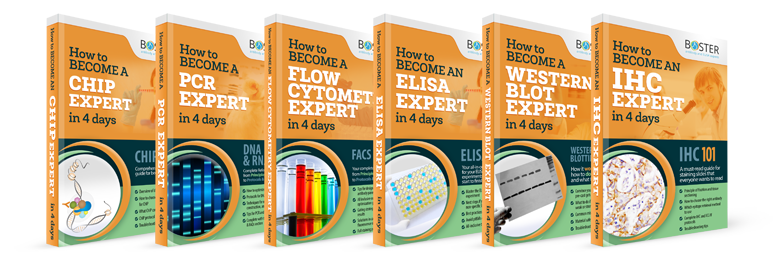
Download troubleshooting handbooks for IHC, Western blot and ELISA for FREE.
Troubleshooting Guides
Protocols, optimization tips, troubleshooting guides, and more for Western Blot..
Technical ResourcesLearn the concept behind Western blotting. It is a technique that is used to detect specific proteins in the given sample. It usually involves two major processes, namely, SDS-polyacrylamide gel electrophoresis and protein blotting and testing.
Learn ELISA PrincipleCheck out this Western Blot sample preparation guides to learn how to get the best results from your sample type. Learn more about sample preparation in this guide.
Learn Western Blot Sample PreparationLearn a stepwise Western blotting protocol from reagent preparation to detection with application of BosterBio reagents. Check out our ELISA protocols to learn how to get the best results.
Check our Western Blot ProtocolGet to learn Pro tips on resolving common Western Blot issues such as weak signal, wrong band size, smiley gel, and high background.
Browse Western Blot Troubleshooting Tips