This website uses cookies to ensure you get the best experience on our website.


- Table of Contents
Deliver single-domain antibodies with picomolar affinity and turnkey developability—ready in as little as six weeks. Our platform is optimized for therapeutic developability and ease of antibody engineering.
Built for programs that need better access to difficult targets, faster discovery timelines, and VHH candidates ready for engineering.
Our custom nanobody discovery service delivers an end-to-end VHH workflow—from immunization and screening to sequence recovery, expression, and validation.
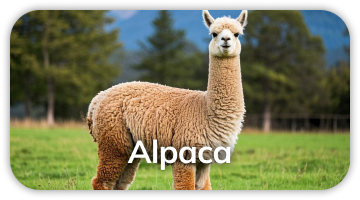
Our in-house llama herd in Wuhan supports a high-diversity VHH repertoire and a more consistent discovery supply chain.
Optimized workflows and parallel processing help deliver custom nanobody candidates within 6 weeks.
Phage display, NGS, and BLI/SPR support precise affinity and specificity profiling.
Supports multimerization, Fc-fusion, PEGylation, and other tailored nanobody formats.
GLP/GMP-ready workflows and IND-enabling support help smooth the path toward development.
Ph.D. scientists guide your project across screening, validation, and optimization.
Our streamlined 5-step pipeline delivers high-affinity nanobodies quickly and reliably:
Every research or therapeutic program has distinct requirements—and the right antibody format can make all the difference. Use this simple checklist to map your project needs against the strengths of each platform. Whether you need an ultra-compact binder, extended serum half-life, or lightning-fast screening, our guide will steer you toward the optimal solution. New to nanobodies? Read our introduction to how they work and where they fit best.
| Project Need | Recommended Format |
|---|---|
| Need a small, highly penetrant scaffold? | Nanobody |
| Require long serum half-life? | Fc-fusion or PEGylation |
| Looking for rapid screening? | Phage-display sdAb |
Use our guide to pick the optimum antibody format for your application.
| Feature | Nanobody (Library Display) | Rabbit Monoclonal (High Throughput B cell isolation) |
|---|---|---|
| Throughput | Very high (>10⁹ clones per library; phage library size ~10¹¹) | Moderate (~10⁸ B cells harvested per bleed) |
| Epitope Range | Linear & cryptic; accesses hidden or recessed epitopes | Broad; favors conformational epitopes |
| Engineering Flexibility | Exceptional (easy fusion, multimerization, humanization) | Moderate (standard IgG formats; Fc engineering possible) |
| Cost | Low–Moderate | Low–Moderate |
| Timeline (post-immunization) | ~6 weeks | 8–12 weeks |
| When to Choose | Small, highly soluble binders for imaging probes, bispecific formats, or rapid modular engineering. | Full-length IgG with natural effector functions for diagnostics and assays. |
| Display Platform | Library Size | Sequence Diversity | Timeline (post-immunization) | PTM vs Human | ER QC | Golgi QC | Membrane QC | Developability |
|---|---|---|---|---|---|---|---|---|
| Phage Display | 10¹¹ | Low (scFv/Fab) | Short | Different | ✗ | ✗ | ✗ | Low |
| E. coli Display | 10¹¹ | Low (scFv/Fab) | Short | Different | ✗ | ✗ | ✗ | Low |
| Yeast Display | 10¹⁰ | Low (scFv/Fab) | Medium | Different | ✓ | ✓ | ✗ | Medium |
| Mammalian-Cell Display | 10⁷ | High (full-spectrum) | Longer | Identical | ✓ | ✓ | ✓ | High |