Customer Testimonials

Peer Reviews from Real Labs

Browse peer-submitted results linked to specific products—ratings, images, and practical notes included. Contribute your own result to strengthen the evidence base and claim rewards after verification.

Video Interviews

See real workflows and decision points—what researchers tried, what worked, and why. Share your story in a short interview and claim rewards!

Get Interview Rewards

Filter by category, reactivity, and host to find the most relevant peer results.

WB analysis using Anti-GH antibody (A00851-2) in mouse hippocampal tissue revealed a specific band at the expected molecular weight with negligible non-specific signals.

Excellent, submitted by on
SKU A00851-2
Application Western Blot
Sample mouse hippocampal tissue
Sample Processing Description Total protein was extracted from the left hippocampus of normal mouse brain.
Other Reagents RIPA lysis buffer, Protease inhibitor, Electrophoresis buffer, Transfer buffer, Blocking buffer
Primary Antibody GH1 Antibody Picoband®
Primary Incubation 1:4000, overnight at 4 ℃
Secondary Antibody HRP-conjugated goat anti-rabbit IgG
Secondary Incubation 1:10000, 1h in RT
Detection Substrate: ECL substrate; Image system: ChemiDoc MP
Results Summary Growth hormone (GH) serves as a central integrative signal that coordinates growth, metabolism, and tissue repair in response to changes in nutritional status. It is not only the primary driver of linear growth during puberty but also plays a critical role throughout life in maintaining muscle mass, bone strength, and metabolic flexibility. In this study, hippocampal tissues from two normal mouse brains were used to evaluate the performance of the GH antibody. The results showed a band at the expected position with good specificity, indicating that the antibody performs well in WB applications.

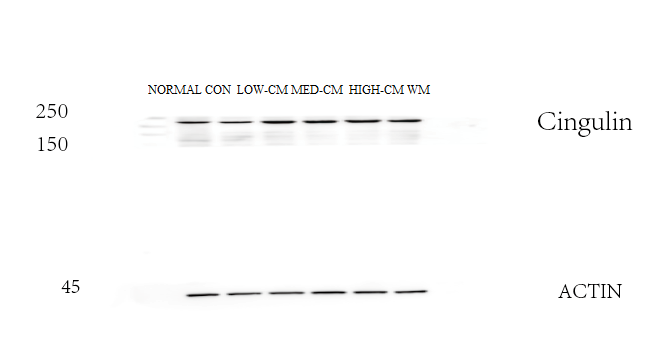
WB results showed that Cingulin/CGN (A02373-1) was downregulated in the rat colon model group and restored after Chinese medicine treatment, with the high-dose group showing the best effect, and the target bands were clear and specific.

Excellent, submitted by on
SKU A02373-1
Application Western Blot
Sample rat colon tissue
Sample Processing Description Rat colon tissues were lysed in RIPA buffer containing PMSF (100:1) for 10 min, centrifuged at 12,000 rpm for 15 min, and the supernatant was mixed with 5× loading buffer, denatured at 100°C for 10 min, and then loaded onto SDS-PAGE.
Other Reagents5% non-fat milk
Primary Antibody Cingulin/CGN Antibody
Primary Incubation 1:1000, overnight at 4 ℃
Secondary Antibody HRP Conjugated AffiniPure Goat Anti-Rabbit IgG (H+L) (BA1054)
Secondary Incubation 1:5000, 1 h in RT
Detection Substrate: ECL substrate, Image system:ChemiDoc MP
Results Summary The figure shows WB results of Cingulin/CGN and the internal control Actin in rat colon across different groups; expression was decreased in the model group and restored after Chinese medicine treatment, with the high-dose group showing the best effect, and the target bands were clear and specific, indicating satisfactory results.

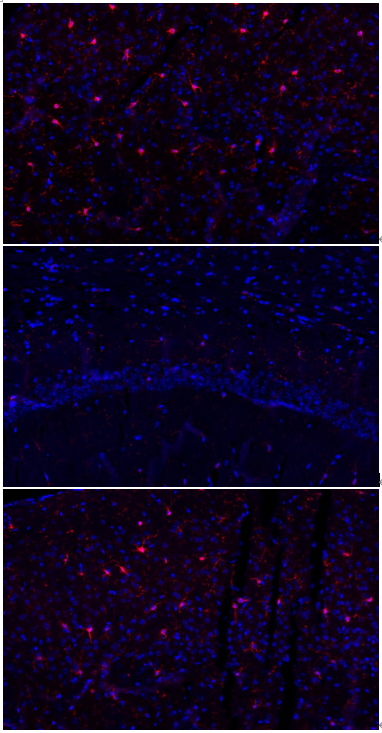
In the IF experiment using Anti-IBA-1 antibody (Cat# M01394-4), the antibody clearly and specifically labeled microglial cells in mouse cerebral infarction tissue, showing distinct staining and well-defined cellular morphology.

Excellent, submitted by on
SKU M01394-4
Application Immunofluorescence
Sample mouse brain tissue
Sample Processing Description Mouse cerebral infarction model; brain tissues were collected, fixed in formaldehyde for 48 hours, and then sagittally paraffin-embedded.
Other ReagentsGoat serum, DAPI Staining Solution, Antifade fluorescence mounting medium.
Primary Antibody Iba1 Rabbit Monoclonal Antibody
Primary Incubation 1:100, overnight at 4 ℃
Secondary Antibody Goat Anti-Rabbit IgG (H+L) Secondary Antibody, Fluoro594 Conjugated (BA1142, Boster)
Secondary Incubation 45 min at 37℃
Detection Imaging system:Leica DMi3000
Results Summary IBA-1 is a well-established marker of microglia in the nervous system. Microglia are the primary immune effector cells in the central nervous system and respond rapidly to CNS injury by proliferating, upregulating or re-expressing MHC antigens, migrating, and adopting a phagocyte-like morphology. In this study, IBA-1 was used to label microglia in cerebral infarction samples, showing clear staining and accurate cellular morphology.

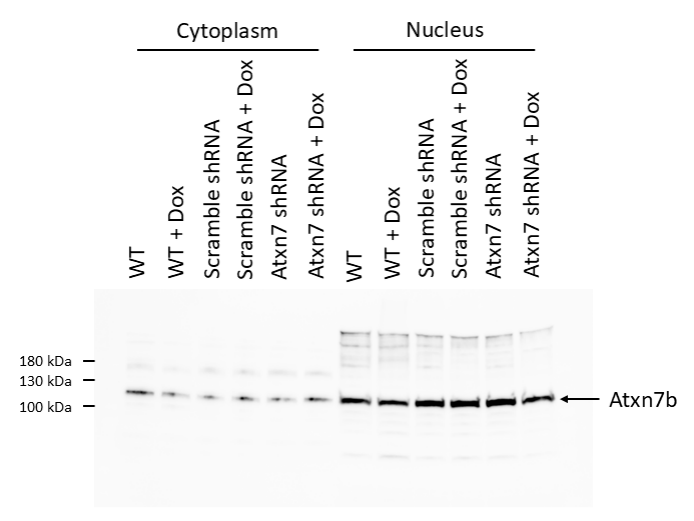
An shRNA targeting Atxn7 displayed a decrease in Atxn7 abondance showing specificity of the antibody.

Excellent, submitted by on
SKU DZ41648
Application Western Blot
Sample 3T3 Cell lysate
Sample Processing Description Nuclear and Cytoplasmic Extraction was performed on 3T3 cells with NE-PER kit by following the protocol and by adding protease and phosphatase inhibitors. Total protein was quantified with Qubit Protein Assay. Lysates were mixed with 4× Laemmli Sample Buffer and 2-mercaptoethanol, and then heated at 95°C for 5 min.
Primary Antibody Anti-Mouse Atxn7 Antibody
Primary Incubation Incubated in non-fat dry milk in TBST overnight at 4°C with antibody dilution at 1:1000 dilution
Secondary Antibody Goat anti-Rabbit IgG (H+L) Secondary Antibody, HRP
Secondary Incubation 1:4000 dilution in milk for 1 hour at room temperature
Other Reagents used SuperSignal West Pico PLUS Chemiluminescent Substrate
Detection Biorad ChemiDoc
Results Summary I was looking to target Atxn7 isoform 2, named as Atxn7b in the literature, and referenced as ENSMUST00000223714.2 on Ensembl. (It differs only on the C-terminus compared to Atxn7a, isoform 1). Atxn7 is mainly in the nucleus and is between 100-130 kDa. An shRNA targeting Atxn7 displayed a decrease in Atxn7 abondance showing specificity of the antibody.

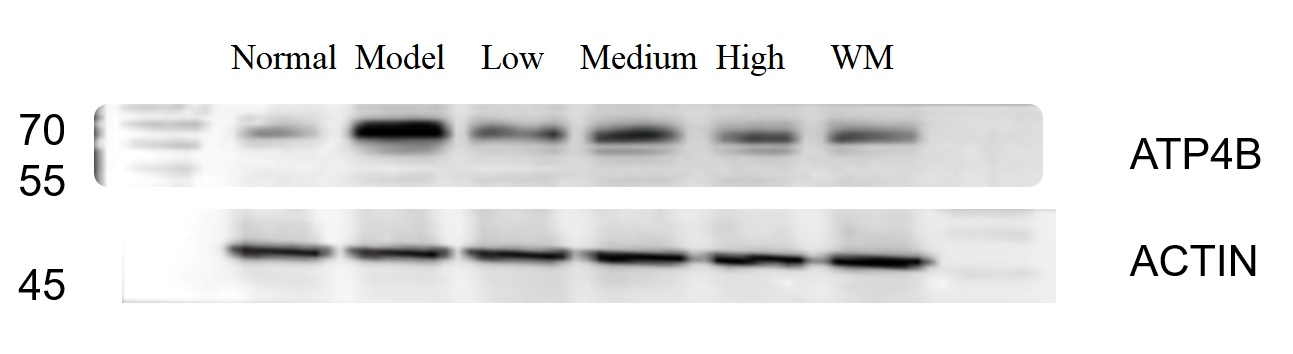
This antibody is highly specific and efficient, suitable for detecting ATP4B protein in rat colon by Western blot, with only minimal nonspecific bands.

Excellent, submitted by on
SKU A08719-2
Application Western Blot
Sample rat colon tissue
Sample Processing Description RIPA lysis buffer with protease inhibitor PMSF (100:1) was used to lyse the sample for 10 minutes, followed by centrifugation at 12,000 rpm for 15 minutes. The supernatant was mixed with 5× loading buffer, denatured at 100°C for 10 minutes, and then loaded onto SDS-PAGE.
Other Reagents Blocking buffer
Primary Antibody ATP4B Antibody Picoband®
Primary Incubation 1:1000, overnight at 4 ℃
Secondary Antibody HRP Conjugated AffiniPure Goat Anti-Rabbit IgG (H+L)
Secondary Incubation 1:5000, 1 hour in room temperature
Detection Substrate: ECL, Imaging system:ChemiDoc MP
Results Summary The figure shows a schematic representation of Western blot results for the target protein ATP4B and the loading control Actin in rat colon across the normal group, model group, low-, medium-, and high-dose traditional Chinese medicine groups, and the western medicine group. Expression was increased in the model group, and among the traditional Chinese medicine groups, the high-dose group showed the best efficacy. The target bands are clear and distinct, and the experimental results are satisfactory.

Our lab will continue to use this antibody, and we will recommend it to other researchers at the university working on similar studies.

Excellent, submitted by on
SKU A31732-2
Application Immunofluorescence
Sample Normal rat liver and alcoholic rat liver
Sample Processing Description The samples consist of myocardium from normal SD rats and myocardium from SD rats subjected to an alcoholic liver disease model. The alcoholic liver disease model was established by gavaging 50% ethanol twice daily, while allowing the rats to freely consume alcoholic beverages, for a total of 14 weeks.
Other Reagents Goat Serum, DAPI, Anti-fade mounting medium
Primary Antibody Anti-PTRF/CAVIN1 Antibody Picoband®
Primary Incubation 1:200, overnight at 4 ℃
Secondary Antibody DyLight 488 Goat Anti-Rabbit IgG (H+L)
Secondary Incubation 1:500, 45 minutes in room temperature
Detection Imaging system:Leica DM2500
Results Summary PTRF/CAVIN1 is a multifunctional protein that shuttles between the plasma membrane and the nucleus, assisting in the recruitment of repair proteins when the plasma membrane is damaged. The results of this IF experiment indicate that alcohol gavage induces myocardial injury and leads to increased expression of PTRF.

The SLC40A1 antibody was used to detect the expression of the target protein in human uterine tissue. Although two bands were observed, the differences in expression levels were still clearly discernible.

Excellent, submitted by on
SKU A01953-2
Application Western Blot
Sample human uterine tissue
Sample Processing Description The tissue was minced and further disrupted by sonication, then lysed on ice for 1 hour using RIPA buffer. After centrifugation, the supernatant was collected and quantified using the BCA method. The appropriate amount of loading buffer was added, and the samples were boiled in a water bath to denature the proteins. Finally, 15 μL of each protein sample was loaded into each lane of the SDS-PAGE gel.
Other Reagents 5% Non-fat milk
Primary Antibody Anti-SLC40A1 Antibody Picoband®
Primary Incubation overnight at 4 ℃
Secondary Antibody HRP-conjugated Anti-Rabbit IgG Secondary Antibody
Secondary Incubation 1 hour in room temperature
Detection Substrate: Ultra-sensitive ECL luminescent reagent (Cat# AR1191), Imaging system:Tanon
Results Summary The SLC40A1 antibody was used to detect the expression of the target protein in human uterine tissue. Although two bands were detected, the differences in expression levels were still clearly observable and did not affect the analysis of the experimental results.

The SLC7A11 antibody was used to detect the expression of the target protein in human uterine tissue. Although two bands were observed in the experiment, this did not affect the interpretation of the results.

Excellent, submitted by on
SKU A03036-2
Application Western Blot
Sample human uterine tissue
Sample Processing Description The tissue was minced and further disrupted by sonication, then lysed on ice for 1 hour using RIPA buffer. After centrifugation, the supernatant was collected and quantified using the BCA method. The appropriate amount of loading buffer was added, and the samples were boiled in a water bath to denature the proteins. Finally, 15 μL of each protein sample was loaded into each lane of the SDS-PAGE gel.
Other Reagents 5% Non-fat milk
Primary Antibody Anti-xCT/SLC7A11 Antibody Picoband®
Primary Incubation 1:1000, overnight at 4 ℃
Secondary Antibody HRP-conjugated Anti-Rabbit IgG Secondary Antibody
Secondary Incubation 1 hour in room temperature
Detection Substrate: Ultra-sensitive ECL luminescent reagent (Cat# AR1191), Imaging system:Tanon
Results Summary The SLC7A11 antibody was used to detect the expression of the target protein in human uterine tissue. Although two bands were observed in the experiment, this did not affect the interpretation of the results.

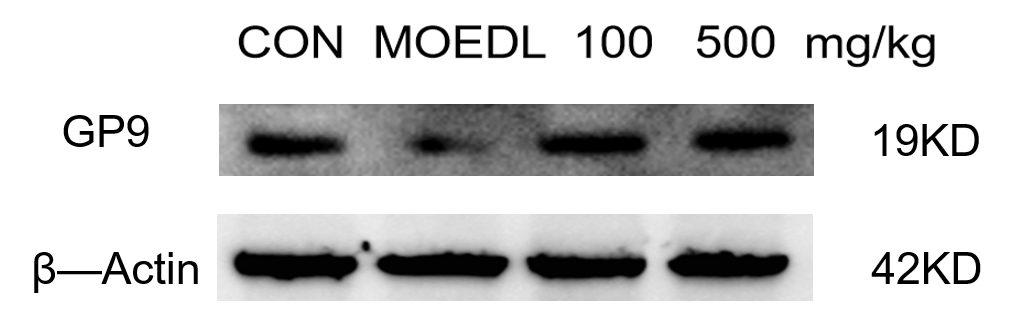
Western blot analysis was performed using the GP9 antibody to detect GP9 protein expression in the mouse hippocampus. This antibody is highly efficient and specific, making it suitable for quantitative WB detection of GP9 in mouse tissues.

Excellent, submitted by on
SKU M00024-1
Application Western Blot
Sample Mouse hippocampus tissue
Sample Processing Description The mouse hippocampus was lysed with RIPA buffer containing a protease inhibitor cocktail. After protein quantification, samples were mixed with 5× protein loading buffer and heated for 10 minutes to denature. Load 5 μL of protein per lane and apply to SDS-PAGE.
Primary Antibody Anti-AKT1 Monoclonal Antibody
Primary Incubation overnight at 4 ℃
Secondary Antibody HRP-conjugated Anti-Rabbit IgG Secondary Antibody
Secondary Incubation 1 hour in room temperature
Detection Substrate: Ultra-sensitive ECL luminescent reagent (Cat# AR1191), Imaging system:Tanon
Results Summary CD71 antibody was used to detect protein expression in mouse uterine tissue. The bands were clear and free of non-specific signals. After recovery, the antibody could be reused and still showed good performance.

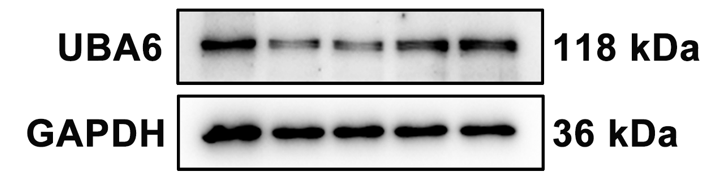
The antibody performs efficiently and specifically, with very few nonspecific bands.

Excellent, submitted by on
WB result image
SKU A03213-2
Application Western Blot
Sample MCF-7 cell
Sample Processing Description Cells were directly lysed in NP-40 buffer, mixed with loading buffer at the appropriate ratio, and denatured by heating at 98 °C. Then, 20 µL of protein sample was loaded per lane onto SDS-PAGE.
Primary Antibody UBA6 Antibody
Primary Incubation 1:1000, overnight at 4 °C
Blocking Agent 5% Non-fat milk
Secondary Antibody HRP-conjugated Goat Anti-Rabbit IgG
Secondary Incubation Incubate at room temperature for 1 hour
Detection Signal was developed using ECL substrate on a Tanon system.
Results Summary The antibody performs efficiently and specifically, with very few nonspecific bands.