Customer Testimonials

Peer Reviews from Real Labs

Browse peer-submitted results linked to specific products—ratings, images, and practical notes included. Contribute your own result to strengthen the evidence base and claim rewards after verification.

Video Interviews

See real workflows and decision points—what researchers tried, what worked, and why. Share your story in a short interview and claim rewards!

Get Interview Rewards

Filter by category, reactivity, and host to find the most relevant peer results.

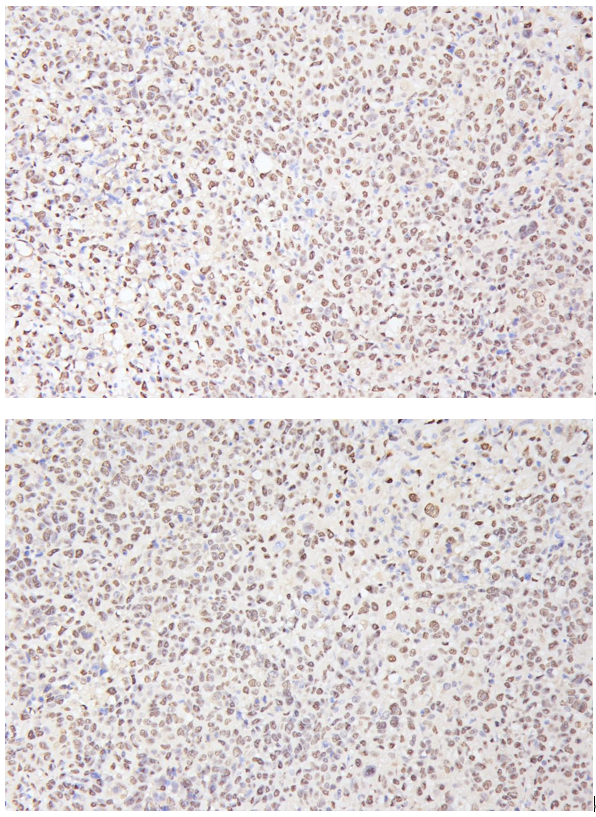
IHC with Anti-Ki67 antibody (M00254-9) in HepG2 xenograft tumors showed clear nuclear staining in proliferating cells, accurately reflecting the proliferation index with low background.

Excellent, submitted by on
SKU M00254-9
Application Immunohistochemistry
Sample HepG2 subcutaneous xenograft in nude mice
Sample Processing Description HepG2 cells were expanded in culture and subcutaneously implanted into nude mice. After 2 weeks of tumor formation, tumor tissues were harvested, fixed in 4% formaldehyde for 48 hours, and then processed for paraffin embedding and sectioning.
Other Reagents Goat serum, DAB chromogen solution
Primary Antibody Ki67 Antibody Picoband® (monoclonal, 5C7)
Primary Incubation 1:200, overnight at 4 ℃
Secondary Antibody Two-step IHC detection kit
Secondary Incubation 30 min in 37℃
Detection Image system: Leica DM2500
Results Summary Ki67 is a key marker of cell proliferation with high specificity, as it is expressed only in actively dividing cells and has a very short half-life, allowing accurate assessment of the proliferation index at the time of sampling. It is widely used in tumor prognosis evaluation (e.g., high Ki67 index in breast cancer is often associated with poor prognosis) and assessment of tissue regenerative activity. In this experiment, clear and distinct nuclear positivity was observed with well-defined staining.

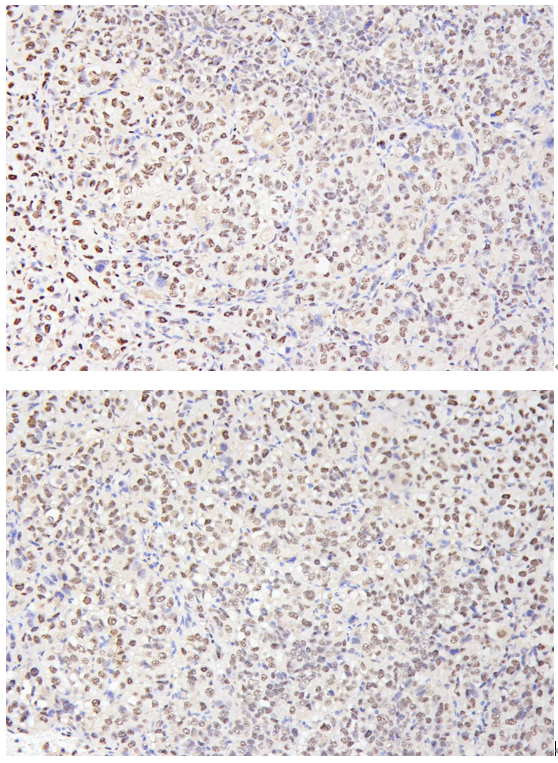
The PCNA antibody (Cat# MA1083) showed clear and distinct nuclear positivity in HepG2-derived subcutaneous tumors, indicating reliable detection.

Excellent, submitted by on
MA1083 Immunohistochemistry
SKU MA1083
Application Immunohistochemistry
Sample HepG2 subcutaneous xenograft in nude mice
Sample Processing Description HepG2 cells were expanded and then implanted subcutaneously into nude mice. After 2 weeks, tumors formed, which were excised, fixed in formalin for 48 hours, and processed for paraffin embedding and sectioning.
Other Reagents Goat serum, DAB chromogen solution
Primary Antibody PCNA Antibody (Monoclonal, PC 10)
Primary Incubation 1:500, overnight at 4 ℃
Secondary Antibody Two-step IHC detection kit
Secondary Incubation 30 min in 37℃
Detection Image system: Leica DM2500
Results Summary PCNA is a key marker for cell proliferation studies; however, besides being a proliferation marker, it is a core component of the DNA replication and repair complex. Its long half-life and involvement in DNA damage repair mean that PCNA positivity does not solely indicate cell proliferation but may also reflect cells responding to DNA damage. Combined with Ki67 staining, it can accurately indicate proliferative status. In our experiment, the staining was clear, with distinct nuclear positivity.

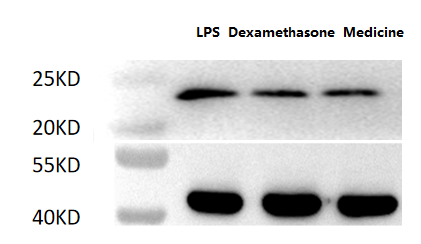
WB results showed that VEGFC (M00623) was upregulated by LPS and reduced after dexamethasone or homemade drug treatment, with clear and specific bands, indicating an anti-inflammatory effect.

Excellent, submitted by on
SKU M00623
Application Western Blot
Sample Human retinal microvascular endothelial cells
Sample Processing Description Human retinal microvascular endothelial cells treated with LPS and then with dexamethasone or homemade drug.
Other ReagentsRIPA lysis buffer, Protease inhibitor, Running buffer, Transfer buffer, Blocking buffer
Primary Antibody VEGFC Antibody
Primary Incubation 1:2000, overnight at 4 ℃
Secondary Antibody HRP Conjugated AffiniPure Goat Anti-Rabbit IgG (H+L) (BA1054)
Secondary Incubation 1:10000, 1 h in RT
Detection Substrate: ECL substrate, Image system:ChemiDoc MP
Results Summary VEGFC is an important signaling protein in vivo that primarily acts on lymphatic and blood vascular endothelial cells, promoting lymphangiogenesis and angiogenesis. WB results showed that VEGFC expression was increased in LPS-stimulated human retinal microvascular endothelial cells and decreased after treatment with dexamethasone or a homemade drug, indicating the anti-inflammatory effect of the homemade drug.

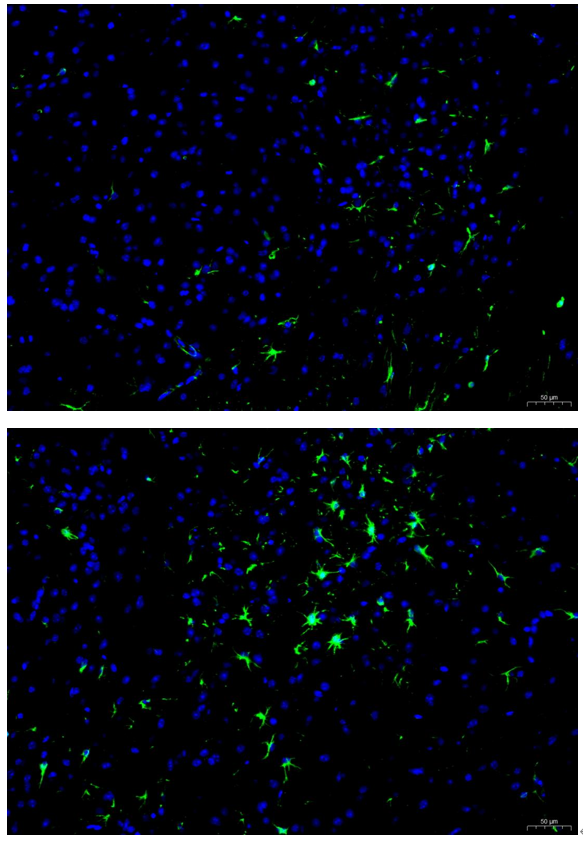
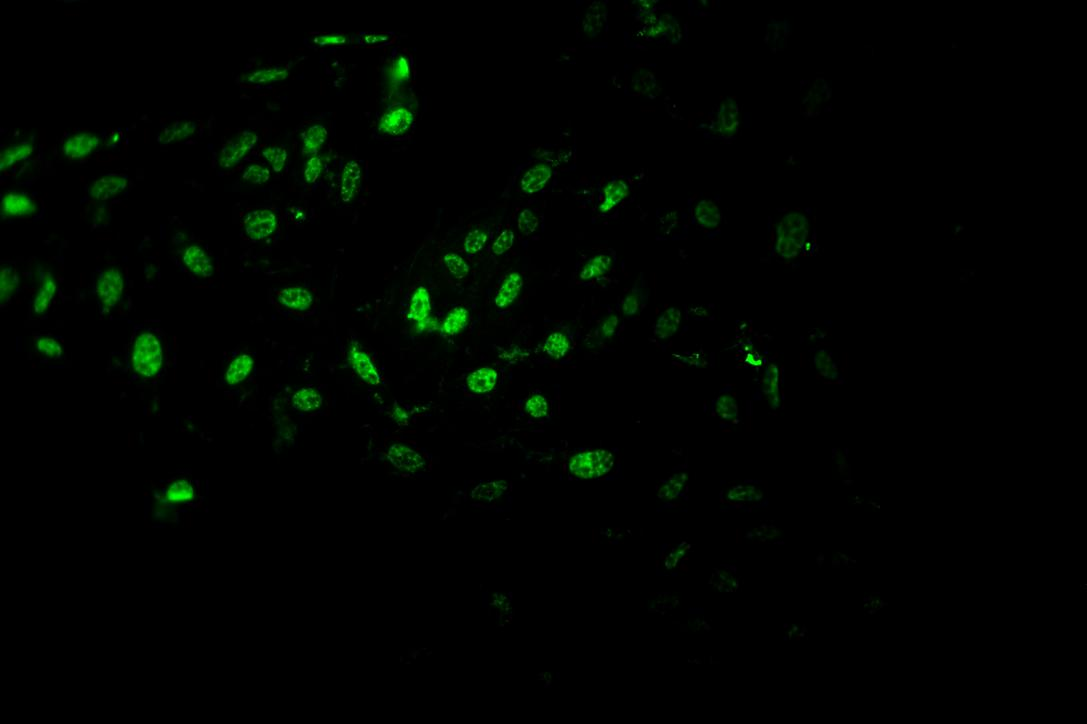
Immunofluorescence using Anti-GFAP antibody (MA1045) clearly labeled protoplasmic astrocytes in the spinal cord gray matter, showing dense, bushy processes surrounding neurons, with excellent specificity and staining.

Excellent, submitted by on
SKU MA1045
Application Immunofluorescence
Sample rat spinal tissue
Sample Processing Description Paraffin-embedded transverse sections of rat spinal cord were prepared after formalin fixation.
Other ReagentsTris-EDTA Antigen Retrieval Buffer (50×, pH 9.0), DAPI
Primary Antibody GFAP Antibody (Monoclonal, G-A-5)
Primary Incubation 1:200, overnight at 4 ℃
Secondary Antibody Goat Anti-Mouse IgG (H+L) Secondary Antibody, Fluoro488 Conjugated
Secondary Incubation 45 minutes in 37℃
Detection Imaging system:Leica DM2500
Results Summary GFAP is a marker of astrocytes. In this experiment, immunostaining for GFAP was used to label astrocytes in the gray matter of the spinal cord to observe their distribution, density, and morphology. The results showed that the labeled protoplasmic astrocytes in the gray matter had short, thick, and highly branched processes with rough surfaces, forming a dense “bushy” network tightly surrounding neuronal cell bodies and synapses, consistent with theoretical expectations and demonstrating excellent staining.

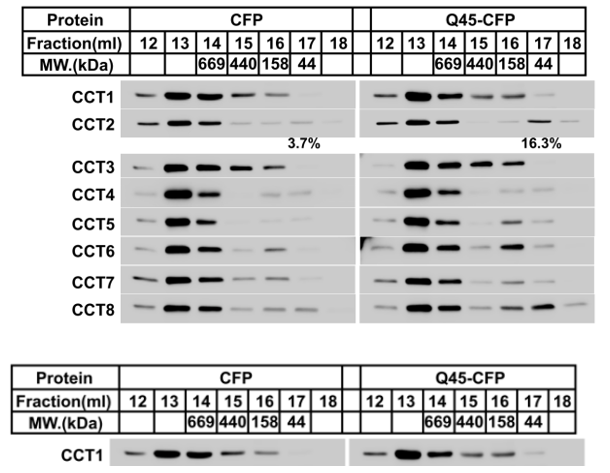
In this study, these two antibodies were primarily used for Western blot experiments. In the Western blot results, the CCT1 antibody showed a strong specific band and maintained a robust signal even after multiple reuses.

Excellent, submitted by on
SKU M02389
Application Western Blot
Sample U2OS cell
Sample Processing Description Cells were lysed with NP-40 lysis buffer to extract proteins. After quantification using the BCA assay, 5× loading buffer was added, and the samples were boiled for denaturation. Then, 20 µg of protein was loaded into each lane.
Primary Antibody Anti-TCP1 alpha Antibody Picoband® (monoclonal, 2E7)
Primary Incubation 1:1000, overnight at 4 ℃
Blocking Agent BSA
Secondary Antibody Goat Anti-Rabbit IgG (H+L) Secondary Antibody, Unconjugated (BA1039)
Secondary Incubation Incubate at room temperature for 1 hour
Detection Substrate: ECL substrate, Imaging system: ChemiDoc MP (Bio-Rad)
Results Summary I will purchase Boster products again and recommend them to my classmates and colleagues.

Highly prone to positive signals, with precise localization of expression

Excellent, submitted by on
MA1083 Immunofluorenscence
SKU MA1083
Application Immunofluorenscence
Sample Mouse MC-8 cells
Sample Processing Description 4% paraformaldehyde for 15 minutes
Primary Antibody Anti-PCNA Antibody (Monoclonal, PC 10)
Primary Incubation 1:1000, overnight at 4 ℃
Blocking Agent Goat serum
Secondary Antibody DyLight 550-conjugated goat anti-rabbit antibody.
Secondary Incubation Incubate at room temperature for 1 hour
Detection Laser confocal microscopy
Results Summary I will purchase Boster products again and recommend them to my classmates and colleagues.

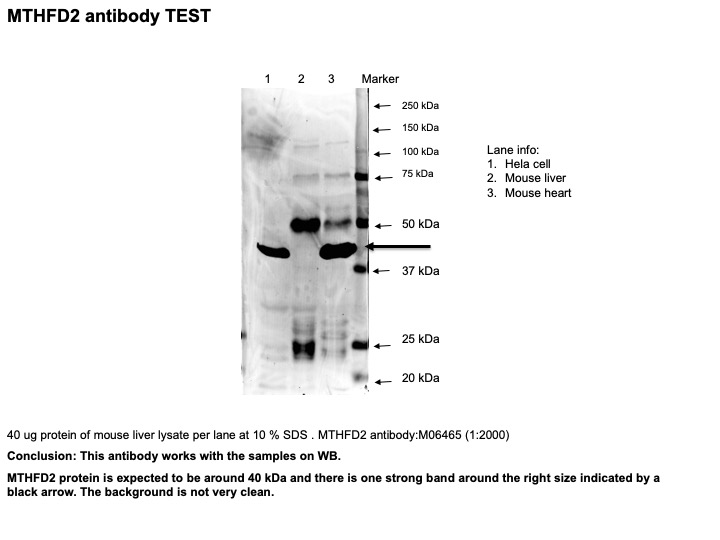
MTHFD2 Antibody for Western Blot

Excellent, submitted by on

Source: Biocompare.com

SKU M06465
Application Western Blot
Sample Hello cell and mouse tissues
Primary Incubation 1:2000 dilution at 4oC overnight
Blocking Agent 5% non-fat milk
Secondary Incubation 1:2500 dilution at RT for 1 hour
Detection Fluorescence
Results Summary This antibody works in WB with tested samples. The signal is strong enough to get a decent image. It works for human and mouse samples.

"This antibody of MTHFD2 is good for WB with mouse tissue and human cell. Signal is strong and the background is ok."

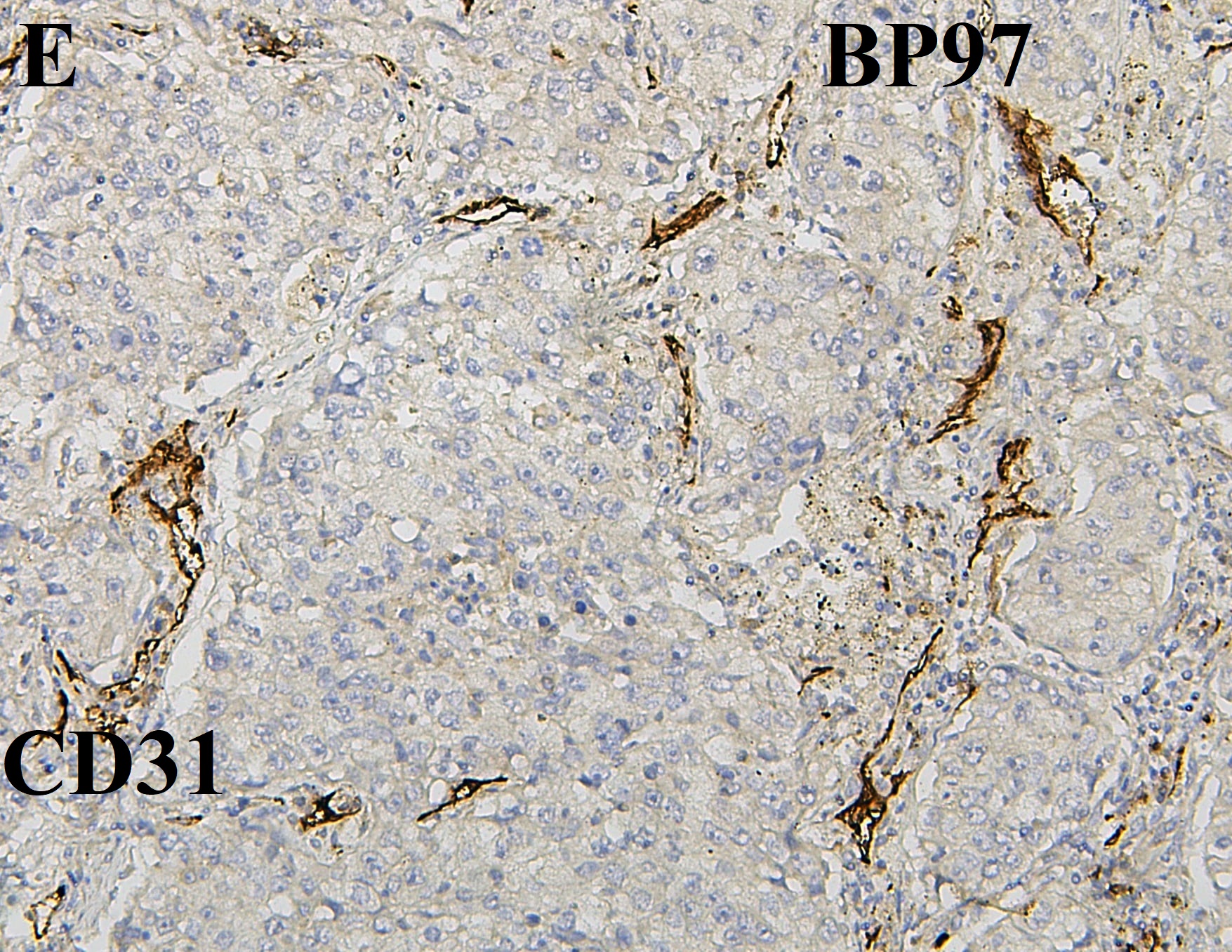
Immunohistochemistry for Anti-CD31/PECAM1 Antibody

Excellent, submitted by on
SKU M01513-4
Application Immunohistochemistry (Paraffin-embedded)
Blocking step 5% BSA as a blocking agent for 30 min at 37°C
Sample Human Lung
Fixative Fixed with 4% paraformaldehyde
Primary Ab Incubation 37°C for 30 minutes
Primary Ab Incubation diluent 5% BSA in TBS
Primary Ab Concentration 1ug/ml
Secondary Antibody SABC kit from Boster Bio, (SA1022)
Secondary Ab Dilution The kit was ready to use, no dilution needed
Secondary Ab Incubation at 37°C for 30 min

Immunohistochemistry for Anti-E Cadherin 1 CDH1 Antibody

Excellent, submitted by on
SKU M00063-2
Application Immunohistochemistry (Paraffin-embedded)
Blocking step 5% BSA as a blocking agent for 30 min at 37°C
Sample Human Oesophagus
Fixative Fixed with 4% paraformaldehyde
Primary Ab Incubation 4°C overnight
Primary Ab Incubation diluent 5% BSA in TBS
Primary Ab Concentration 2ug/ml
Secondary Antibody SABC kit from Boster Bio, (SA1022)
Secondary Ab Dilution The kit was ready to use, no dilution needed
Secondary Ab Incubation at 37°C for 30 min