Customer Testimonials

Peer Reviews from Real Labs

Browse peer-submitted results linked to specific products—ratings, images, and practical notes included. Contribute your own result to strengthen the evidence base and claim rewards after verification.

Video Interviews

See real workflows and decision points—what researchers tried, what worked, and why. Share your story in a short interview and claim rewards!

Get Interview Rewards

Filter by category, reactivity, and host to find the most relevant peer results.

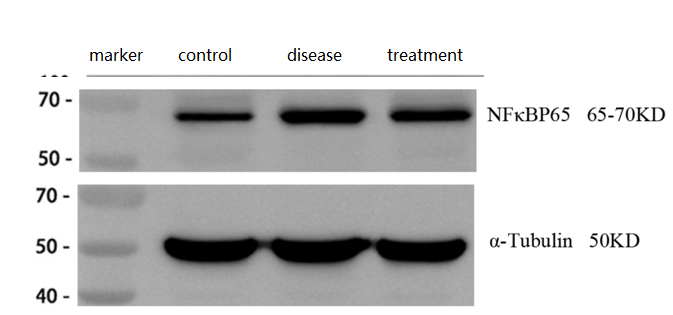
P65 Antibody (A00284-1) shows clear, specific bands with low background in mouse brain tissues by WB, with elevated expression in Alzheimer’s disease models and reduced levels after treatment, consistent with the expected results.

Excellent, submitted by on
A00284-1 wb
SKU A00284-1
Application Western Blot
Sample mouse brain tissue
Sample Processing Description ① Normal mouse hippocampal tissue, ② Hippocampal tissue from Alzheimer’s disease model mouse, ③ Hippocampal tissue from Alzheimer’s disease model mouse treated with a self-developed drug. Total protein was extracted from all samples.
Other Reagents RIPA lysis buffer, Protease inhibitor, Running buffer, Transfer buffer, Blocking buffer
Primary Antibody NF-kB p65/RELA Antibody Picoband®
Primary Incubation 1:2000, overnight at 4 ℃
Secondary Antibody HRP Conjugated AffiniPure Goat Anti-Rabbit IgG (H+L) (BA1054)
Secondary Incubation 1:10000, 1 h in RT
Detection Substrate: ECL substrate, Image system: ChemiDoc MP
Results Summary NF-κB p65 (RelA) is one of the most classical and essential subunits of the NF-κB transcription factor family. In Alzheimer’s disease, activation of p65 can initiate neuroprotective programs in neurons. The results showed that p65 expression was significantly increased in the brains of Alzheimer’s disease model mice and decreased after treatment, consistent with the expected outcomes.

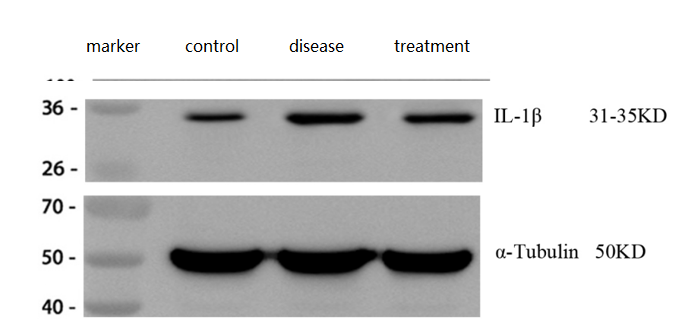
IL-1β Antibody (A00101) shows clear, specific bands with low background in mouse brain tissues by WB, with elevated expression in Alzheimer’s disease models and reduced levels after treatment, demonstrating excellent antibody performance.

Excellent, submitted by on
A00101 wb
SKU A00101
Application Western Blot
Sample mouse brain tissue
Sample Processing Description ① Normal mouse hippocampal tissue, ② Hippocampal tissue from Alzheimer’s disease model mice, ③ Hippocampal tissue from Alzheimer’s disease model mice treated with a self-developed drug. Total protein was extracted from all samples.
Other Reagents RIPA lysis buffer, Protease inhibitor, Running buffer, Transfer buffer, Blocking buffer
Primary Antibody N Cadherin/CDH2 Antibody Picoband®
Primary Incubation 1:2000, overnight at 4 ℃
Secondary Antibody HRP Conjugated AffiniPure Goat Anti-Rabbit IgG (H+L) (BA1054)
Secondary Incubation 1:10000, 1 h in RT
Detection Substrate: ECL substrate, Image system: ChemiDoc MP
Results Summary IL-1β is a key member of the interleukin-1 family and a potent pro-inflammatory cytokine. It plays a crucial role in immune defense, inflammatory responses, and tissue repair, and its levels typically increase rapidly following inflammation. The results showed that IL-1β expression was significantly elevated in the brains of Alzheimer’s disease model mice and decreased after treatment.

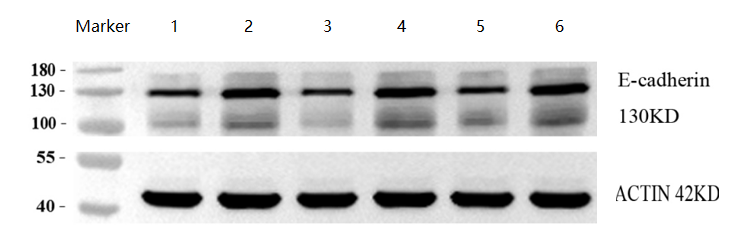
E-cadherin Antibody Picoband® (PB9561) shows clear, specific bands in human cervical cancer and adjacent tissues by WB, with higher expression in adjacent tissues than in cancer tissues, demonstrating excellent antibody performance.

Excellent, submitted by on
PB9561 wb
SKU PB9561
Application Western Blot
Sample human cervical cancer and adjacent tissues
Sample Processing Description Three samples each of human cervical cancer and adjacent tissues were collected, and total protein was extracted.
Other Reagents RIPA lysis buffer, Protease inhibitor, Running buffer, Transfer buffer, Blocking buffer
Primary Antibody E Cadherin 1/CDH1 Antibody Picoband®
Primary Incubation 1:1000, overnight at 4 ℃
Secondary Antibody HRP Conjugated AffiniPure Goat Anti-Rabbit IgG (H+L) (BA1054)
Secondary Incubation 1:10000, 1 h in RT
Detection Substrate: ECL substrate, Image system: ChemiDoc MP
Results Summary Based on this study, the expression of E-cadherin in human cervical cancer and adjacent tissues was compared, and results from three cases showed that E-cadherin levels were significantly higher in adjacent tissues than in cancer tissues.

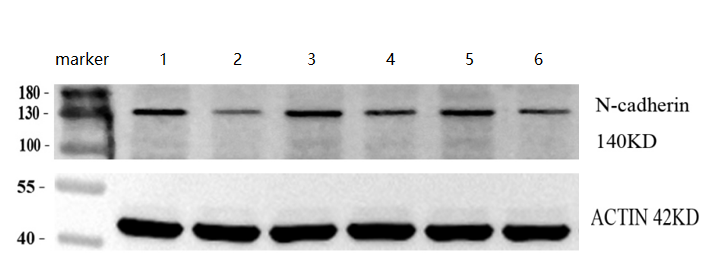
N Cadherin/CDH2 Antibody Picoband® (A01577-3) shows clear, specific bands in human cervical cancer and adjacent tissues by WB, with higher levels in cancer tissues, demonstrating excellent antibody performance.

Excellent, submitted by on
A01577-3 wb
SKU A01577-3
Application Western Blot
Sample human cervical cancer and adjacent tissues
Sample Processing Description Three samples each of human cervical cancer and adjacent tissues were collected, and total protein was extracted.
Other Reagents RIPA lysis buffer, Protease inhibitor, Running buffer, Transfer buffer, Blocking buffer
Primary Antibody N Cadherin/CDH2 Antibody Picoband®
Primary Incubation 1:1000, overnight at 4 ℃
Secondary Antibody HRP Conjugated AffiniPure Goat Anti-Rabbit IgG (H+L) (BA1054)
Secondary Incubation 1:10000, 1 h in RT
Detection Substrate: ECL substrate, Image system: ChemiDoc MP
Results Summary The purpose of this study was to evaluate the expression differences of N-cadherin in human cervical cancer and adjacent tissues. Results from three samples showed that N-cadherin levels in adjacent tissues were significantly lower than in cancer tissues.

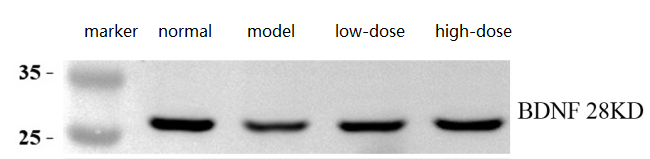
Anti-BDNF (PB9075) shows clear, specific bands in mouse brain tissues by WB, with BDNF levels markedly reduced in depressed mice and restored after treatment, demonstrating excellent antibody performance.

Excellent, submitted by on
PB9075 wb
SKU PB9075
Application Western Blot
Sample mouse brain tissue
Sample Processing Description ① Hippocampal tissue from normal mice, ② Hippocampal tissue from depressed mice, ③ Hippocampal tissue from depressed mice treated with our in-house drug, ④ Hippocampal tissue from depressed mice treated with a positive control drug. Total protein was extracted from all samples.
Other Reagents RIPA lysis buffer, Protease inhibitor, Running buffer, Transfer buffer, Blocking buffer
Primary Antibody BDNF Antibody Picoband®
Primary Incubation 1:2000, overnight at 4 ℃
Secondary Antibody HRP Conjugated AffiniPure Goat Anti-Rabbit IgG (H+L) (BA1054)
Secondary Incubation 1:10000, 1 h in RT
Detection Substrate: ECL substrate, Image system: ChemiDoc MP
Results Summary BDNF belongs to the neurotrophin family and functions by binding to the TrkB receptor on the surface of neurons, activating intracellular signaling pathways to maintain, protect, and enhance neuronal function. In simple terms, it helps brain cells stay healthier, more active, and better connected. Experimental results show that BDNF levels are significantly decreased in the brains of depressed mice, but are restored after treatment.

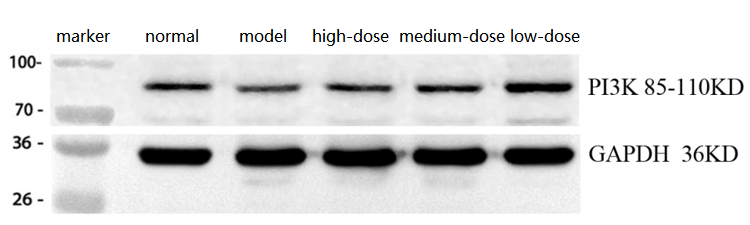
The PI3K p85 alpha Antibody (M00318-2) showed clear and specific bands in WB of rat skeletal muscle, with PI3K p85 expression increased in the model group and decreased in a dose-dependent manner in the treatment groups, consistent with expectations.

Excellent, submitted by on
M00318-2 wb
SKU M00318-2
Application Western Blot
Sample Rat skeletal muscle tissue
Sample Processing Description Normal rat skeletal muscle, injury model, and high-, medium-, and low-dose treatment groups, with total protein extracted.
Other Reagents RIPA lysis buffer, Protease inhibitor, Running buffer, Transfer buffer,Blocking buffer
Primary Antibody PI3 Kinase p85 alpha Rabbit Monoclonal Antibody
Primary Incubation 1:2000, overnight at 4 ℃
Secondary Antibody HRP Conjugated AffiniPure Goat Anti-Rabbit IgG (H+L) (BA1054)
Secondary Incubation 1:10000, 1 h in RT
Detection Substrate: ECL substrate, Image system: ChemiDoc MP
Results Summary Based on the experimental results, the band of PI3K p85 is clear. The PI3K p85 level in the model group is significantly higher than in the normal group, whereas in the treatment group, the PI3K p85 level decreases with increasing drug dose, which is consistent with expectations.

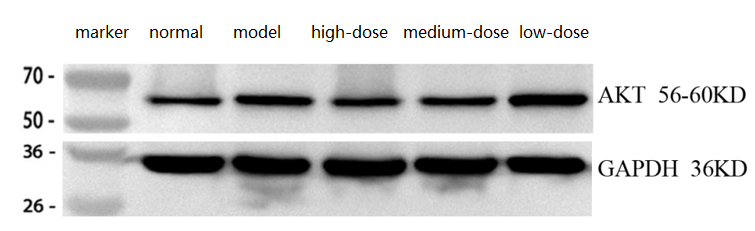
The AKT1 Antibody (M00024-1) showed clear, specific bands in WB of rat skeletal muscle, with expression changes consistent with expectations.

Excellent, submitted by on
SKU M00024-1
Application Western Blot
Sample Rat skeletal muscle tissue
Sample Processing Description Normal rat skeletal muscle, injury model, and high-, medium-, and low-dose treatment groups, with total protein extracted.
Other Reagents RIPA lysis buffer, Protease inhibitor, Running buffer, Transfer buffer, Blocking buffer
Primary Antibody AKT1 Monoclonal Antibody
Primary Incubation 1:2000, overnight at 4 ℃
Secondary Antibody HRP Conjugated AffiniPure Goat Anti-Rabbit IgG (H+L) (BA1054)
Secondary Incubation 1:10000, 1 h in RT
Detection Substrate: ECL substrate, Image system: ChemiDoc MP
Results Summary The AKT1 bands are clear and correctly positioned; expression is significantly higher in the model group than in the control, and decreases with increasing drug dose in the treatment groups, consistent with expectations.

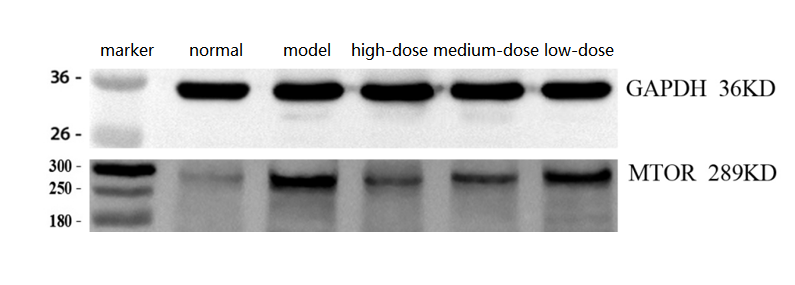
MTOR Antibody (M00003) WB on rat skeletal muscle shows clear bands, with higher MTOR in the model and dose-dependent reduction in treatment groups.

Excellent, submitted by on
SKU M00003
Application Western Blot
Sample Rat skeletal muscle tissue
Sample Processing Description Total protein was extracted from rat skeletal muscle tissue: ① normal, ② injury model, ③ high-dose drug treatment, ④ medium-dose drug treatment, ⑤ low-dose drug treatment.
Other ReagentsRIPA lysis buffer, Protease inhibitor, Running buffer, Transfer buffer, Blocking buffer
Primary Antibody mTOR/Tor Rabbit Monoclonal Antibody
Primary Incubation 1:2000, overnight at 4 ℃
Secondary Antibody HRP Conjugated AffiniPure Goat Anti-Rabbit IgG (H+L) (BA1054)
Secondary Incubation 1:10000, 1 h in RT
Detection Substrate: ECL substrate, Image system:ChemiDoc MP
Results Summary The results show clear MTOR bands, with higher levels in the injury model compared to normal, and a dose-dependent decrease in the treatment groups, as expected.

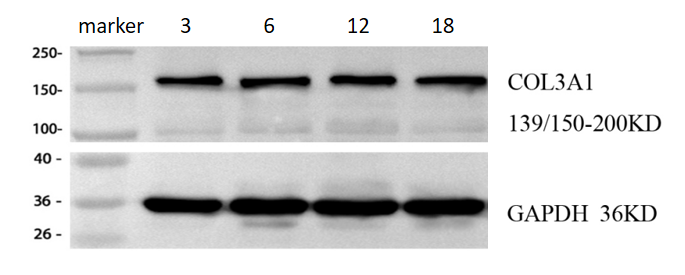
This Western blot experiment using COL3A1 antibody (M00788-1) on mouse cardiac tissues from 3-, 6-, 12-, and 18-month-old mice shows that COL3A1 levels are generally similar across ages, with a slight but not significant increase as age progresses.

Excellent, submitted by on
```html
SKU M00788-1
Application Western Blot
Sample mouse cardiac tissue
Sample Processing Description Total protein was extracted from mouse cardiac tissues at 3, 6, 12, and 18 months of age.
Other Reagents RIPA lysis buffer, Protease inhibitor, Running buffer, Transfer buffer, Blocking buffer
Primary Antibody Collagen III Rabbit Monoclonal Antibody
Primary Incubation 1:2000, overnight at 4 ℃
Secondary Antibody HRP Conjugated AffiniPure Goat Anti-Rabbit IgG (H+L) (BA1054)
Secondary Incubation 1:10000, 1 h at RT
Detection Substrate: ECL substrate, Image system: ChemiDoc MP
Results Summary This experiment aimed to investigate changes in COL3A1 expression in mouse cardiac tissues from 3-, 6-, 12-, and 18-month-old mice (representing young, middle-aged, middle-old, and old stages), and the results show that COL3A1 levels are generally similar across ages, with a slight but not significant increase as age progresses.
```

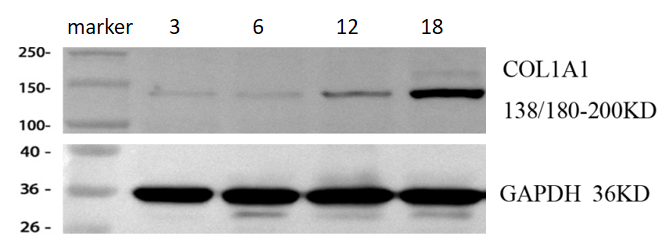
WB of COL1A1 (Cat# PA2140-1) in mouse cardiac tissues from 3-, 6-, 12-, and 18-month-old mice shows that COL1A1 levels clearly increase with age.

Excellent, submitted by on
SKU PA2140-1
Application Western Blot
Sample mouse cardiac tissue
Sample Processing Description Total protein was extracted from mouse cardiac tissues at 3, 6, 12, and 18 months of age.
Other Reagents RIPA lysis buffer, Protease inhibitor, Running buffer, Transfer buffer, Blocking buffer
Primary Antibody Collagen I/COL1A1 Antibody Picoband®
Primary Incubation 1:2000, overnight at 4 ℃
Secondary Antibody HRP Conjugated AffiniPure Goat Anti-Rabbit IgG (H+L) (BA1054)
Secondary Incubation 1:10000, 1 h in RT
Detection Substrate: ECL substrate, Image system: ChemiDoc MP
Results Summary This experiment aimed to investigate changes in COL1A1 expression in mouse cardiac tissues from 3-, 6-, 12-, and 18-month-old mice (representing young, middle-aged, middle-old, and old stages), and the results show that COL1A1 levels clearly increase with age.