Customer Testimonials

Peer Reviews from Real Labs

Browse peer-submitted results linked to specific products—ratings, images, and practical notes included. Contribute your own result to strengthen the evidence base and claim rewards after verification.

Video Interviews

See real workflows and decision points—what researchers tried, what worked, and why. Share your story in a short interview and claim rewards!

Get Interview Rewards

Filter by category, reactivity, and host to find the most relevant peer results.

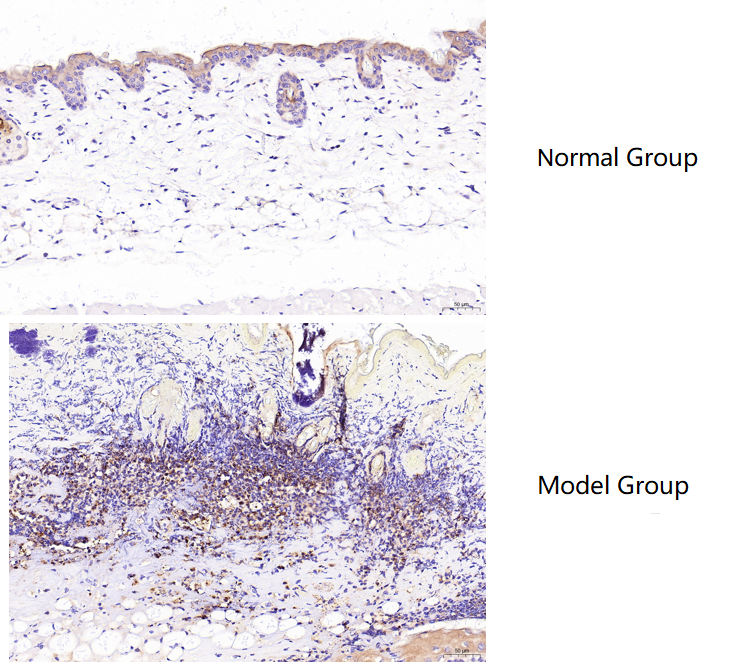
Using Myeloperoxidase/MPO Antibody Picoband® (PA1054) in IHC, MPO showed low expression in normal mouse skin and was markedly increased in burned skin, with clear staining and expected results.

Excellent, submitted by on
SKU PA1054
Application Immunohistochemistry
Sample mouse skin tissue
Sample Processing Description Male BALB/c mice aged 6–8 weeks were used. (1) Normal dorsal skin was collected from untreated mice. (2) Burn injury was induced on the dorsal skin using a burn device. After one week of housing, hair was removed with depilatory cream. Skin samples were collected from normal mice (dorsal skin) and burned mice (burned area), fixed in formalin for 72 hours, and embedded in paraffin for sectioning./td>
Other ReagentsTris-EDTA Antigen Retrieval Buffer (50×, pH 9.0), DAB Chromogen Kit
Primary Antibody Myeloperoxidase/MPO Antibody Picoband®
Primary Incubation 1:100, overnight at 4 ℃
Secondary Antibody Polymer Anti-Rabbit IgG–HRP Immunohistochemistry Kit
Detection Imaging system:Leica DM2500
Results Summary MPO (myeloperoxidase) is a lysosomal enzyme mainly present in neutrophils and monocytes/macrophages. Its core function is to generate reactive oxygen species, and therefore it plays a “double-edged sword” role in innate immune defense and inflammation-related diseases. MPO is present at very low levels in normal skin, but in burned skin, a large number of macrophages accumulate around the injured tissue, accompanied by a significant increase in MPO expression. Based on the immunohistochemical results, the staining is clear and the findings are consistent with expectations.

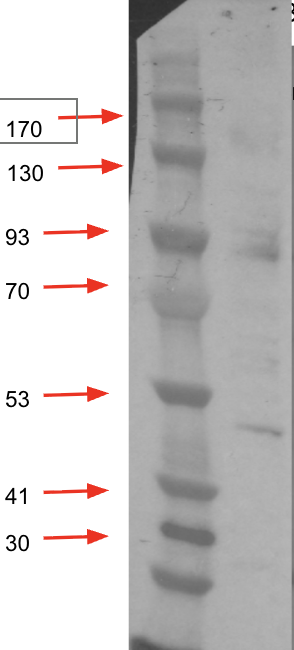
One major band was detected at the expected size (84 kDa), while multiple minor bands were detected in the egg lysate under the condition tested.

Excellent, submitted by on
SKU DZ41739
Application Western Blot
Sample egg lysate
Sample Processing Description Egg lysate was prepared and loaded onto a 10% polyacrylamide gel for electrophoresis.
Primary Antibody Anti-Purple sea urchin LOC581356 Antibody
Primary Incubation 1:2000, incubated overnight at 4°C.
Secondary Antibody Goat anti-rabbit IgG-HRP
Secondary Incubation 2 hour at room temperature.
Detection Chemiluminescent detection.
Results Summary One major band was detected at the expected size (84 kDa), while multiple minor bands were detected in the egg lysate under the condition tested.

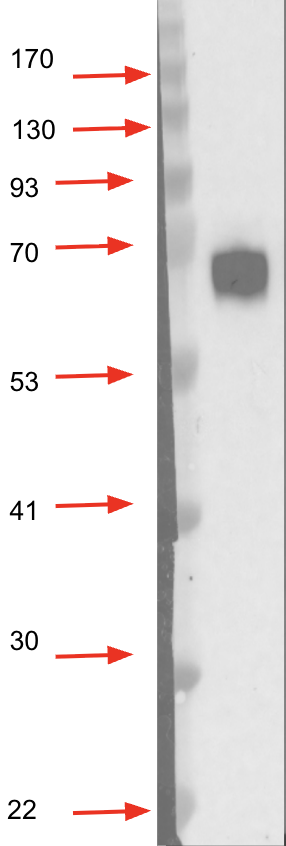
A single band was detected at the expected size of 60kDa in the gastrula stage lysate.

Excellent, submitted by on
SKU DZ41738
Application Western Blot
Sample Embryo lysate
Sample Processing Description Embryonic lysate was prepared and loaded onto a 10% polyacrylamide gel for electrophoresis.
Primary Antibody Anti-Purple sea urchin LOC584590 Antibody
Primary Incubation 1:2000, incubated overnight at 4°C.
Secondary Antibody Goat anti-rabbit IgG-HRP
Secondary Incubation 2 hour at room temperature.
Detection Chemiluminescent detection.
Results Summary A single band was detected at the expected size of 60kDa in the gastrula stage lysate.

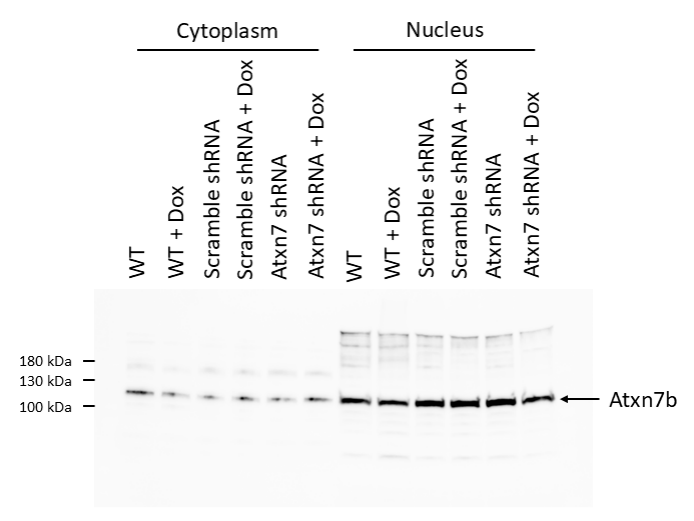
An shRNA targeting Atxn7 displayed a decrease in Atxn7 abondance showing specificity of the antibody.

Excellent, submitted by on
SKU DZ41648
Application Western Blot
Sample 3T3 Cell lysate
Sample Processing Description Nuclear and Cytoplasmic Extraction was performed on 3T3 cells with NE-PER kit by following the protocol and by adding protease and phosphatase inhibitors. Total protein was quantified with Qubit Protein Assay. Lysates were mixed with 4× Laemmli Sample Buffer and 2-mercaptoethanol, and then heated at 95°C for 5 min.
Primary Antibody Anti-Mouse Atxn7 Antibody
Primary Incubation Incubated in non-fat dry milk in TBST overnight at 4°C with antibody dilution at 1:1000 dilution
Secondary Antibody Goat anti-Rabbit IgG (H+L) Secondary Antibody, HRP
Secondary Incubation 1:4000 dilution in milk for 1 hour at room temperature
Other Reagents used SuperSignal West Pico PLUS Chemiluminescent Substrate
Detection Biorad ChemiDoc
Results Summary I was looking to target Atxn7 isoform 2, named as Atxn7b in the literature, and referenced as ENSMUST00000223714.2 on Ensembl. (It differs only on the C-terminus compared to Atxn7a, isoform 1). Atxn7 is mainly in the nucleus and is between 100-130 kDa. An shRNA targeting Atxn7 displayed a decrease in Atxn7 abondance showing specificity of the antibody.

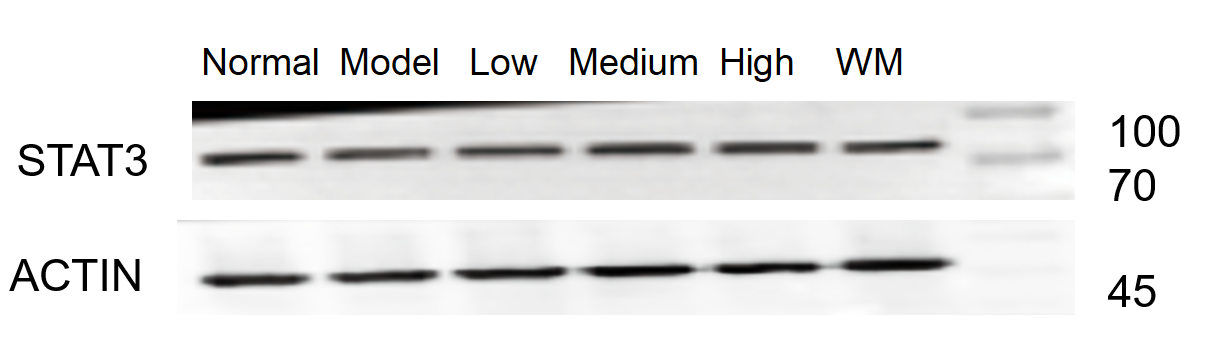
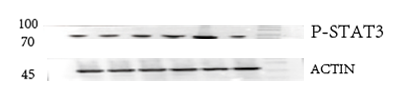
This antibody is highly specific and efficient, suitable for detecting STAT3 protein in rat colon by Western blot, with clear results.

Excellent, submitted by on
SKU M00007
Application Western Blot
Sample rat colon tissue
Sample Processing Description RIPA lysis buffer with protease inhibitor PMSF (100:1) was used to lyse the sample for 10 minutes, followed by centrifugation at 12,000 rpm for 15 minutes. The supernatant was mixed with 5× loading buffer, denatured at 100°C for 10 minutes, and then loaded onto SDS-PAGE.
Other Reagents Blocking buffer
Primary Antibody Phospho-STAT3 (Y705) Rabbit Monoclonal Antibody
Primary Incubation 1:1000, overnight at 4 ℃
Secondary Antibody HRP Conjugated AffiniPure Goat Anti-Rabbit IgG (H+L)
Secondary Incubation 1:5000, 1 hour in room temperature
Detection Substrate: ECL, Imaging system:ChemiDoc MP
Results Summary The figure shows Western blot results of the target protein STAT3 and the loading control Actin in the colon of normal rats, model rats, low/medium/high dose Chinese medicine treatment groups, and Western medicine treatment group. No differences were observed between the groups. The target bands are clear and distinct, and the experimental results are satisfactory.

Western blot analysis of Drosophila ovaries from three fly strains showed comparable Phb2 protein levels across all samples. Consistent bands at 30 kDa confirmed expected molecular weight, with β-Actin used as a loading control to verify equal protein loa

Excellent, submitted by on
SKU DZ41317
Application Western Blot
Sample Drosophila Ovaries
Sample Processing Description Dissection, Homogenization, Sample boiling in 1X Lamelli, SDS-PAGE, Standard Western Blotting
Primary Antibody Anti-Fruit fly Phb2 Antibody
Primary Incubation 1:1000 in 5% BSA and 0.1% PBST. Either 2 hours at RT or Overnight at 4 Degrees
Secondary Antibody 1:10000 Anti-rabbit/mouse IgG horseradish peroxidase-conjugated
Secondary Incubation 1 hour at room temperature
Detection Biorad ChemiDoc
Results Summary Western blot analysis of Drosophila ovaries from three fly strains showed comparable Phb2 protein levels across all samples. Consistent bands at 30 kDa confirmed expected molecular weight, with β-Actin used as a loading control to verify equal protein loading.

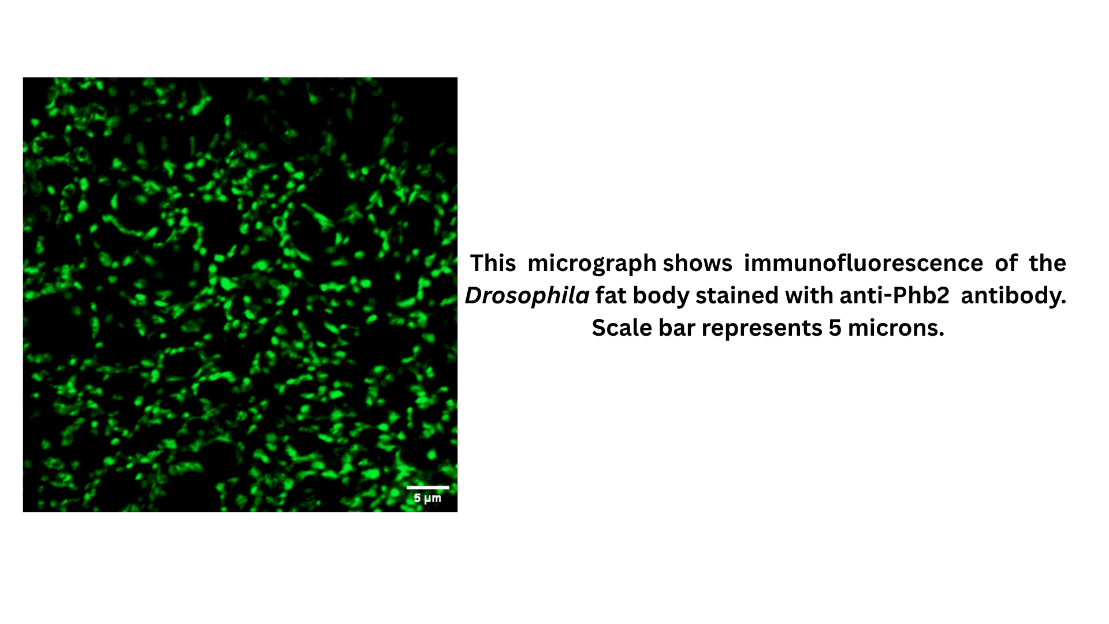
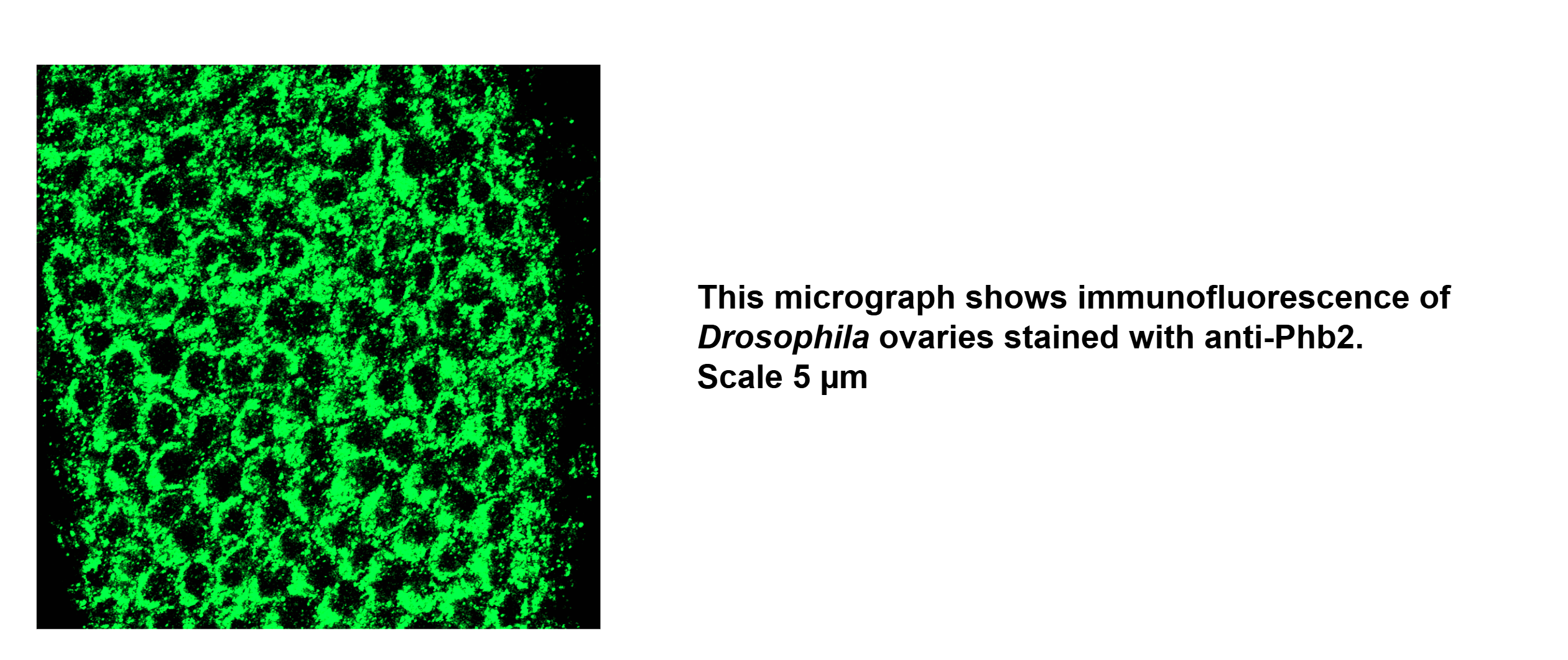
Drosophila fatbody showed good staining of Phb2.

Excellent, submitted by on
SKU DZ41317
Application Immunofluorescence
Sample Drosophila Fat body and Ovaries
Sample Processing Description Dissection, Fixation in 4%PFA, Permeabilization in PBS-TX, Blocking, Primary, Washes,Secondary, Washes,Nuclei Staining, Slide Preparation
Primary Antibody Anti-Fruit fly Phb2 Antibody
Primary Incubation 1:200 in 2%BSA and 0.5% PBS-TX for Ovaries, 1:100 in 2%BSA and 0.1% PBS-TX for Fat body
Secondary Antibody 1:1000 Anti-Rabbit/Mouse Alexa Fluor 488/Cy3/Cy5
Secondary Incubation 1 hour at room temperature
Detection Zeiss LSM 900 Confocal Microscope with Airyscan 2
Results Summary Drosophila fatbody showed good staining of Phb2.

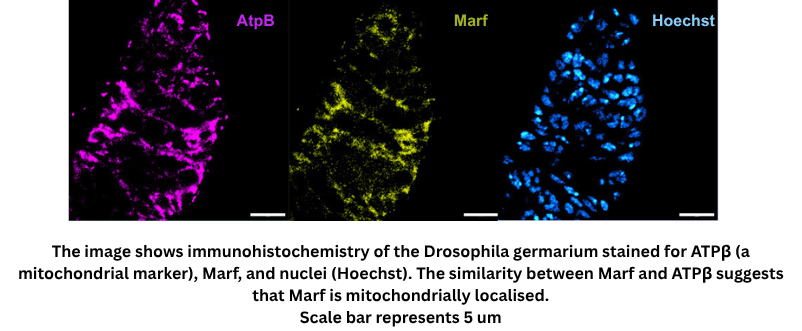
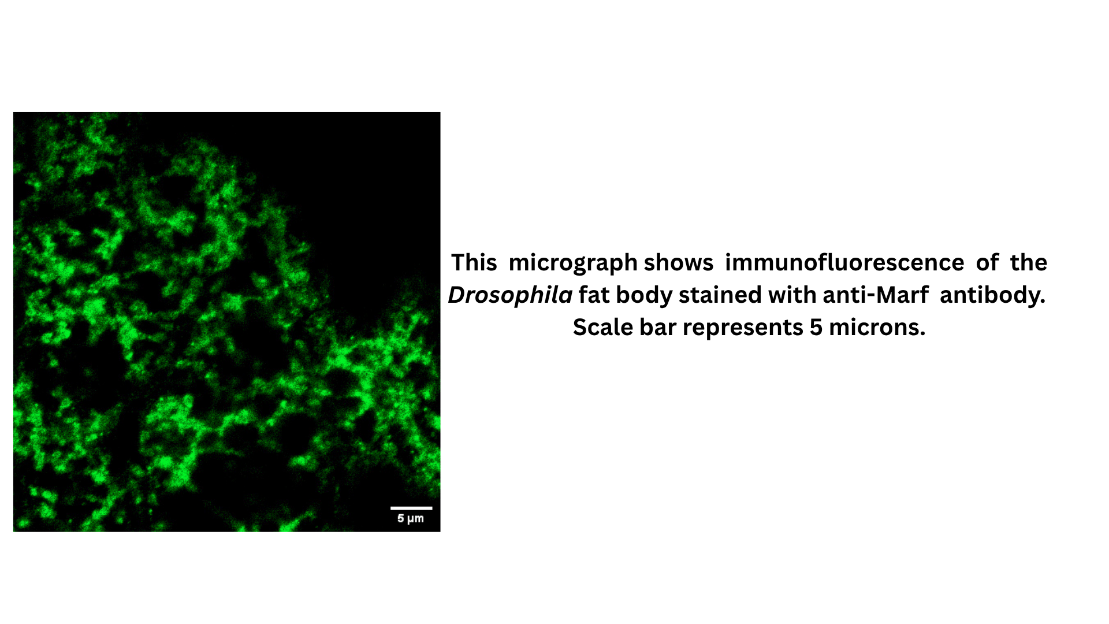
This was only optimization experiment and still needs validation through necessary experiments.

Excellent, submitted by on
SKU DZ41315
Application Immunofluorescence
Sample Drosophila Fat body and Ovaries
Sample Processing Description Dissection, Fixation in 4%PFA, Permeabilization in PBS-TX, Blocking, Primary, Washes,Secondary, Washes,Nuclei Staining, Slide Preparation
Primary Antibody Anti-Fruit fly Marf Antibody
Primary Incubation 1:200 in 2%BSA and 0.5% PBS-TX for Ovaries, 1:100 in 2%BSA and 0.1% PBS-TX for Fat body
Secondary Antibody 1:1000 Anti-Rabbit/Mouse Alexa Fluor 488/Cy3/Cy5
Secondary Incubation 1 hour at room temperature
Detection Zeiss LSM 900 Confocal Microscope with Airyscan 2
Results Summary This was only optimization experiment and still needs validation through necessary experiments.

This antibody is highly efficient and specific, suitable for Western blot detection of STAT3 (Phospho-Y705) protein in rat colon tissue, with only minor nonspecific bands observed.

Excellent, submitted by on
SKU P00007-2
Application Western Blot
Sample rat colon tissue
Sample Processing Description RIPA lysis buffer with protease inhibitor PMSF (100:1) was used to lyse the sample for 10 minutes, followed by centrifugation at 12,000 rpm for 15 minutes. The supernatant was mixed with 5× loading buffer, denatured at 100°C for 10 minutes, and then loaded onto SDS-PAGE.
Other Reagents Blocking buffer
Primary Antibody Phospho-STAT3 (Y705) Rabbit Monoclonal Antibody
Primary Incubation 1:1000, overnight at 4 ℃
Secondary Antibody HRP Conjugated AffiniPure Goat Anti-Rabbit IgG (H+L)
Secondary Incubation 1:5000, 1 hour in room temperature
Detection Substrate: ECL, Imaging system:ChemiDoc MP
Results Summary The figure shows representative Western blot results of the target protein STAT3 (Phospho-Y705) and the internal control Actin in rat colon tissue from the normal control group, disease model group, low-, medium-, and high-dose traditional Chinese medicine–treated groups, and the western medicine–treated group. The target bands are clear and well defined, and the experimental results are satisfactory.

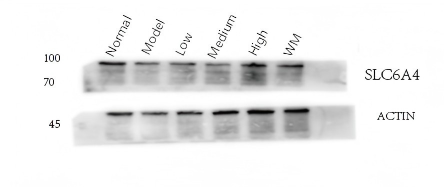
This antibody is highly efficient and specific, suitable for Western blot detection of SLC6A4 protein in rat colon tissue, with only slight nonspecific bands observed.

Excellent, submitted by on
SKU PB9438
Application Western Blot
Sample rat colon tissue
Sample Processing Description RIPA lysis buffer with protease inhibitor PMSF (100:1) was used to lyse the sample for 10 minutes, followed by centrifugation at 12,000 rpm for 15 minutes. The supernatant was mixed with 5× loading buffer, denatured at 100°C for 10 minutes, and then loaded onto SDS-PAGE.
Other Reagents Blocking buffer
Primary Antibody Serotonin transporter/SLC6A4 Antibody Picoband®
Primary Incubation 1:1000, overnight at 4 ℃
Secondary Antibody HRP Conjugated AffiniPure Goat Anti-Rabbit IgG (H+L)
Secondary Incubation 1:5000, 1 hour in room temperature
Detection Substrate: ECL, Imaging system:ChemiDoc MP
Results Summary The figure shows representative Western blot results of the target protein SLC6A4 and the internal control Actin in rat colon tissue from the normal control group, disease model group, low-, medium-, and high-dose traditional Chinese medicine–treated groups, and the western medicine–treated group. The target bands are clear and well defined, and the experimental results are satisfactory.