Customer Testimonials

Peer Reviews from Real Labs

Browse peer-submitted results linked to specific products—ratings, images, and practical notes included. Contribute your own result to strengthen the evidence base and claim rewards after verification.

Video Interviews

See real workflows and decision points—what researchers tried, what worked, and why. Share your story in a short interview and claim rewards!

Get Interview Rewards

Filter by category, reactivity, and host to find the most relevant peer results.

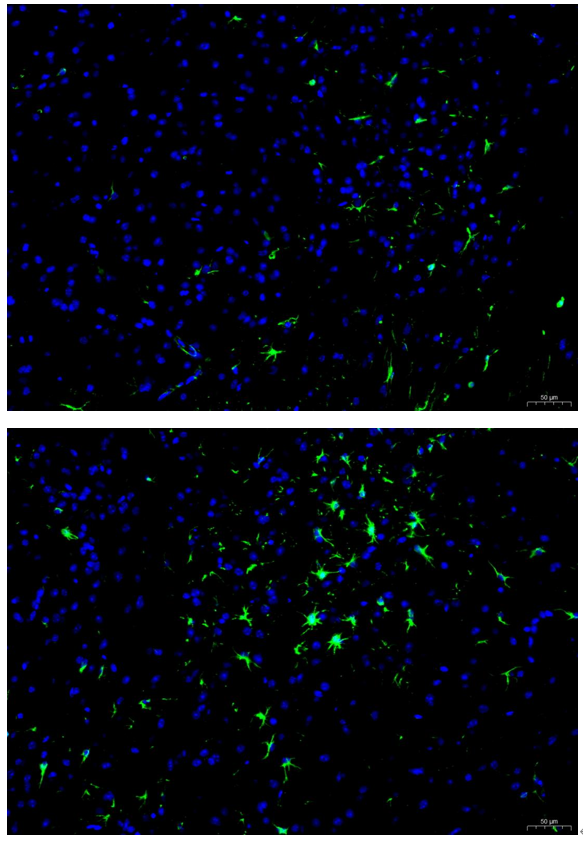
Immunofluorescence using Anti-GFAP antibody (MA1045) clearly labeled protoplasmic astrocytes in the spinal cord gray matter, showing dense, bushy processes surrounding neurons, with excellent specificity and staining.

Excellent, submitted by on
SKU MA1045
Application Immunofluorescence
Sample rat spinal tissue
Sample Processing Description Paraffin-embedded transverse sections of rat spinal cord were prepared after formalin fixation.
Other ReagentsTris-EDTA Antigen Retrieval Buffer (50×, pH 9.0), DAPI
Primary Antibody GFAP Antibody (Monoclonal, G-A-5)
Primary Incubation 1:200, overnight at 4 ℃
Secondary Antibody Goat Anti-Mouse IgG (H+L) Secondary Antibody, Fluoro488 Conjugated
Secondary Incubation 45 minutes in 37℃
Detection Imaging system:Leica DM2500
Results Summary GFAP is a marker of astrocytes. In this experiment, immunostaining for GFAP was used to label astrocytes in the gray matter of the spinal cord to observe their distribution, density, and morphology. The results showed that the labeled protoplasmic astrocytes in the gray matter had short, thick, and highly branched processes with rough surfaces, forming a dense “bushy” network tightly surrounding neuronal cell bodies and synapses, consistent with theoretical expectations and demonstrating excellent staining.

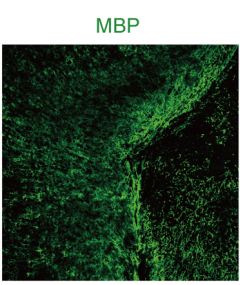
BOSTER’s rabbit anti-MBP antibody (catalog BA0094) exhibits high specificity and low background, enabling sensitive detection of demyelination and myelin regeneration processes, greatly facilitating this study.

Excellent, submitted by on
SKU PA1050
Application Immunofluorenscence
Sample Mouse spinal cord
Sample Processing Description Mouse spinal cord fixed with 2% paraformaldehyde for 6–8 hours, dehydrated in 30% sucrose, embedded in OCT, and sectioned using a cryostat.
Primary Antibody Anti-MBP9 antibody
Primary Incubation 1:100, overnight at 4 ℃
Blocking Agent 3% BSA
Secondary Antibody Anti-rabbit IgG-CY3 conjugated antibody.
Secondary Incubation Incubate at room temperature for 1 hour
Detection Immunofluorescence images were acquired using a confocal laser microscope (Leica SP8, Zeiss LSM 880 Airyscan).
Results Summary BOSTER’s rabbit anti-MBP antibody (catalog BA0094) has high specificity and low background, enabling sensitive detection of demyelination and myelin regeneration processes, greatly facilitating this study.

Accurate localization and good imaging performance.

Excellent, submitted by on
SKU PB9093
Application Immunofluorenscence
Sample Mouse 4T1 cell xenograft tumor
Sample Processing Description Fixed in 4% paraformaldehyde for 48 hours, followed by paraffin embedding and sectioning.
Primary Incubation 1:200, overnight at 4 ℃
Blocking Agent Goat serum
Secondary Antibody DyLight 550-conjugated goat anti-rabbit antibody.
Secondary Incubation Incubate at room temperature for 1 hour
Detection Laser confocal microscopy
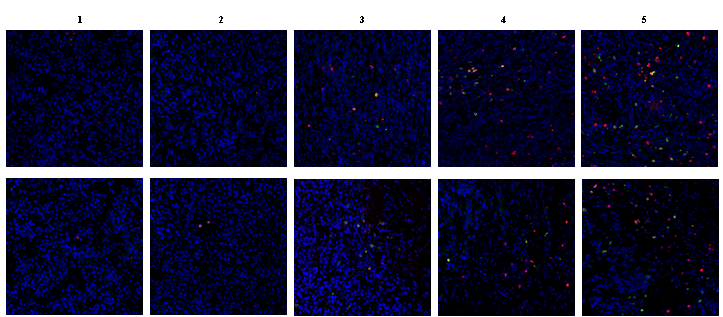
Results Summary The delivery time for antibodies is impressively fast — I usually receive the products within a week, which saves me a lot of valuable time. Both the pre-sales and after-sales support are efficient and reliable. Since my background is in chemistry, I often consulted Boster’s technical specialists about various details of biological experiments. They were always patient and thorough in their explanations, helping me avoid many detours during my experiments. Most importantly, these antibodies offer excellent value for money — they have strong binding performance, produce clear imaging results, and ensure a high experiment success rate, which has provided a solid foundation for my research.