Customer Testimonials

Peer Reviews from Real Labs

Browse peer-submitted results linked to specific products—ratings, images, and practical notes included. Contribute your own result to strengthen the evidence base and claim rewards after verification.

Video Interviews

See real workflows and decision points—what researchers tried, what worked, and why. Share your story in a short interview and claim rewards!

Get Interview Rewards

Filter by category, reactivity, and host to find the most relevant peer results.

WB analysis using Anti-GH antibody (A00851-2) in mouse hippocampal tissue revealed a specific band at the expected molecular weight with negligible non-specific signals.

Excellent, submitted by on
SKU A00851-2
Application Western Blot
Sample mouse hippocampal tissue
Sample Processing Description Total protein was extracted from the left hippocampus of normal mouse brain.
Other Reagents RIPA lysis buffer, Protease inhibitor, Electrophoresis buffer, Transfer buffer, Blocking buffer
Primary Antibody GH1 Antibody Picoband®
Primary Incubation 1:4000, overnight at 4 ℃
Secondary Antibody HRP-conjugated goat anti-rabbit IgG
Secondary Incubation 1:10000, 1h in RT
Detection Substrate: ECL substrate; Image system: ChemiDoc MP
Results Summary Growth hormone (GH) serves as a central integrative signal that coordinates growth, metabolism, and tissue repair in response to changes in nutritional status. It is not only the primary driver of linear growth during puberty but also plays a critical role throughout life in maintaining muscle mass, bone strength, and metabolic flexibility. In this study, hippocampal tissues from two normal mouse brains were used to evaluate the performance of the GH antibody. The results showed a band at the expected position with good specificity, indicating that the antibody performs well in WB applications.

The ELAVL1 antibody (A00736-1) produced a clear specific band at the expected size in WB using rat colon and colon cancer tissue samples, consistent with the expected expression pattern.

Excellent, submitted by on
SKU A00736-1
Application Western Blot
Sample HepG2 subcutaneous xenograft in nude mice
Sample Processing Description ① normal rat colon tissue; ② rat colon cancer model tissue; total protein extracted.
Other Reagents RIPA lysis buffer, Protease inhibitor, Electrophoresis buffer, Transfer buffer, Blocking buffer
Primary Antibody HuR/ELAVL1 Antibody Picoband®
Primary Incubation 1:2000, overnight at 4 ℃
Secondary Antibody HRP-conjugated goat anti-rabbit IgG
Secondary Incubation 1:10000, 30 min in 37℃
Detection Substrate: ECL substrate; Image system: ChemiDoc MP
Results Summary HUR protein is an RNA-binding protein that plays multiple key roles in gene expression regulation. It is essential in maintaining cellular homeostasis, stress response, inflammation, and the development and progression of diseases, especially cancer. In normal tissues, it is expressed at moderate levels, maintaining a delicate balance of cell proliferation, stress response, inflammation, and neural functions, while in tumors it is highly overexpressed, driving malignant progression. The experimental results are consistent with these observations.

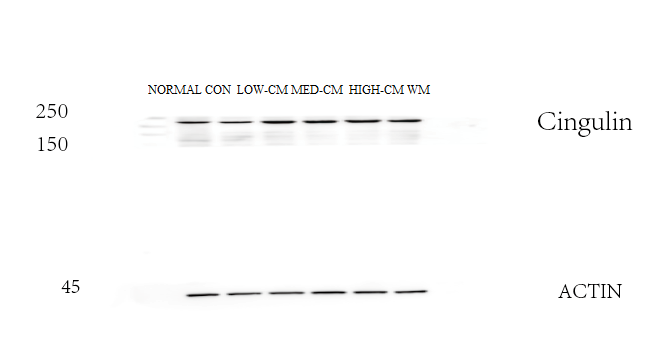
WB results showed that Cingulin/CGN (A02373-1) was downregulated in the rat colon model group and restored after Chinese medicine treatment, with the high-dose group showing the best effect, and the target bands were clear and specific.

Excellent, submitted by on
SKU A02373-1
Application Western Blot
Sample rat colon tissue
Sample Processing Description Rat colon tissues were lysed in RIPA buffer containing PMSF (100:1) for 10 min, centrifuged at 12,000 rpm for 15 min, and the supernatant was mixed with 5× loading buffer, denatured at 100°C for 10 min, and then loaded onto SDS-PAGE.
Other Reagents5% non-fat milk
Primary Antibody Cingulin/CGN Antibody
Primary Incubation 1:1000, overnight at 4 ℃
Secondary Antibody HRP Conjugated AffiniPure Goat Anti-Rabbit IgG (H+L) (BA1054)
Secondary Incubation 1:5000, 1 h in RT
Detection Substrate: ECL substrate, Image system:ChemiDoc MP
Results Summary The figure shows WB results of Cingulin/CGN and the internal control Actin in rat colon across different groups; expression was decreased in the model group and restored after Chinese medicine treatment, with the high-dose group showing the best effect, and the target bands were clear and specific, indicating satisfactory results.

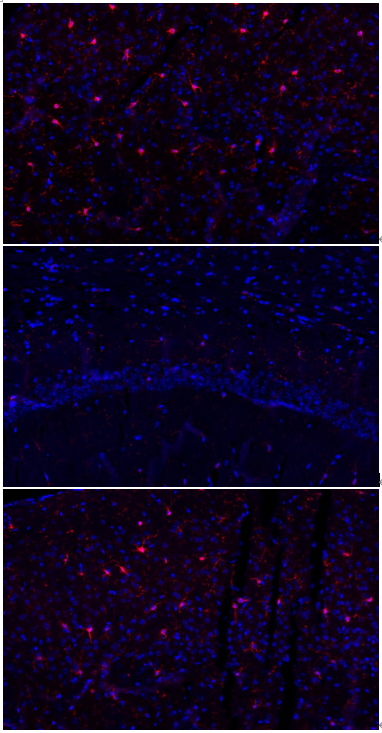
In the IF experiment using Anti-IBA-1 antibody (Cat# M01394-4), the antibody clearly and specifically labeled microglial cells in mouse cerebral infarction tissue, showing distinct staining and well-defined cellular morphology.

Excellent, submitted by on
SKU M01394-4
Application Immunofluorescence
Sample mouse brain tissue
Sample Processing Description Mouse cerebral infarction model; brain tissues were collected, fixed in formaldehyde for 48 hours, and then sagittally paraffin-embedded.
Other ReagentsGoat serum, DAPI Staining Solution, Antifade fluorescence mounting medium.
Primary Antibody Iba1 Rabbit Monoclonal Antibody
Primary Incubation 1:100, overnight at 4 ℃
Secondary Antibody Goat Anti-Rabbit IgG (H+L) Secondary Antibody, Fluoro594 Conjugated (BA1142, Boster)
Secondary Incubation 45 min at 37℃
Detection Imaging system:Leica DMi3000
Results Summary IBA-1 is a well-established marker of microglia in the nervous system. Microglia are the primary immune effector cells in the central nervous system and respond rapidly to CNS injury by proliferating, upregulating or re-expressing MHC antigens, migrating, and adopting a phagocyte-like morphology. In this study, IBA-1 was used to label microglia in cerebral infarction samples, showing clear staining and accurate cellular morphology.

Western blot analysis of Drosophila ovaries from three fly strains showed comparable Phb2 protein levels across all samples. Consistent bands at 30 kDa confirmed expected molecular weight, with β-Actin used as a loading control to verify equal protein loa

Excellent, submitted by on
SKU DZ41317
Application Western Blot
Sample Drosophila Ovaries
Sample Processing Description Dissection, Homogenization, Sample boiling in 1X Lamelli, SDS-PAGE, Standard Western Blotting
Primary Antibody Anti-Fruit fly Phb2 Antibody
Primary Incubation 1:1000 in 5% BSA and 0.1% PBST. Either 2 hours at RT or Overnight at 4 Degrees
Secondary Antibody 1:10000 Anti-rabbit/mouse IgG horseradish peroxidase-conjugated
Secondary Incubation 1 hour at room temperature
Detection Biorad ChemiDoc
Results Summary Western blot analysis of Drosophila ovaries from three fly strains showed comparable Phb2 protein levels across all samples. Consistent bands at 30 kDa confirmed expected molecular weight, with β-Actin used as a loading control to verify equal protein loading.

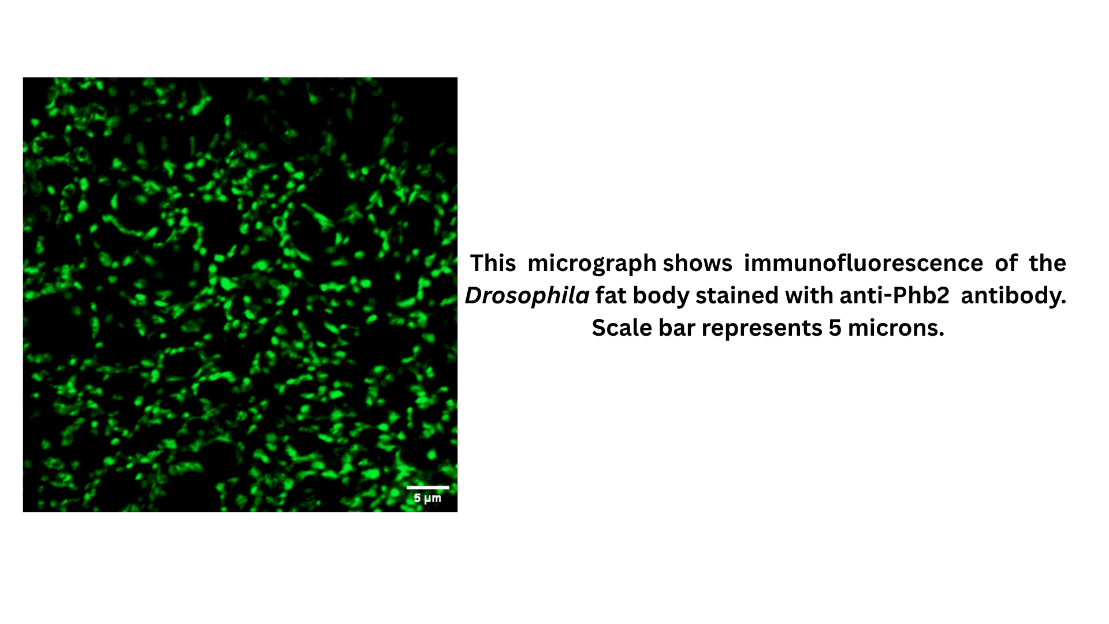
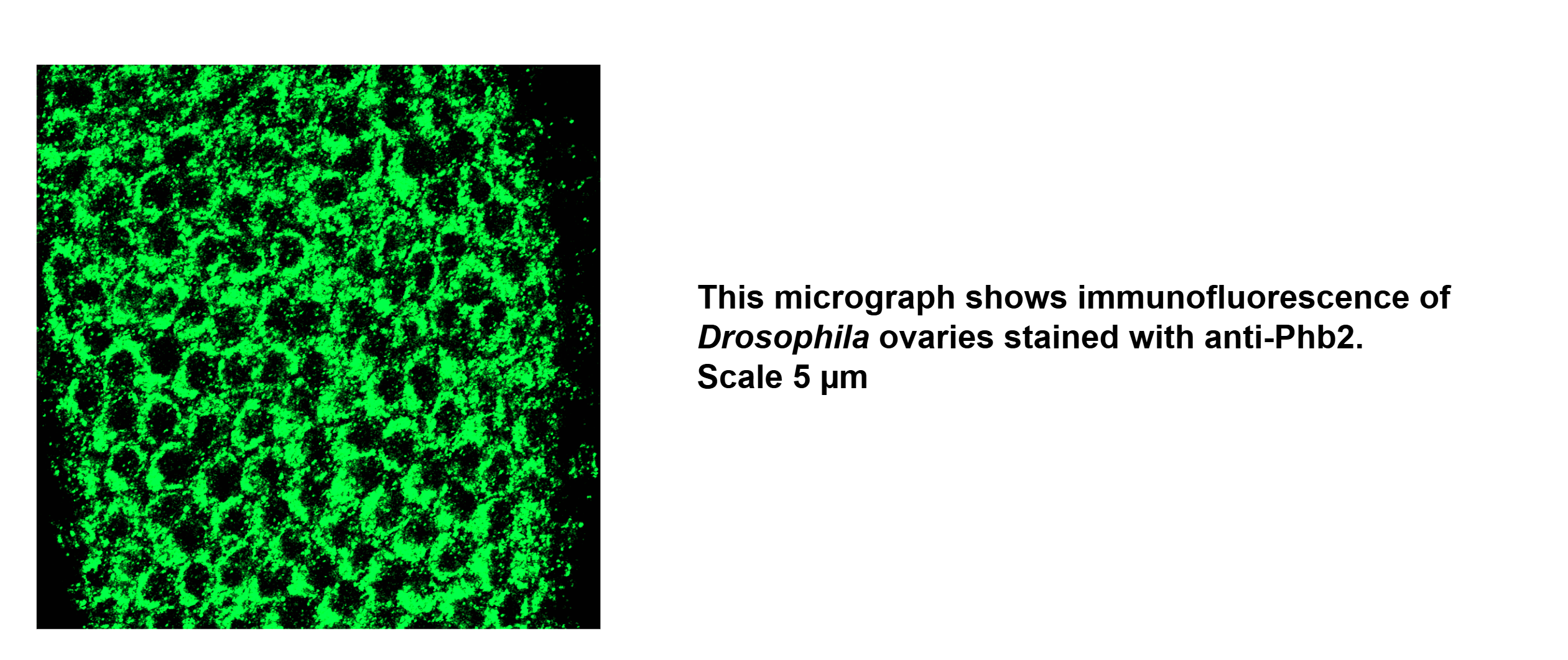
Drosophila fatbody showed good staining of Phb2.

Excellent, submitted by on
SKU DZ41317
Application Immunofluorescence
Sample Drosophila Fat body and Ovaries
Sample Processing Description Dissection, Fixation in 4%PFA, Permeabilization in PBS-TX, Blocking, Primary, Washes,Secondary, Washes,Nuclei Staining, Slide Preparation
Primary Antibody Anti-Fruit fly Phb2 Antibody
Primary Incubation 1:200 in 2%BSA and 0.5% PBS-TX for Ovaries, 1:100 in 2%BSA and 0.1% PBS-TX for Fat body
Secondary Antibody 1:1000 Anti-Rabbit/Mouse Alexa Fluor 488/Cy3/Cy5
Secondary Incubation 1 hour at room temperature
Detection Zeiss LSM 900 Confocal Microscope with Airyscan 2
Results Summary Drosophila fatbody showed good staining of Phb2.

This was only optimization experiment and still needs validation through necessary experiments.

Excellent, submitted by on
SKU DZ41315
Application Immunofluorescence
Sample Drosophila Fat body and Ovaries
Sample Processing Description Dissection, Fixation in 4%PFA, Permeabilization in PBS-TX, Blocking, Primary, Washes,Secondary, Washes,Nuclei Staining, Slide Preparation
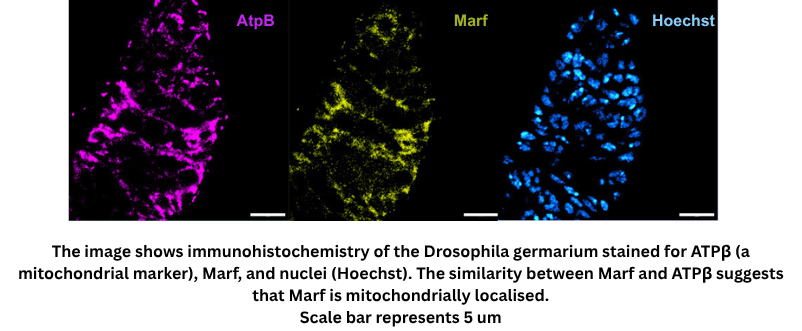
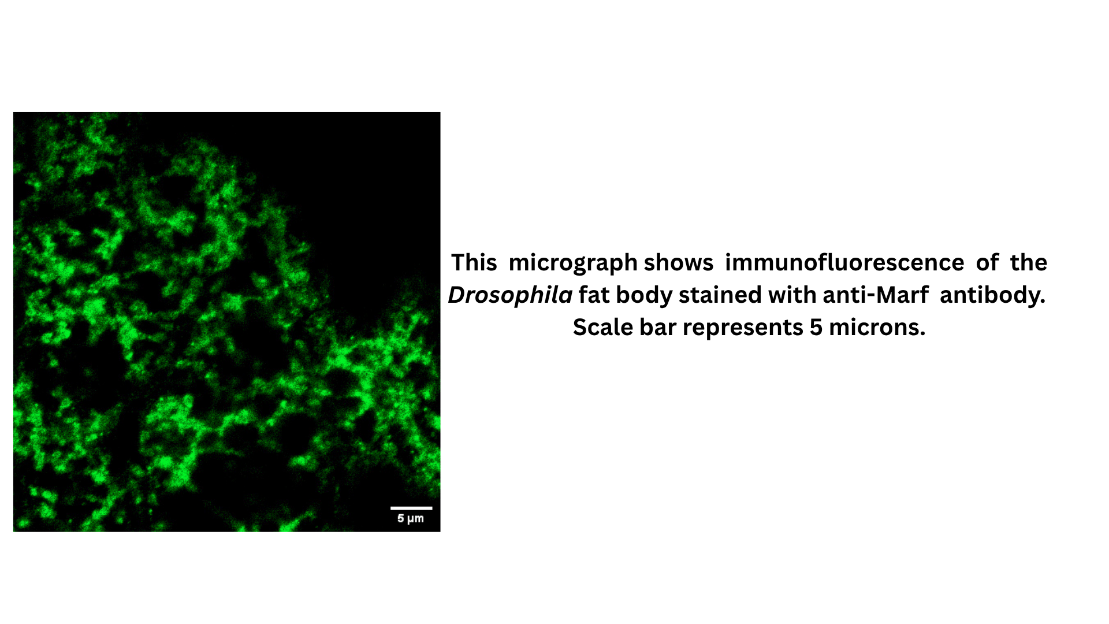
Primary Antibody Anti-Fruit fly Marf Antibody
Primary Incubation 1:200 in 2%BSA and 0.5% PBS-TX for Ovaries, 1:100 in 2%BSA and 0.1% PBS-TX for Fat body
Secondary Antibody 1:1000 Anti-Rabbit/Mouse Alexa Fluor 488/Cy3/Cy5
Secondary Incubation 1 hour at room temperature
Detection Zeiss LSM 900 Confocal Microscope with Airyscan 2
Results Summary This was only optimization experiment and still needs validation through necessary experiments.

Antibody Optimized and validated

Excellent, submitted by on
SKU DZ41314
Application Western Blot
Sample Drosophila Ovaries
Sample Processing Description Dissection, Homogenization, Sample boiling in 1X Lamelli, SDS-PAGE, Standard Western Blotting
Primary Antibody Anti-Fruit Fly Drp1 Antibody
Primary Incubation 1:1000 in 5% BSA and 0.1% PBST Either 2 hours at RT or Overnight at 4 Degrees
Secondary Antibody 1:10000 Anti-rabbit/mouse IgG horseradish peroxidase-conjugated
Secondary Incubation 1 hour at room temperature
Other Reagents used ECL Clarity Substrate and enzyme for Chemiluminescence
Detection Biorad ChemiDoc
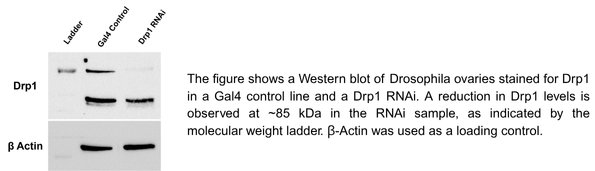
Results Summary In Drosophila ovaries, loss of Drp1 function was confirmed. Western blot analysis validated Drp1 knockdown, showing reduced Drp1 protein levels (~85 kDa) in ovaries expressing Drp1 miRNA, with β-Actin serving as a loading control.

Antibody Optimized and validated

Excellent, submitted by on
SKU DZ41314
Application Immunofluorescence
Sample Drosophila Fat body
Sample Processing Description Dissection, Fixation in 4%PFA, Permeabilization in PBS-TX, Blocking, Primary, Washes, Secondary, Washes, Nuclei Staining, Slide Preparation
Primary Antibody Anti-Fruit Fly Drp1 Antibody
Primary Incubation 1:100 in 2%BSA and 0.1% PBS-TX for Fat body
Secondary Antibody 1:1000 Anti-Rabbit/Mouse Alexa Fluor 488/Cy3/Cy5
Secondary Incubation 1 hour at room temperature
Detection Zeiss LSM 900 Confocal Microscope with Airyscan 2
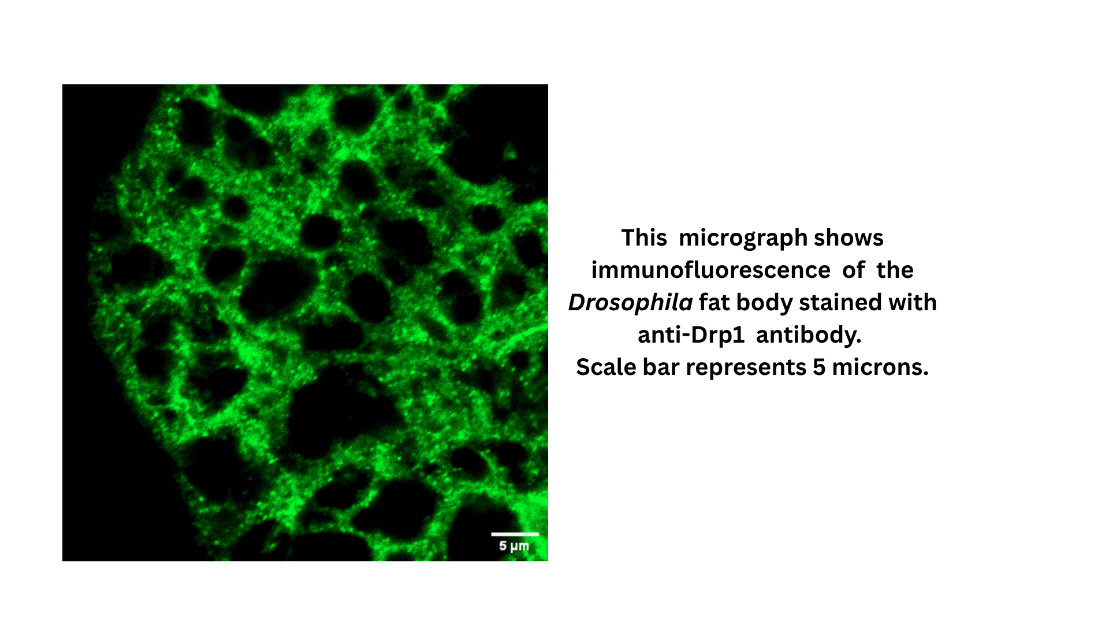
Results Summary In Drosophila fatbody, Drp1 was seen as punctate structures, as expected from the literature on mitochondria.

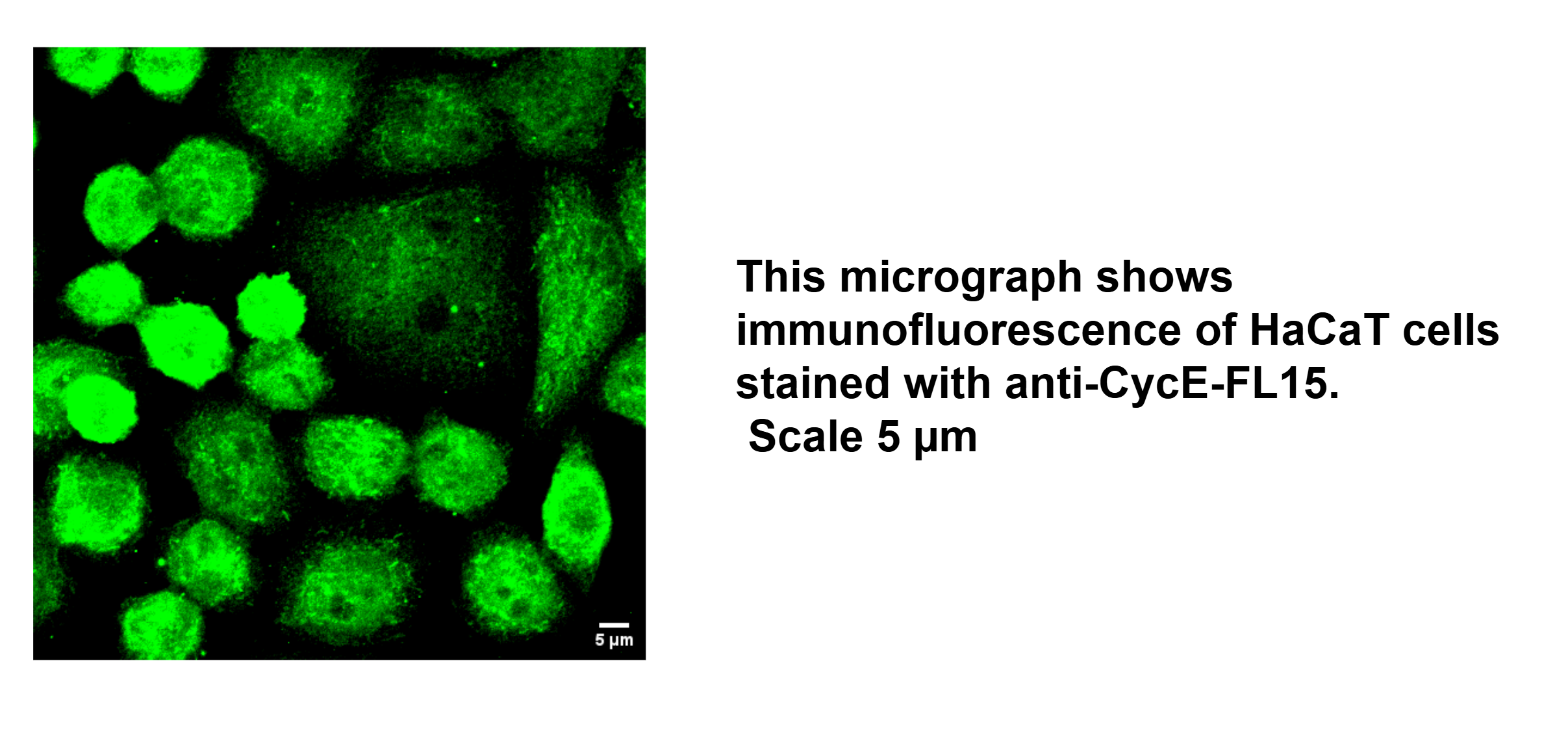
A strong nuclear signal for Cyclin E was observed in proliferating cells by IF . Results were reproducible and matched expected patterns.

Excellent, submitted by on
SKU DZ41312
Application Immunofluorescence
Sample Human HaCaT cell
Sample Processing Description Cells were fixed in 4% paraformaldehyde for 15 minutes at room temperature, permeabilized with 0.1% Triton X-100 for 10 minutes and blocked in 1% BSA for 1 hour before incubation with the primary antibody.
Primary Antibody Human CCNE1 Antibody
Primary Incubation 1:100-1:200, overnight at 4 ℃
Secondary Antibody Goat anti-rabbit IgG conjugated to Alexa Fluor 488
Secondary Incubation 1:1000, 1-2 hours in room temperature
Other Reagents used PBS, 0.1% Triton X-100, 1% BSA, DAPI for nuclear counterstaining
Detection Fluorescence microscopy using Alexa Fluor 488 (excitation 488 nm, emission 519 nm) Using Confocal Microscope Zeiss LSM 900
Results Summary The CyclinE-FL antibody (DZ41312) worked in IF application using human cell lines. In IF, the nuclear localization of Cyclin E matched the known expression pattern with good specificity. A fluorescent secondary antibody (Alexa Fluor 488) was used for detection and gave clear signal. Overall, a reliable antibody for full length Cyclin E detection in human cell systems.