Customer Testimonials

Peer Reviews from Real Labs

Browse peer-submitted results linked to specific products—ratings, images, and practical notes included. Contribute your own result to strengthen the evidence base and claim rewards after verification.

Video Interviews

See real workflows and decision points—what researchers tried, what worked, and why. Share your story in a short interview and claim rewards!

Get Interview Rewards

Filter by category, reactivity, and host to find the most relevant peer results.

WB analysis using Anti-CDK2 antibody (M00166) in mouse hippocampal tissue showed a specific band at the expected size with low background, indicating good performance.

Excellent, submitted by on
SKU M00166
Application Western Blot
Sample mouse hippocampal tissue
Sample Processing Description Total protein was extracted from the left hippocampus of normal mouse brain.
Other Reagents RIPA lysis buffer, Protease inhibitor, Electrophoresis buffer, Transfer buffer, Blocking buffer
Primary Antibody CDK2 Rabbit Monoclonal Antibody
Primary Incubation 1:3000, overnight at 4 ℃
Secondary Antibody HRP-conjugated goat anti-rabbit IgG
Secondary Incubation 1:10000, 1 hour in RT
Detection Substrate: ECL substrate; Image system: ChemiDoc MP
Results Summary CDK2 (cyclin-dependent kinase 2) plays a central role in driving the cell cycle and serves as a key node integrating proliferative signaling, DNA damage response, and chemotherapy stress. In this study, hippocampal tissues from two normal mouse brains were used to evaluate the performance of the CDK2 antibody. The results showed a specific band at the expected molecular weight with good signal quality, indicating reliable antibody performance.

WB analysis using Anti-GH antibody (A00851-2) in mouse hippocampal tissue revealed a specific band at the expected molecular weight with negligible non-specific signals.

Excellent, submitted by on
SKU A00851-2
Application Western Blot
Sample mouse hippocampal tissue
Sample Processing Description Total protein was extracted from the left hippocampus of normal mouse brain.
Other Reagents RIPA lysis buffer, Protease inhibitor, Electrophoresis buffer, Transfer buffer, Blocking buffer
Primary Antibody GH1 Antibody Picoband®
Primary Incubation 1:4000, overnight at 4 ℃
Secondary Antibody HRP-conjugated goat anti-rabbit IgG
Secondary Incubation 1:10000, 1h in RT
Detection Substrate: ECL substrate; Image system: ChemiDoc MP
Results Summary Growth hormone (GH) serves as a central integrative signal that coordinates growth, metabolism, and tissue repair in response to changes in nutritional status. It is not only the primary driver of linear growth during puberty but also plays a critical role throughout life in maintaining muscle mass, bone strength, and metabolic flexibility. In this study, hippocampal tissues from two normal mouse brains were used to evaluate the performance of the GH antibody. The results showed a band at the expected position with good specificity, indicating that the antibody performs well in WB applications.

WB analysis using Anti-ATP1A1 antibody (M00956) in HepG2 cells showed a clear and specific band at the expected molecular weight, with minimal background, demonstrating excellent antibody performance.

Excellent, submitted by on
SKU M00956
Application Western Blot
Sample human adrenocortical carcinoma tissue
Sample Processing Description Total protein was extracted from clinically collected human adrenocortical carcinoma tissue.
Other Reagents RIPA lysis buffer, Protease inhibitor, Electrophoresis buffer, Transfer buffer, Blocking buffer
Primary Antibody Sodium Potassium ATPase ATP1A1 Rabbit Monoclonal Antibody
Primary Incubation 1:5000, overnight at 4 ℃
Secondary Antibody HRP-conjugated goat anti-rabbit IgG
Secondary Incubation 1:10000, 1h in RT
Detection Substrate: ECL substrate; Image system: ChemiDoc MP
Results Summary ATP1A1 encodes the α1 catalytic subunit of the Na⁺/K⁺-ATPase, whose core physiological function is to maintain the transmembrane sodium and potassium electrochemical gradient, serving as the basis for nearly all vital processes such as neuronal excitability, renal reabsorption, and muscle contraction. In this study, normally cultured HepG2 cells (without any drug treatment) were used to validate the quality of the ATP1A1 antibody. The results showed a clear target band at the correct position with clean background, indicating that the antibody performs well.

The ELAVL1 antibody (A00736-1) produced a clear specific band at the expected size in WB using rat colon and colon cancer tissue samples, consistent with the expected expression pattern.

Excellent, submitted by on
SKU A00736-1
Application Western Blot
Sample HepG2 subcutaneous xenograft in nude mice
Sample Processing Description ① normal rat colon tissue; ② rat colon cancer model tissue; total protein extracted.
Other Reagents RIPA lysis buffer, Protease inhibitor, Electrophoresis buffer, Transfer buffer, Blocking buffer
Primary Antibody HuR/ELAVL1 Antibody Picoband®
Primary Incubation 1:2000, overnight at 4 ℃
Secondary Antibody HRP-conjugated goat anti-rabbit IgG
Secondary Incubation 1:10000, 30 min in 37℃
Detection Substrate: ECL substrate; Image system: ChemiDoc MP
Results Summary HUR protein is an RNA-binding protein that plays multiple key roles in gene expression regulation. It is essential in maintaining cellular homeostasis, stress response, inflammation, and the development and progression of diseases, especially cancer. In normal tissues, it is expressed at moderate levels, maintaining a delicate balance of cell proliferation, stress response, inflammation, and neural functions, while in tumors it is highly overexpressed, driving malignant progression. The experimental results are consistent with these observations.

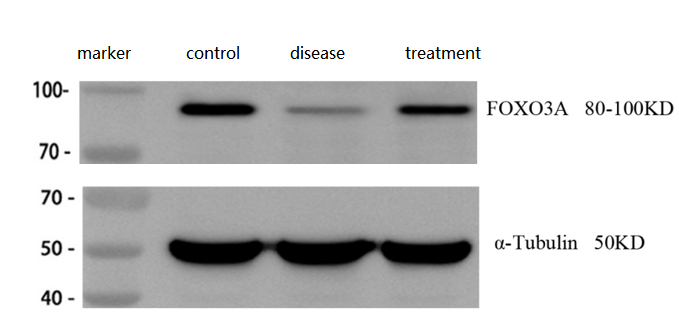
The Anti-FOXO3A antibody (M00252) produced clear, specific bands with low background, and reliably detected expected changes in FOXO3A levels in normal, Alzheimer’s model, and treated mouse hippocampal tissues, demonstrating excellent performance.

Excellent, submitted by on
M00252 wb
SKU M00252
Application Western Blot
Sample mouse brain tissue
Sample Processing Description ① Normal mouse hippocampal tissue, ② Hippocampal tissue from Alzheimer’s disease model mouse, ③ Hippocampal tissue from Alzheimer’s disease model mouse treated with a self-developed drug. Total protein was extracted from all samples.
Other Reagents RIPA lysis buffer, Protease inhibitor, Running buffer, Transfer buffer, Blocking buffer
Primary Antibody TNF alpha Antibody Picoband®
Primary Incubation 1:2000, overnight at 4 ℃
Secondary Antibody HRP Conjugated AffiniPure Goat Anti-Rabbit IgG (H+L) (BA1054)
Secondary Incubation 1:10000, 1 h in RT
Detection Substrate: ECL substrate, Image system: ChemiDoc MP
Results Summary FOXO3a is a key member of the FOXO transcription factor family, playing a central regulatory role in cellular processes such as stress response, apoptosis, autophagy, metabolism, and antioxidation. In Alzheimer’s disease, FOXO3a is known to exert neuroprotective effects. Experimental results show that FOXO3a protein levels are significantly decreased in the brains of Alzheimer’s model mice, while treatment leads to a noticeable increase.

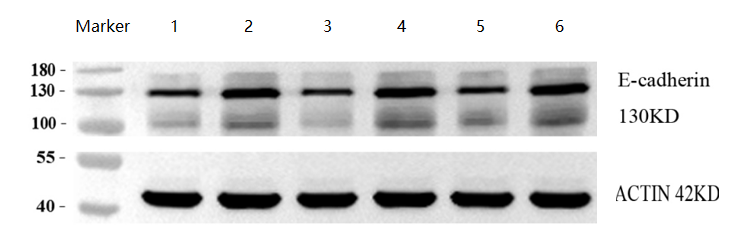
E-cadherin Antibody Picoband® (PB9561) shows clear, specific bands in human cervical cancer and adjacent tissues by WB, with higher expression in adjacent tissues than in cancer tissues, demonstrating excellent antibody performance.

Excellent, submitted by on
PB9561 wb
SKU PB9561
Application Western Blot
Sample human cervical cancer and adjacent tissues
Sample Processing Description Three samples each of human cervical cancer and adjacent tissues were collected, and total protein was extracted.
Other Reagents RIPA lysis buffer, Protease inhibitor, Running buffer, Transfer buffer, Blocking buffer
Primary Antibody E Cadherin 1/CDH1 Antibody Picoband®
Primary Incubation 1:1000, overnight at 4 ℃
Secondary Antibody HRP Conjugated AffiniPure Goat Anti-Rabbit IgG (H+L) (BA1054)
Secondary Incubation 1:10000, 1 h in RT
Detection Substrate: ECL substrate, Image system: ChemiDoc MP
Results Summary Based on this study, the expression of E-cadherin in human cervical cancer and adjacent tissues was compared, and results from three cases showed that E-cadherin levels were significantly higher in adjacent tissues than in cancer tissues.

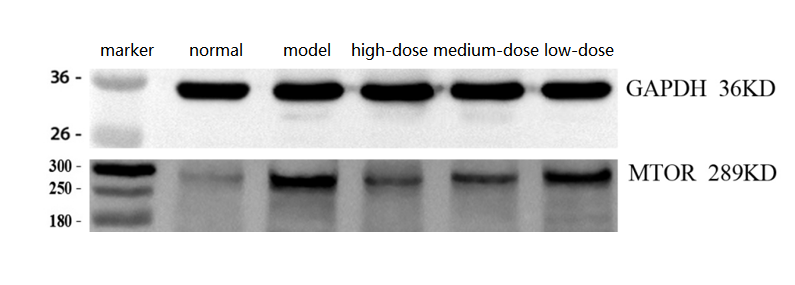
MTOR Antibody (M00003) WB on rat skeletal muscle shows clear bands, with higher MTOR in the model and dose-dependent reduction in treatment groups.

Excellent, submitted by on
SKU M00003
Application Western Blot
Sample Rat skeletal muscle tissue
Sample Processing Description Total protein was extracted from rat skeletal muscle tissue: ① normal, ② injury model, ③ high-dose drug treatment, ④ medium-dose drug treatment, ⑤ low-dose drug treatment.
Other ReagentsRIPA lysis buffer, Protease inhibitor, Running buffer, Transfer buffer, Blocking buffer
Primary Antibody mTOR/Tor Rabbit Monoclonal Antibody
Primary Incubation 1:2000, overnight at 4 ℃
Secondary Antibody HRP Conjugated AffiniPure Goat Anti-Rabbit IgG (H+L) (BA1054)
Secondary Incubation 1:10000, 1 h in RT
Detection Substrate: ECL substrate, Image system:ChemiDoc MP
Results Summary The results show clear MTOR bands, with higher levels in the injury model compared to normal, and a dose-dependent decrease in the treatment groups, as expected.

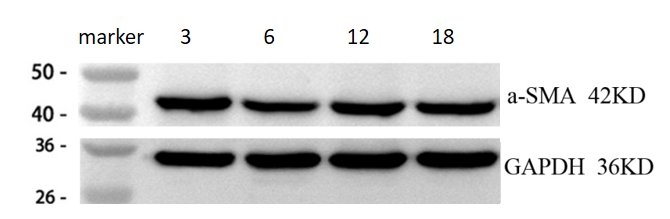
The Anti-α-SMA antibody (Cat# BM3902) shows clear and specific bands with low background in WB analysis of mouse heart tissues across different ages, with results consistent with expected trends.

Excellent, submitted by on
SKU M01072-1
Application Western Blot
Sample mouse cardiac tissue
Sample Processing Description Mouse cardiac tissues were collected from 3-, 6-, 12-, and 18-month-old mice, and total protein was extracted.
Other Reagents RIPA lysis buffer, Protease inhibitor, Running buffer, Transfer buffer, Blocking buffer
Primary Antibody alpha smooth muscle Actin ACTA2 Rabbit Monoclonal Antibody
Primary Incubation 1:2000, overnight at 4 ℃
Secondary Antibody HRP Conjugated AffiniPure Goat Anti-Rabbit IgG (H+L) (BA1054)
Secondary Incubation 1:10000, 1 h at RT
Detection Substrate: ECL substrate
Imaging system: ChemiDoc MP
Results Summary This experiment aimed to investigate the changes in α-SMA expression in mouse cardiac tissues from 3-, 6-, 12-, and 18-month-old mice (representing young, middle-aged, and aged stages). The results show that α-SMA levels are generally similar across different ages, with a slight but not significant increase as age progresses.

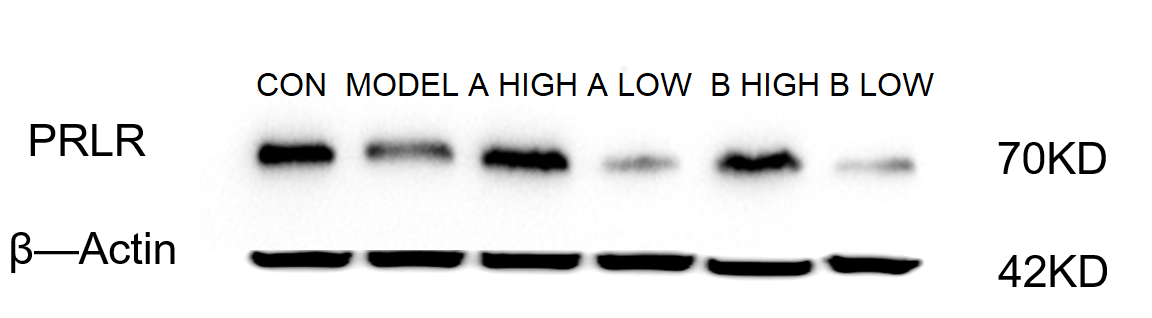
Western blot using Anti-ER/ESR1 Antibody (M00057-2) in mouse brain tissues showed clear, specific ESR1 bands across normal, disease model, and AB drug-treated groups, with β‑actin as a consistent loading control.

Excellent, submitted by on
SKU M00057-2
Application Western Blot
Sample mouse brain tissue
Sample Processing Description Mouse brain tissues were lysed in RIPA buffer containing a protease inhibitor cocktail at 4°C for 2 hours, centrifuged to collect the supernatant, and protein concentration was determined. After adjusting the concentration, samples were mixed with 5× protein loading buffer, denatured by heating at 95–100°C for 10 minutes, and 15 μL of protein was loaded per lane for SDS-PAGE.
Other Reagents 5% non-fat milk
Primary Antibody GAPDH Antibody Picoband®
Primary Incubation 1:1000, overnight at 4 ℃
Secondary Antibody goat anti rabbit secondary antibodies
Secondary Incubation 1:5000, 1 h in RT
Detection Substrate: ECL substrate, Image system:ChemiDoc MP
Results Summary This antibody is highly sensitive, produces clear WB bands, is reusable, offers excellent cost-effectiveness, and demonstrates a clear advantage over similar international products, making it highly recommended for use.

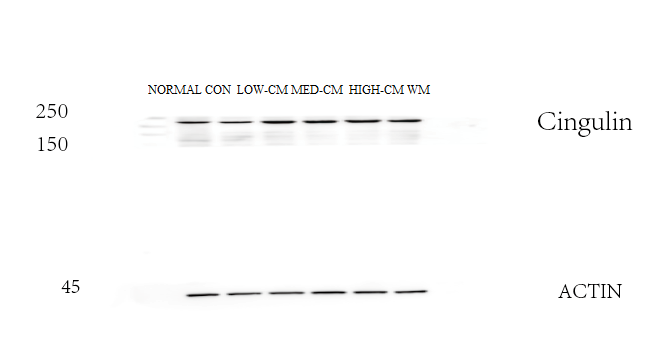
WB results showed that Cingulin/CGN (A02373-1) was downregulated in the rat colon model group and restored after Chinese medicine treatment, with the high-dose group showing the best effect, and the target bands were clear and specific.

Excellent, submitted by on
SKU A02373-1
Application Western Blot
Sample rat colon tissue
Sample Processing Description Rat colon tissues were lysed in RIPA buffer containing PMSF (100:1) for 10 min, centrifuged at 12,000 rpm for 15 min, and the supernatant was mixed with 5× loading buffer, denatured at 100°C for 10 min, and then loaded onto SDS-PAGE.
Other Reagents5% non-fat milk
Primary Antibody Cingulin/CGN Antibody
Primary Incubation 1:1000, overnight at 4 ℃
Secondary Antibody HRP Conjugated AffiniPure Goat Anti-Rabbit IgG (H+L) (BA1054)
Secondary Incubation 1:5000, 1 h in RT
Detection Substrate: ECL substrate, Image system:ChemiDoc MP
Results Summary The figure shows WB results of Cingulin/CGN and the internal control Actin in rat colon across different groups; expression was decreased in the model group and restored after Chinese medicine treatment, with the high-dose group showing the best effect, and the target bands were clear and specific, indicating satisfactory results.