This website uses cookies to ensure you get the best experience on our website.


- Table of Contents
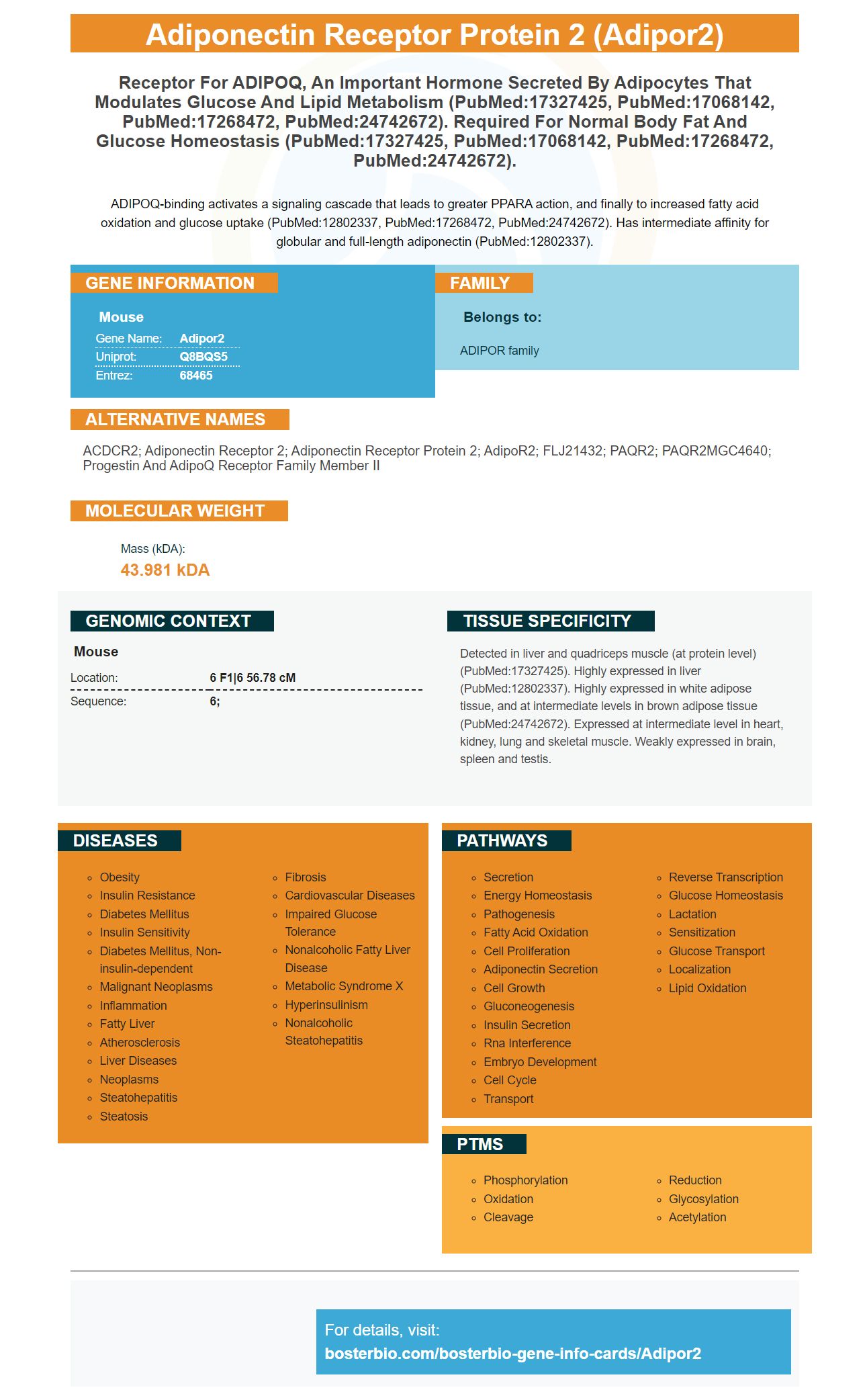
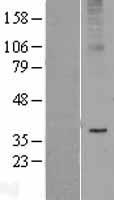
Facts about Adiponectin receptor protein 2.
ADIPOQ-binding activates a signaling cascade that leads to greater PPARA action, and finally to increased fatty acid oxidation and glucose uptake (PubMed:12802337, PubMed:17268472, PubMed:24742672). Has intermediate affinity for globular and full-length adiponectin (PubMed:12802337).
| Mouse | |
|---|---|
| Gene Name: | Adipor2 |
| Uniprot: | Q8BQS5 |
| Entrez: | 68465 |
| Belongs to: |
|---|
| ADIPOR family |

ACDCR2; adiponectin receptor 2; adiponectin receptor protein 2; AdipoR2; FLJ21432; PAQR2; PAQR2MGC4640; Progestin and adipoQ receptor family member II
Mass (kDA):
43.981 kDA

| Mouse | |
|---|---|
| Location: | 6 F1|6 56.78 cM |
| Sequence: | 6; |
Detected in liver and quadriceps muscle (at protein level) (PubMed:17327425). Highly expressed in liver (PubMed:12802337). Highly expressed in white adipose tissue, and at intermediate levels in brown adipose tissue (PubMed:24742672). Expressed at intermediate level in heart, kidney, lung and skeletal muscle. Weakly expressed in brain, spleen and testis.

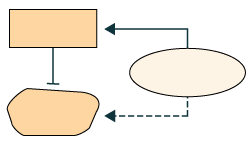

PMID: 12802337 by Yamauchi T., et al. Cloning of adiponectin receptors that mediate antidiabetic metabolic effects.
PMID: 17327425 by Bjursell M., et al. Opposing effects of adiponectin receptors 1 and 2 on energy metabolism.