This website uses cookies to ensure you get the best experience on our website.


- Table of Contents
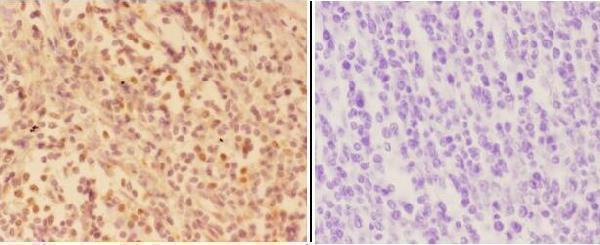
Designing an IHC experiment for AKR1A1? The guide has the expected staining pattern, antigen retrieval and fixation, antibodies backed by real IHC images, the tissue controls to run alongside, and protocols taken from published papers.
Open the AKR1A1 IHC Guide
Facts about Aldo-keto reductase family 1 member A1.
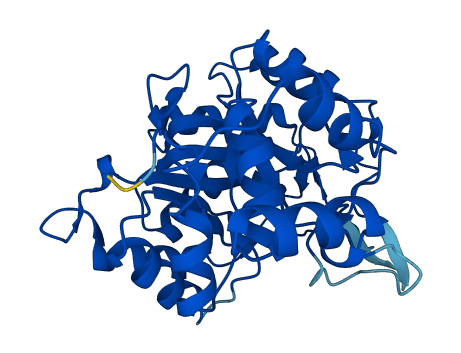
Has broad substrate specificity. In vitro substrates include succinic semialdehyde, 4- nitrobenzaldehyde, 1,2-naphthoquinone, methylglyoxal, and D- glucuronic acid.
| Human | |
|---|---|
| Gene Name: | AKR1A1 |
| Uniprot: | P14550 |
| Entrez: | 10327 |

| Belongs to: |
|---|
| aldo/keto reductase family |

alcohol dehydrogenase [NADP+]; alcohol dehydrogenase; Aldehyde reductase; Aldo-keto reductase family 1 member A1; aldo-keto reductase family 1, member A1 (aldehyde reductase); ALDR1; ALRMGC1380; ARM; DD3; dihydrodiol dehydrogenase 3; EC 1.1.1; EC 1.1.1.2; MGC12529
Mass (kDA):
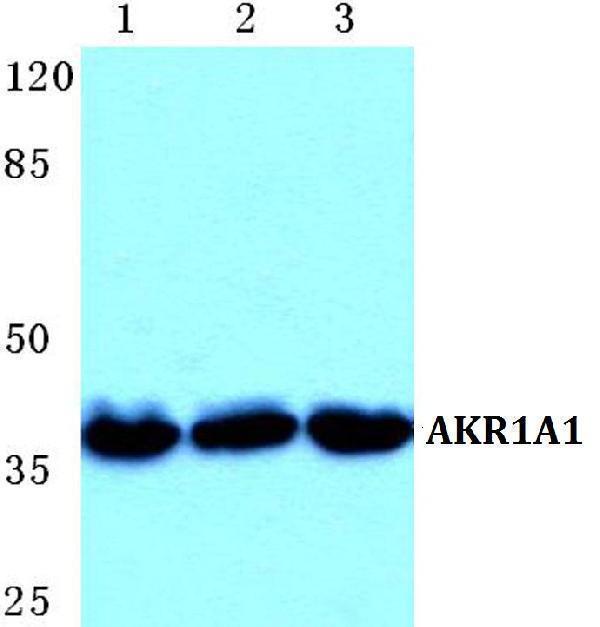
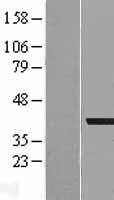
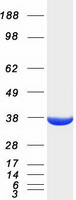
36.573 kDA

| Human | |
|---|---|
| Location: | 1p34.1 |
| Sequence: | 1; NC_000001.11 (45550779..45570051) |
Widely expressed. Highly expressed in kidney, salivary gland and liver. Detected in trachea, stomach, brain, lung, prostate, placenta, mammary gland, small intestine and lung.
Cytoplasm, cytosol. Apical cell membrane.




PMID: 2498333 by Bohren K.M., et al. The aldo-keto reductase superfamily. cDNAs and deduced amino acid sequences of human aldehyde and aldose reductases.
PMID: 10393438 by Fujii J., et al. The structural organization of the human aldehyde reductase gene, AKR1A1, and mapping to chromosome 1p33-->p32.