This website uses cookies to ensure you get the best experience on our website.


- Table of Contents
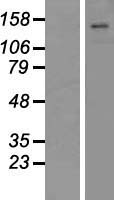
Designing a Western blot for ATP11C? The guide has the expected band size, antibodies backed by real blot images, the controls to run alongside, and protocols taken from published papers.
Open the ATP11C Western Blot Guide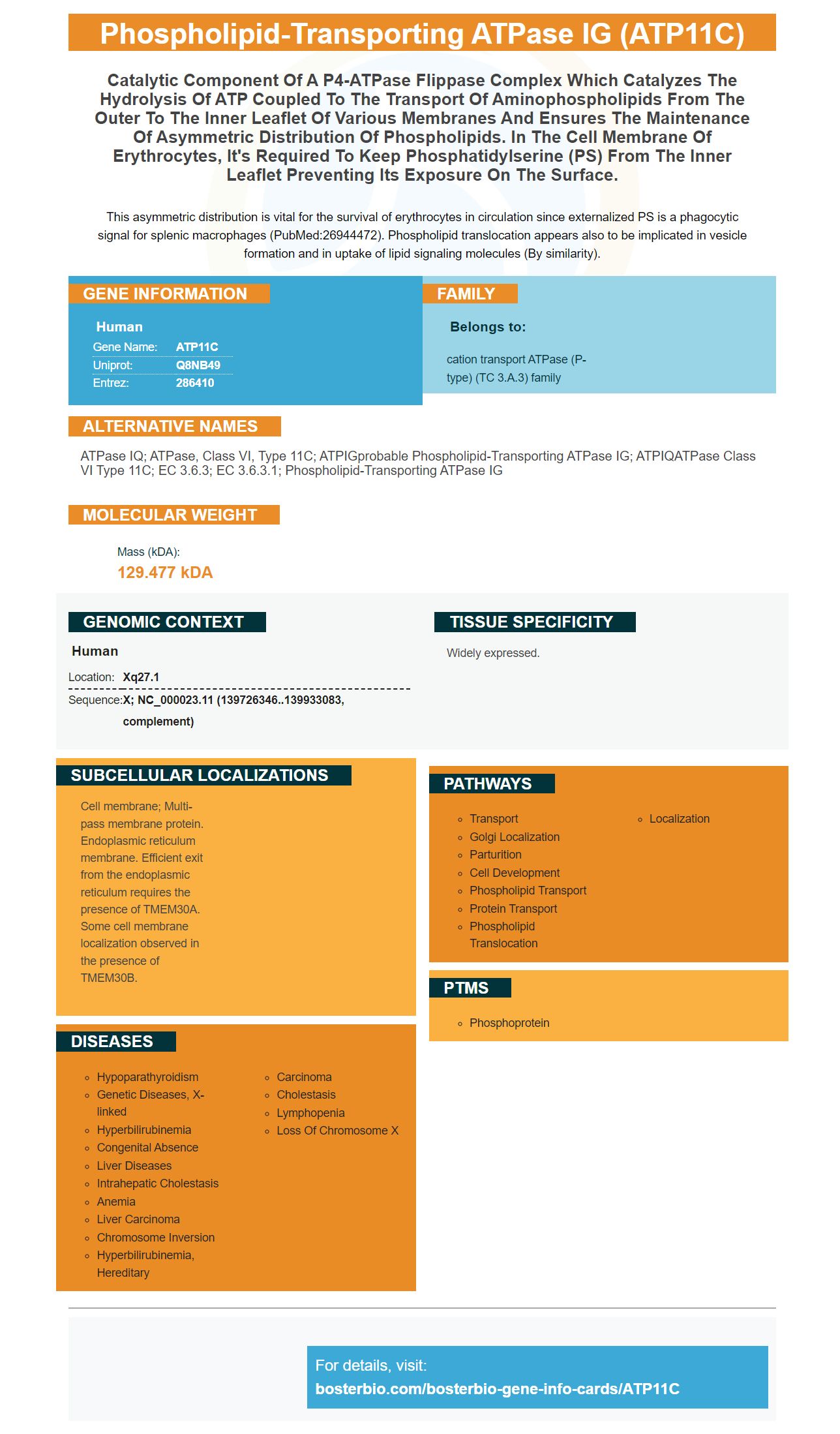
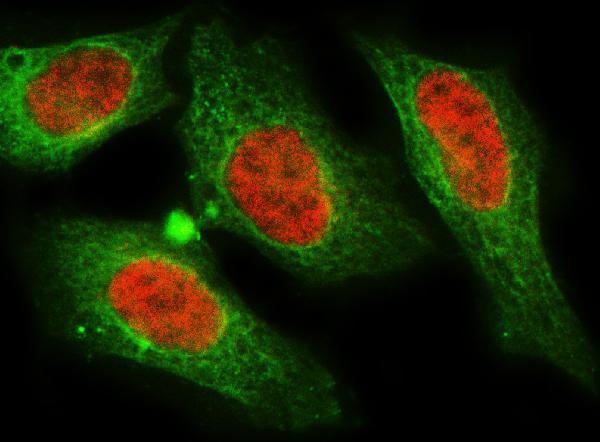
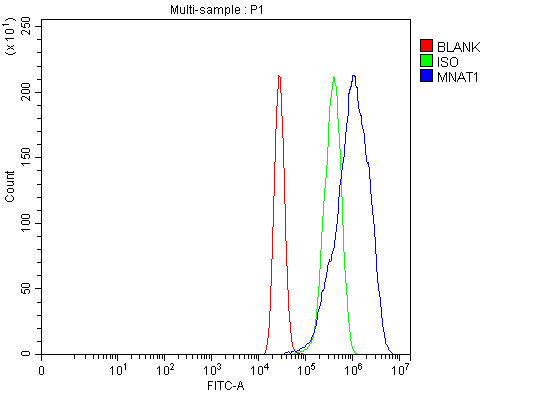
Facts about Phospholipid-transporting ATPase IG.
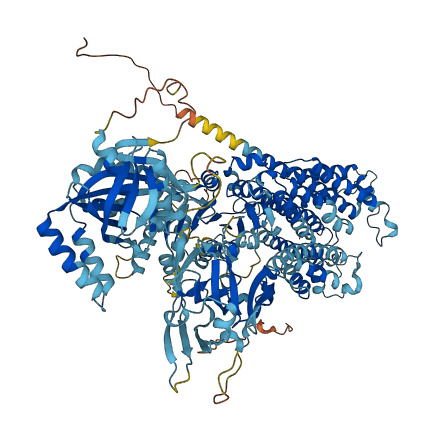
This asymmetric distribution is vital for the survival of erythrocytes in circulation since externalized PS is a phagocytic signal for splenic macrophages (PubMed:26944472). Phospholipid translocation appears also to be implicated in vesicle formation and in uptake of lipid signaling molecules (By similarity).
| Human | |
|---|---|
| Gene Name: | ATP11C |
| Uniprot: | Q8NB49 |
| Entrez: | 286410 |

| Belongs to: |
|---|
| cation transport ATPase (P-type) (TC 3.A.3) family |

ATPase IQ; ATPase, class VI, type 11C; ATPIGprobable phospholipid-transporting ATPase IG; ATPIQATPase class VI type 11C; EC 3.6.3; EC 3.6.3.1; phospholipid-transporting ATPase IG
Mass (kDA):
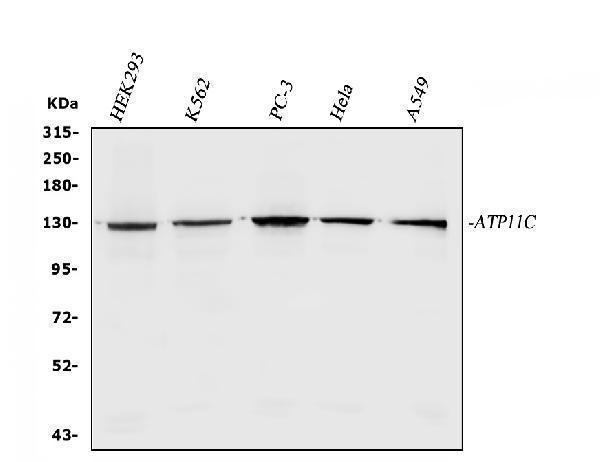
129.477 kDA

| Human | |
|---|---|
| Location: | Xq27.1 |
| Sequence: | X; NC_000023.11 (139726346..139933083, complement) |
Widely expressed.
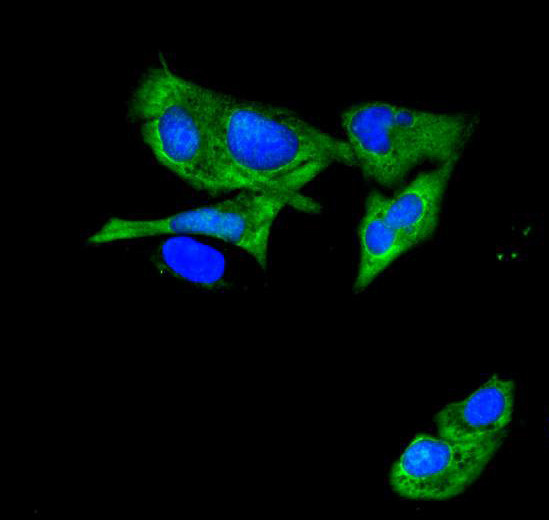
Cell membrane; Multi-pass membrane protein. Endoplasmic reticulum membrane. Efficient exit from the endoplasmic reticulum requires the presence of TMEM30A. Some cell membrane localization observed in the presence of TMEM30B.



PMID: 15533723 by Andrew-Nesbit M., et al. X-linked hypoparathyroidism region on Xq27 is evolutionarily conserved with regions on 3q26 and 13q34 and contains a novel P-type ATPase.
PMID: 21914794 by Takatsu H., et al. ATP9B, a P4-ATPase (a putative aminophospholipid translocase), localizes to the trans-Golgi network in a CDC50 protein-independent manner.