This website uses cookies to ensure you get the best experience on our website.


- Table of Contents
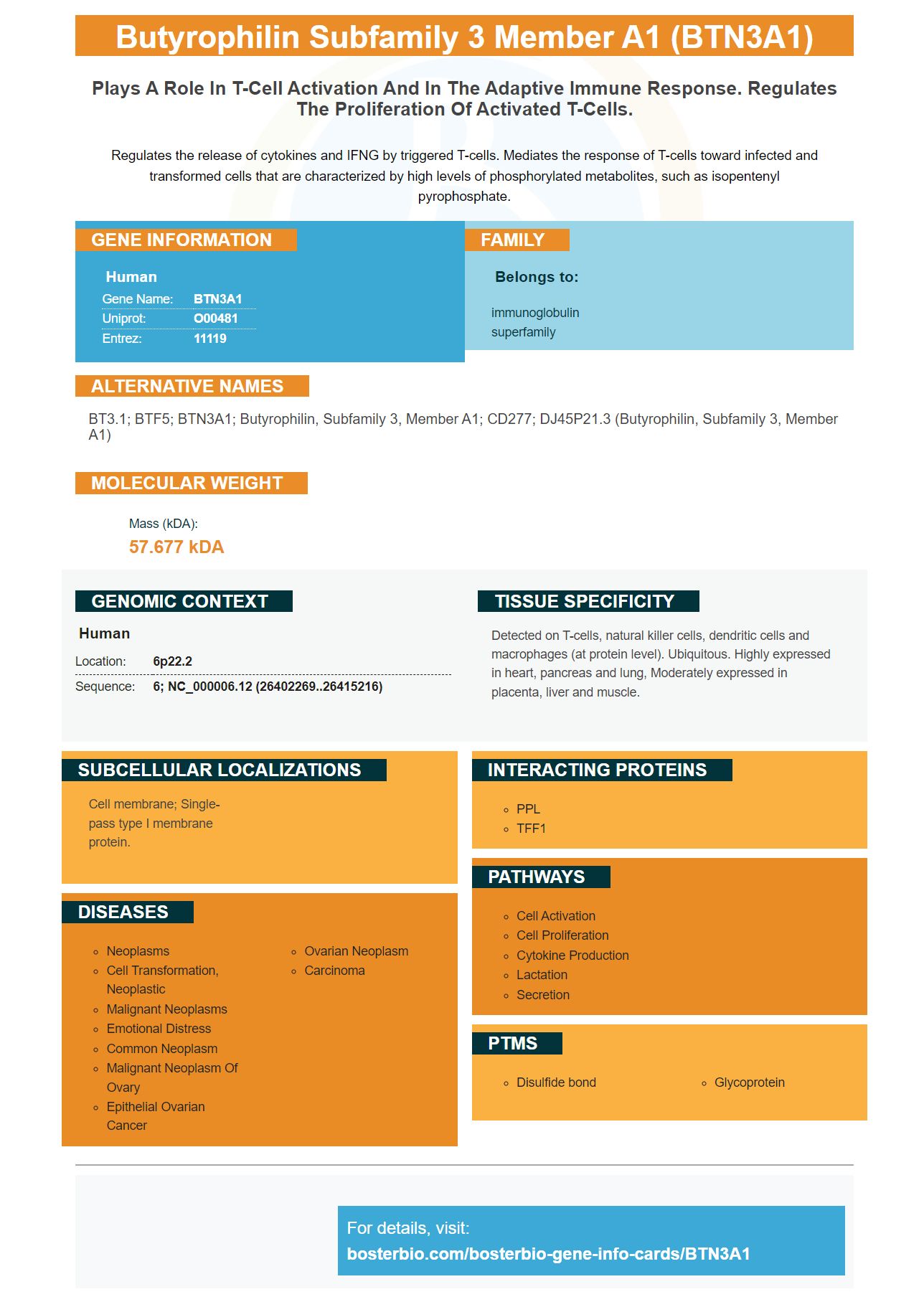
Facts about Butyrophilin subfamily 3 member A1.
Regulates the release of cytokines and IFNG by triggered T-cells. Mediates the response of T-cells toward infected and transformed cells that are characterized by high levels of phosphorylated metabolites, such as isopentenyl pyrophosphate.
| Human | |
|---|---|
| Gene Name: | BTN3A1 |
| Uniprot: | O00481 |
| Entrez: | 11119 |
| Belongs to: |
|---|
| immunoglobulin superfamily |

BT3.1; BTF5; BTN3A1; butyrophilin, subfamily 3, member A1; CD277; dJ45P21.3 (butyrophilin, subfamily 3, member A1)
Mass (kDA):
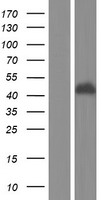
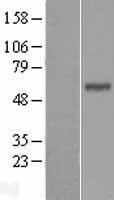
57.677 kDA

| Human | |
|---|---|
| Location: | 6p22.2 |
| Sequence: | 6; NC_000006.12 (26402269..26415216) |
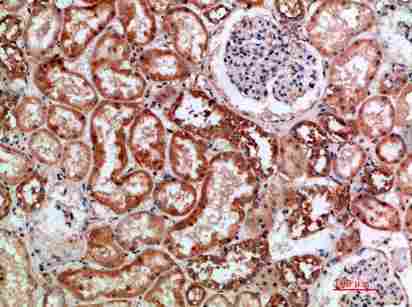
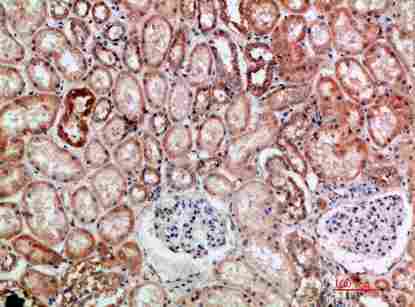
Detected on T-cells, natural killer cells, dendritic cells and macrophages (at protein level). Ubiquitous. Highly expressed in heart, pancreas and lung, Moderately expressed in placenta, liver and muscle.
Cell membrane; Single-pass type I membrane protein.




PMID: 9382921 by Tazi-Ahnini R., et al. Cloning, localization, and structure of new members of the butyrophilin gene family in the juxta-telomeric region of the major histocompatibility complex.
PMID: 9149941 by Ruddy D.A., et al. A 1.1-Mb transcript map of the hereditary hemochromatosis locus.