This website uses cookies to ensure you get the best experience on our website.


- Table of Contents
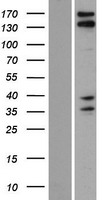
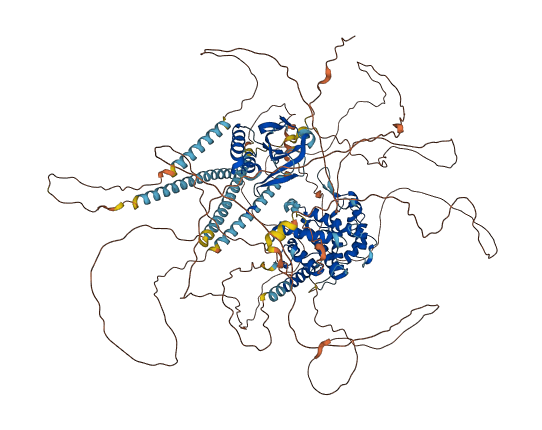
Facts about Calmodulin-regulated spectrin-associated protein 3.
Additionally, it also decreases the speed of microtubule polymerization (PubMed:24486153). Required for the biogenesis and the upkeep of zonula adherens by anchoring the minus-end of microtubules into zonula adherens and by recruiting the kinesin KIFC3 to those junctional sites (PubMed:19041755).
| Human | |
|---|---|
| Gene Name: | CAMSAP3 |
| Uniprot: | Q9P1Y5 |
| Entrez: | 57662 |
| Belongs to: |
|---|
| CAMSAP1 family |

calmodulin regulated spectrin-associated protein family, member 3; calmodulin-regulated spectrin-associated protein 3; KIAA1543; NEZHA; protein Nezha
Mass (kDA):
134.75 kDA

| Human | |
|---|---|
| Location: | 19p13.2 |
| Sequence: | 19; NC_000019.10 (7595863..7618304) |
Cytoplasm, cytoskeleton. Cell junction, adherens junction. Cytoplasm. Scattered in the cytoplasm, associated with the minus-end of microtubules and also detected at the centrosomes (PubMed:19041755, PubMed:24486153, PubMed:27693509). Decorates the minus-end of microtubules by decreasing the rate of tubulin incorporation and remaining bound (PubMed:24486153). Localizes along zonula adherens only at mature cell-cell contacts (PubMed:19041755). In early embryos, accumulates at the microtubule bridges that connect pairs of cells: this structure is present in early embryos, which lack centrosomes (


PMID: 19041755 by Meng W., et al. Anchorage of microtubule minus ends to adherens junctions regulates epithelial cell-cell contacts.
PMID: 23169647 by Tanaka N., et al. Nezha/CAMSAP3 and CAMSAP2 cooperate in epithelial-specific organization of noncentrosomal microtubules.