This website uses cookies to ensure you get the best experience on our website.


- Table of Contents
Designing an IHC experiment for Zinc finger protein DPF3? The guide has the expected staining pattern, antigen retrieval and fixation, antibodies backed by real IHC images, the tissue controls to run alongside, and protocols taken from published papers.
Open the DPF3 IHC Guide
Facts about Zinc finger protein DPF3.
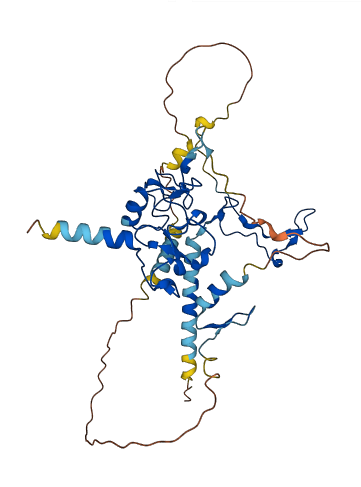
The transition from proliferating neural stem/progenitor cells to post-mitotic neurons requires a switch in subunit composition of the npBAF and nBAF complexes. As neural progenitors exit mitosis and differentiate into neurons, npBAF complexes which contain ACTL6A/BAF53A and PHF10/BAF45A, are exchanged for homologous alternative ACTL6B/BAF53B and DPF1/BAF45B or DPF3/BAF45C subunits in neuron-specific complexes (nBAF).
| Human | |
|---|---|
| Gene Name: | DPF3 |
| Uniprot: | Q92784 |
| Entrez: | 8110 |
| Belongs to: |
|---|
| requiem/DPF family |

CERD4; D4, zinc and double PHD fingers, family 3
Mass (kDA):
43.084 kDA

| Human | |
|---|---|
| Location: | 14q24.2 |
| Sequence: | 14; NC_000014.9 (72619296..72894116, complement) |
Nucleus.



PMID: 18765789 by Lange M., et al. Regulation of muscle development by DPF3, a novel histone acetylation and methylation reader of the BAF chromatin remodeling complex.
PMID: 8812431 by Chestkov A.V., et al. The d4 gene family in the human genome.