This website uses cookies to ensure you get the best experience on our website.


- Table of Contents
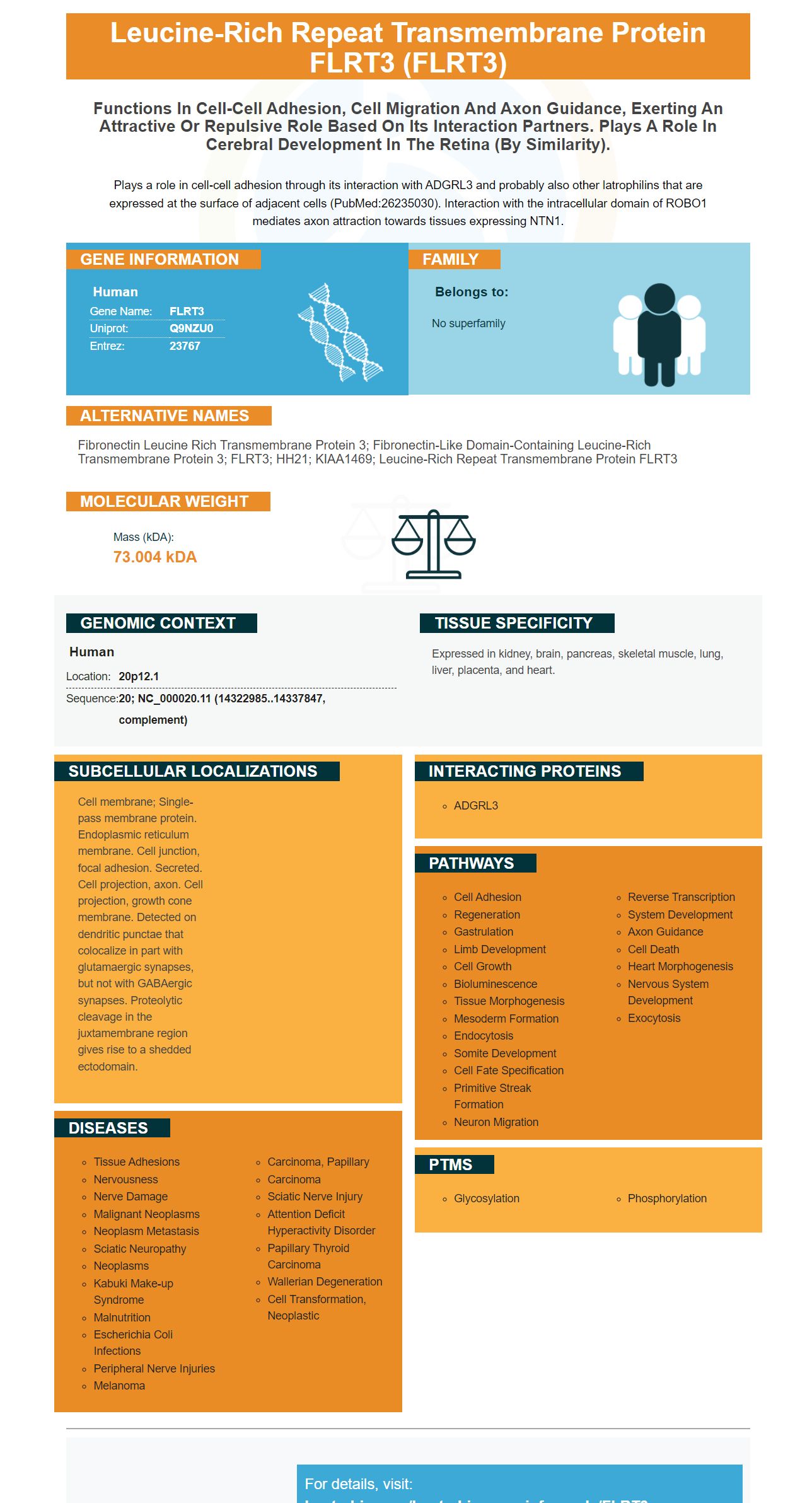
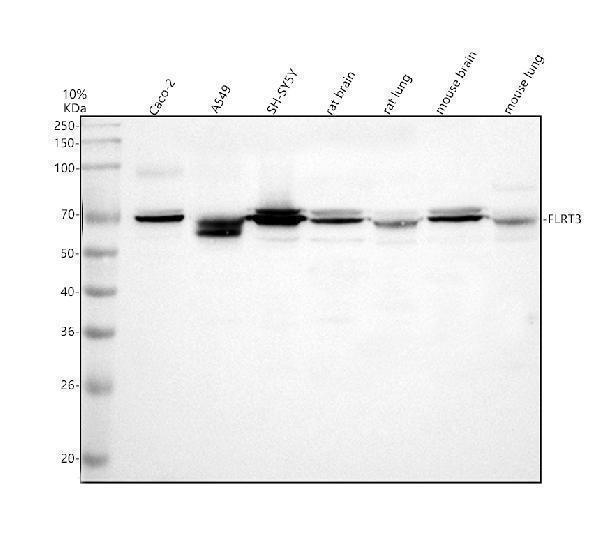
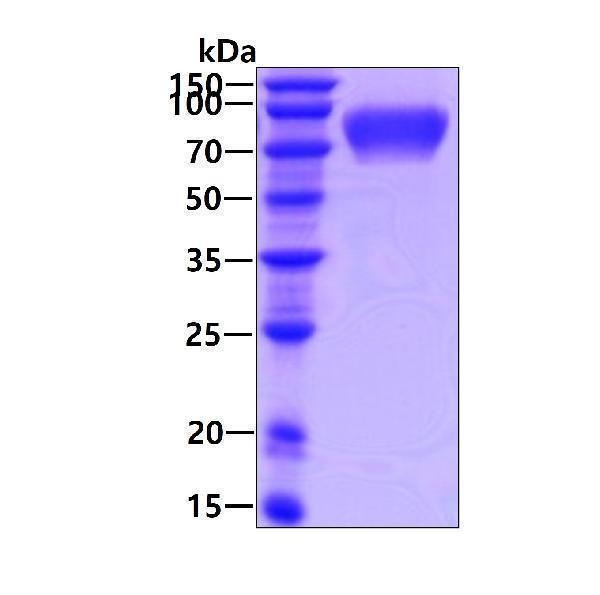
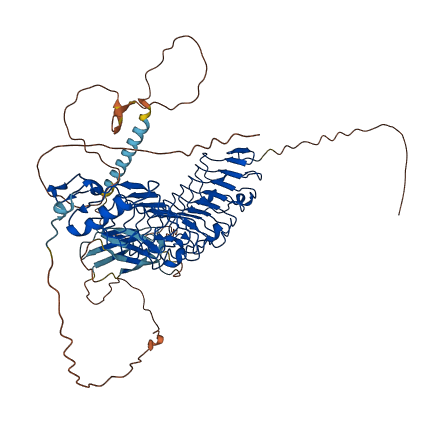
Facts about Leucine-rich repeat transmembrane protein FLRT3.
Plays a role in cell-cell adhesion through its interaction with ADGRL3 and probably also other latrophilins that are expressed at the surface of adjacent cells (PubMed:26235030). Interaction with the intracellular domain of ROBO1 mediates axon attraction towards tissues expressing NTN1.
| Human | |
|---|---|
| Gene Name: | FLRT3 |
| Uniprot: | Q9NZU0 |
| Entrez: | 23767 |
| Belongs to: |
|---|
| No superfamily |

fibronectin leucine rich transmembrane protein 3; Fibronectin-like domain-containing leucine-rich transmembrane protein 3; FLRT3; HH21; KIAA1469; leucine-rich repeat transmembrane protein FLRT3
Mass (kDA):
73.004 kDA

| Human | |
|---|---|
| Location: | 20p12.1 |
| Sequence: | 20; NC_000020.11 (14322985..14337847, complement) |
Expressed in kidney, brain, pancreas, skeletal muscle, lung, liver, placenta, and heart.
Cell membrane; Single-pass membrane protein. Endoplasmic reticulum membrane. Cell junction, focal adhesion. Secreted. Cell projection, axon. Cell projection, growth cone membrane. Detected on dendritic punctae that colocalize in part with glutamaergic synapses, but not with GABAergic synapses. Proteolytic cleavage in the juxtamembrane region gives rise to a shedded ectodomain.




PMID: 10644439 by Lacy S.E., et al. Identification of FLRT1, FLRT2, and FLRT3: a novel family of transmembrane leucine-rich repeat proteins.
PMID: 14706654 by Tsuji L., et al. FLRT3, a cell surface molecule containing LRR repeats and a FNIII domain, promotes neurite outgrowth.