This website uses cookies to ensure you get the best experience on our website.


- Table of Contents
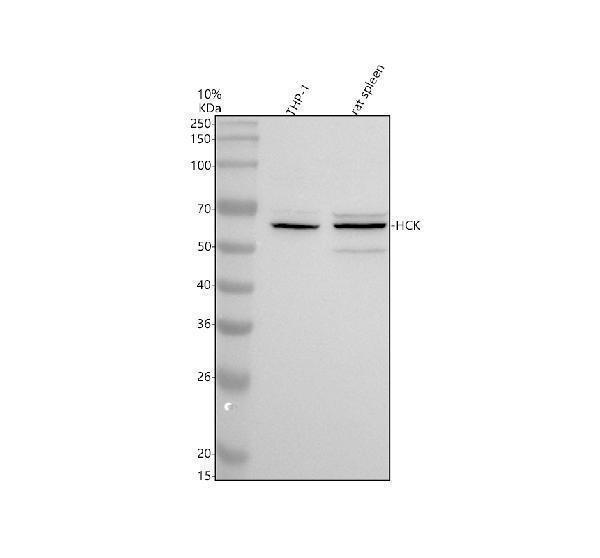
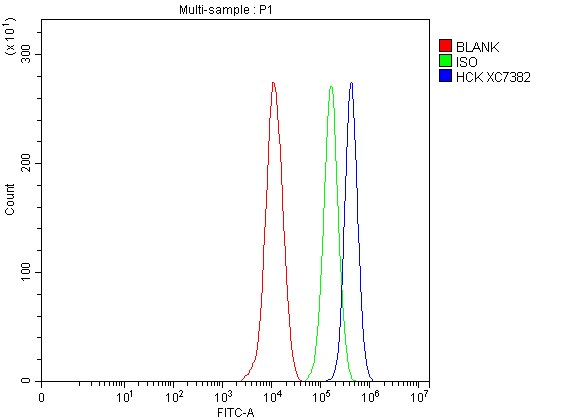
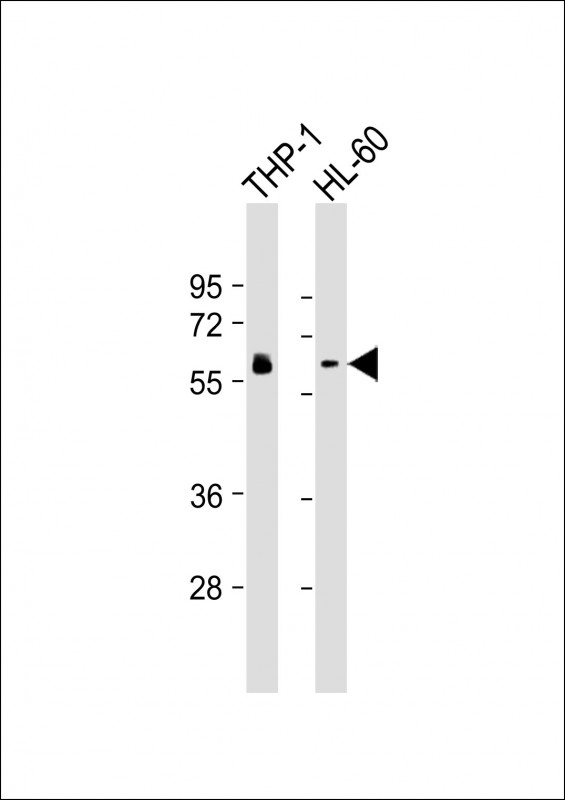
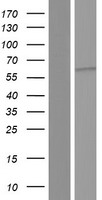
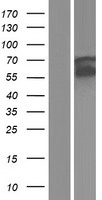
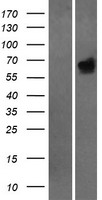
Designing a Western blot for HCK? The guide has the expected band size, antibodies backed by real blot images, the controls to run alongside, and protocols taken from published papers.
Open the HCK Western Blot Guide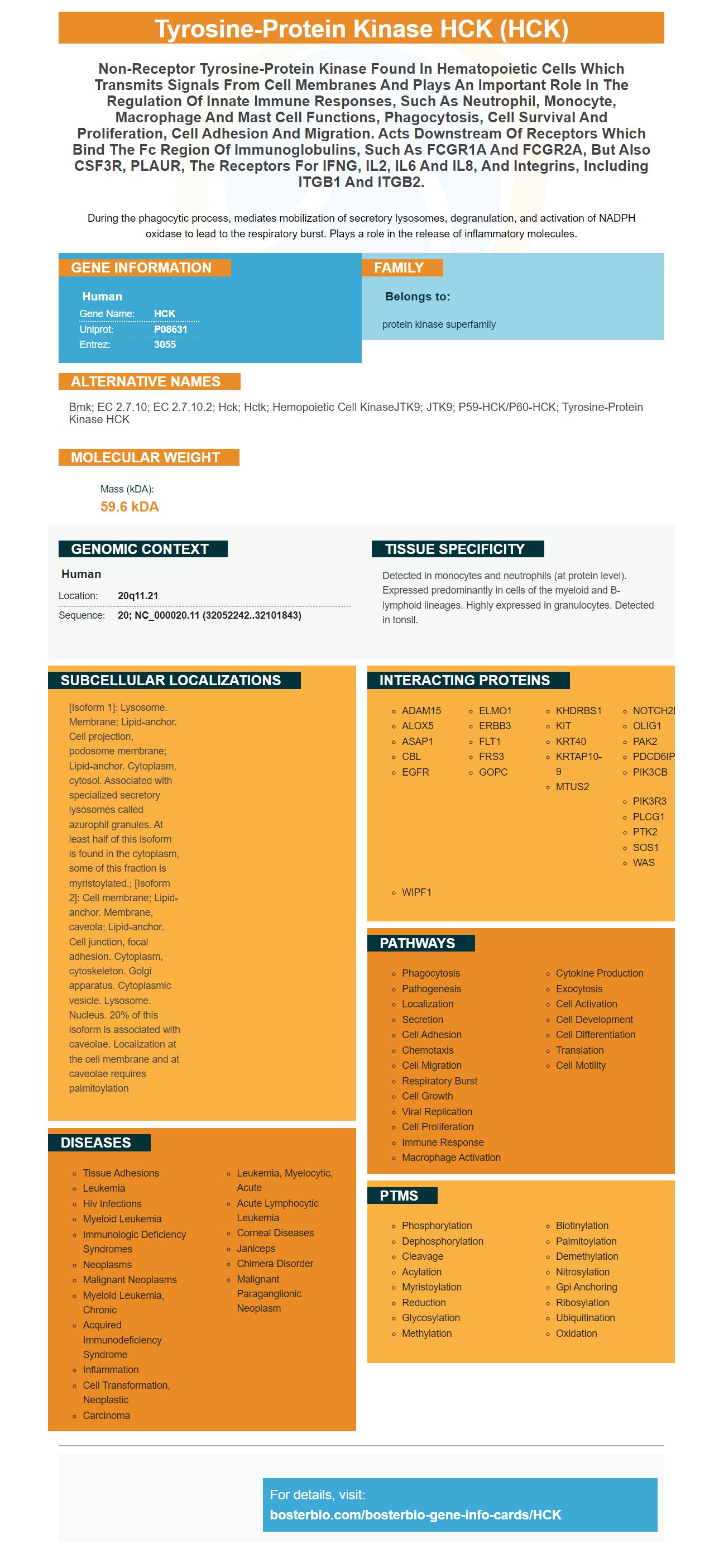
Facts about Tyrosine-protein kinase HCK.
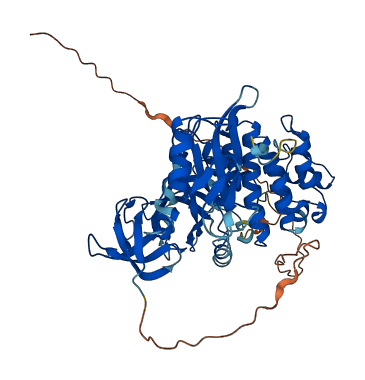
During the phagocytic process, mediates mobilization of secretory lysosomes, degranulation, and activation of NADPH oxidase to lead to the respiratory burst. Plays a role in the release of inflammatory molecules.
| Human | |
|---|---|
| Gene Name: | HCK |
| Uniprot: | P08631 |
| Entrez: | 3055 |

| Belongs to: |
|---|
| protein kinase superfamily |

Bmk; EC 2.7.10; EC 2.7.10.2; Hck; Hctk; hemopoietic cell kinaseJTK9; JTK9; p59-HCK/p60-HCK; tyrosine-protein kinase HCK
Mass (kDA):
59.6 kDA

| Human | |
|---|---|
| Location: | 20q11.21 |
| Sequence: | 20; NC_000020.11 (32052242..32101843) |
Detected in monocytes and neutrophils (at protein level). Expressed predominantly in cells of the myeloid and B-lymphoid lineages. Highly expressed in granulocytes. Detected in tonsil.
[Isoform 1]: Lysosome. Membrane; Lipid-anchor. Cell projection, podosome membrane; Lipid-anchor. Cytoplasm, cytosol. Associated with specialized secretory lysosomes called azurophil granules. At least half of this isoform is found in the cytoplasm, some of this fraction is myristoylated.; [Isoform 2]: Cell membrane; Lipid-anchor. Membrane, caveola; Lipid-anchor. Cell junction, focal adhesion. Cytoplasm, cytoskeleton. Golgi apparatus. Cytoplasmic vesicle. Lysosome. Nucleus. 20% of this isoform is associated with caveolae. Localization at the cell membrane and at caveolae requires palmitoylation





PMID: 3496523 by Quintrell N., et al. Identification of a human gene (HCK) that encodes a protein-tyrosine kinase and is expressed in hemopoietic cells.
PMID: 3453117 by Ziegler S.F., et al. Novel protein-tyrosine kinase gene (hck) preferentially expressed in cells of hematopoietic origin.