This website uses cookies to ensure you get the best experience on our website.


- Table of Contents
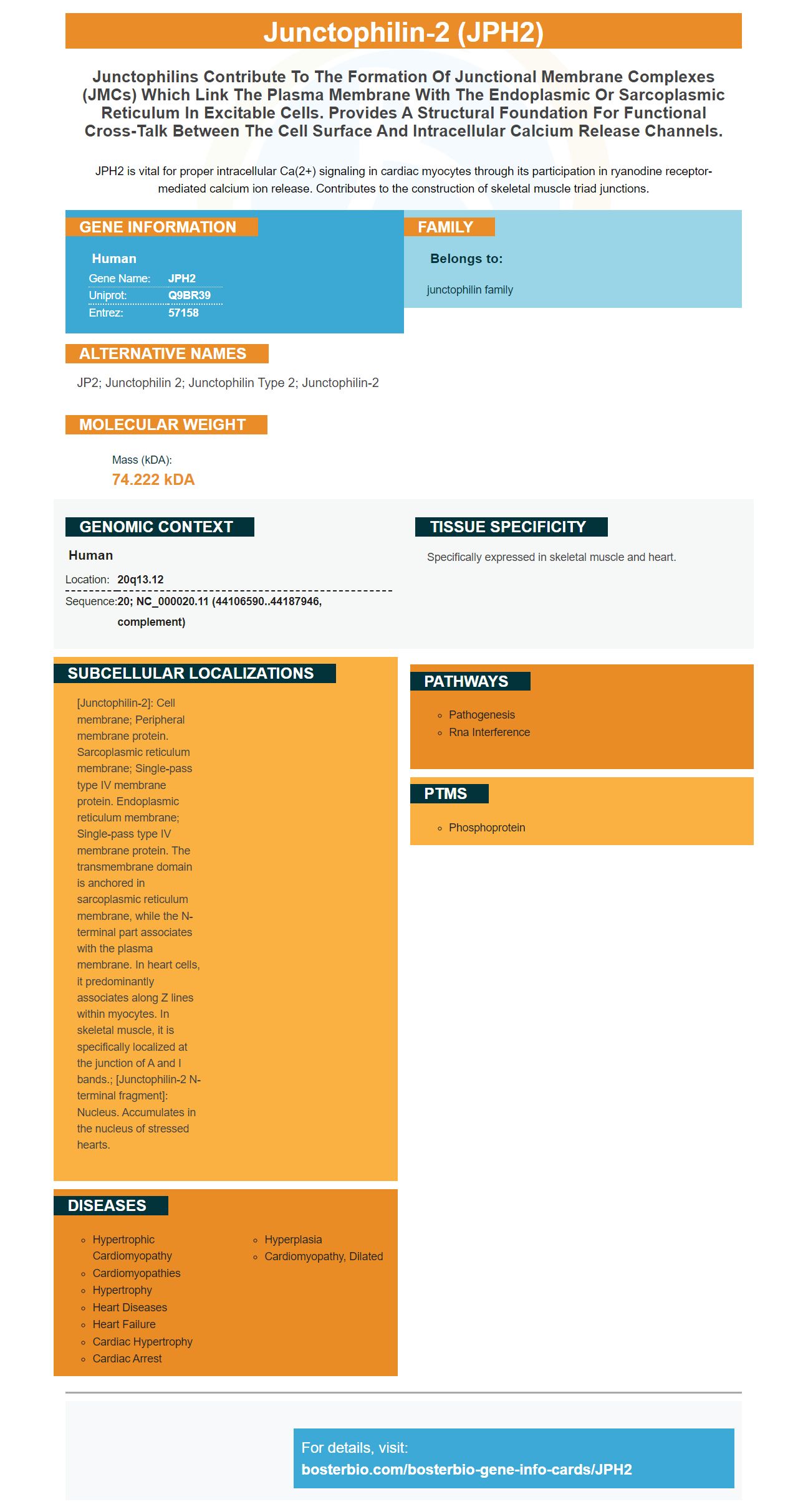
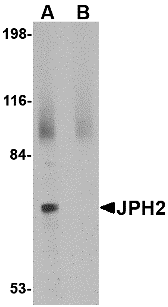
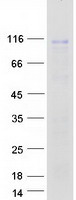
Facts about Junctophilin-2.
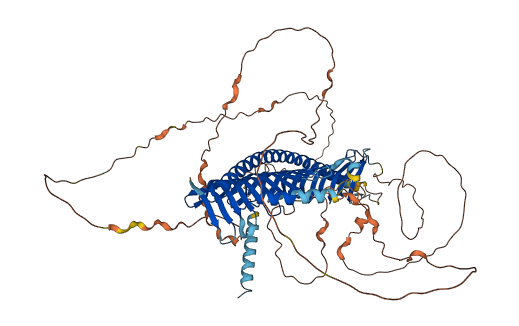
JPH2 is vital for proper intracellular Ca(2+) signaling in cardiac myocytes through its participation in ryanodine receptor-mediated calcium ion release. Contributes to the construction of skeletal muscle triad junctions.
| Human | |
|---|---|
| Gene Name: | JPH2 |
| Uniprot: | Q9BR39 |
| Entrez: | 57158 |
| Belongs to: |
|---|
| junctophilin family |

JP2; junctophilin 2; junctophilin type 2; junctophilin-2
Mass (kDA):
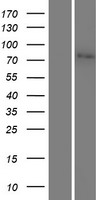
74.222 kDA

| Human | |
|---|---|
| Location: | 20q13.12 |
| Sequence: | 20; NC_000020.11 (44106590..44187946, complement) |
Specifically expressed in skeletal muscle and heart.
[Junctophilin-2]: Cell membrane; Peripheral membrane protein. Sarcoplasmic reticulum membrane; Single-pass type IV membrane protein. Endoplasmic reticulum membrane; Single-pass type IV membrane protein. The transmembrane domain is anchored in sarcoplasmic reticulum membrane, while the N-terminal part associates with the plasma membrane. In heart cells, it predominantly associates along Z lines within myocytes. In skeletal muscle, it is specifically localized at the junction of A and I bands.; [Junctophilin-2 N-terminal fragment]: Nucleus. Accumulates in the nucleus of stressed hearts.


PMID: 10891348 by Nishi M., et al. Characterization of human junctophilin subtype genes.
PMID: 20095964 by Woo J.S., et al. S165F mutation of junctophilin 2 affects Ca2+ signalling in skeletal muscle.