This website uses cookies to ensure you get the best experience on our website.


- Table of Contents
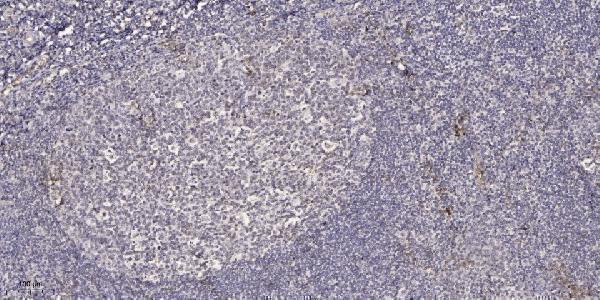
Designing an IHC experiment for MAEA? The guide has the expected staining pattern, antigen retrieval and fixation, antibodies backed by real IHC images, the tissue controls to run alongside, and protocols taken from published papers.
Open the MAEA IHC Guide




Facts about E3 ubiquitin-protein transferase MAEA.

Participates in erythroblastic island creation, that is the practical unit of definitive erythropoiesis. Associates with F-actin to regulate actin distribution in erythroblasts and macrophages.
| Human | |
|---|---|
| Gene Name: | MAEA |
| Uniprot: | Q7L5Y9 |
| Entrez: | 10296 |

| Belongs to: |
|---|
| No superfamily |

EMLP; EMP; EMPCell proliferation-inducing gene 5 protein; Erythroblast macrophage protein; HLC-10; Human lung cancer oncogene 10 protein; lung cancer-related protein 10; macrophage erythroblast attacher; MAEA; PIG5; proliferation-inducing gene 5
Mass (kDA):
45.287 kDA

| Human | |
|---|---|
| Location: | 4p16.3 |
| Sequence: | 4; NC_000004.12 (1289890..1340148) |
Ubiquitous.
Cytoplasm. Nucleus, nucleoplasm. Nucleus matrix. Cell membrane. Cytoplasm, cytoskeleton. Detected in a nuclear, speckled-like pattern (PubMed:16510120). Localized with condensed chromatin at prophase; Detected in nuclear spindle poles at metaphase and in the contractile ring during telophase and cytokinesis (PubMed:16510120). Present in cytoplasm, nuclear matrix and at the cell surface in macrophages; predominantly nuclear in immature macrophages and predominantly detected at the cell surface in mature macrophages. Colocalizes with F-actin in macrophages (By similarity).


PMID: 9763581 by Hanspal M., et al. Molecular identification and functional characterization of a novel protein that mediates the attachment of erythroblasts to macrophages.
PMID: 16510120 by Bala S., et al. Emp is a component of the nuclear matrix of mammalian cells and undergoes dynamic rearrangements during cell division.