This website uses cookies to ensure you get the best experience on our website.


- Table of Contents
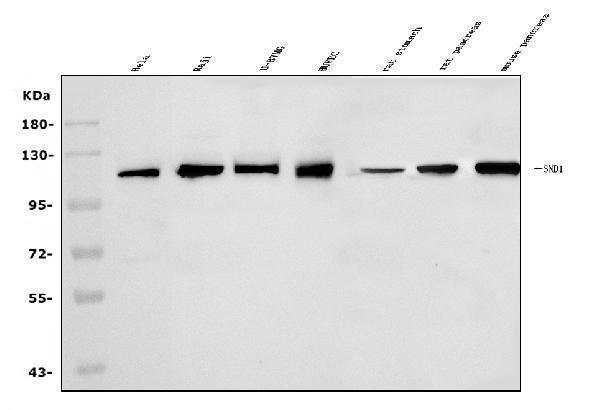
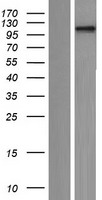
Designing a Western blot for NFATC4? The guide has the expected band size, antibodies backed by real blot images, the controls to run alongside, and protocols taken from published papers.
Open the NFATC4 Western Blot Guide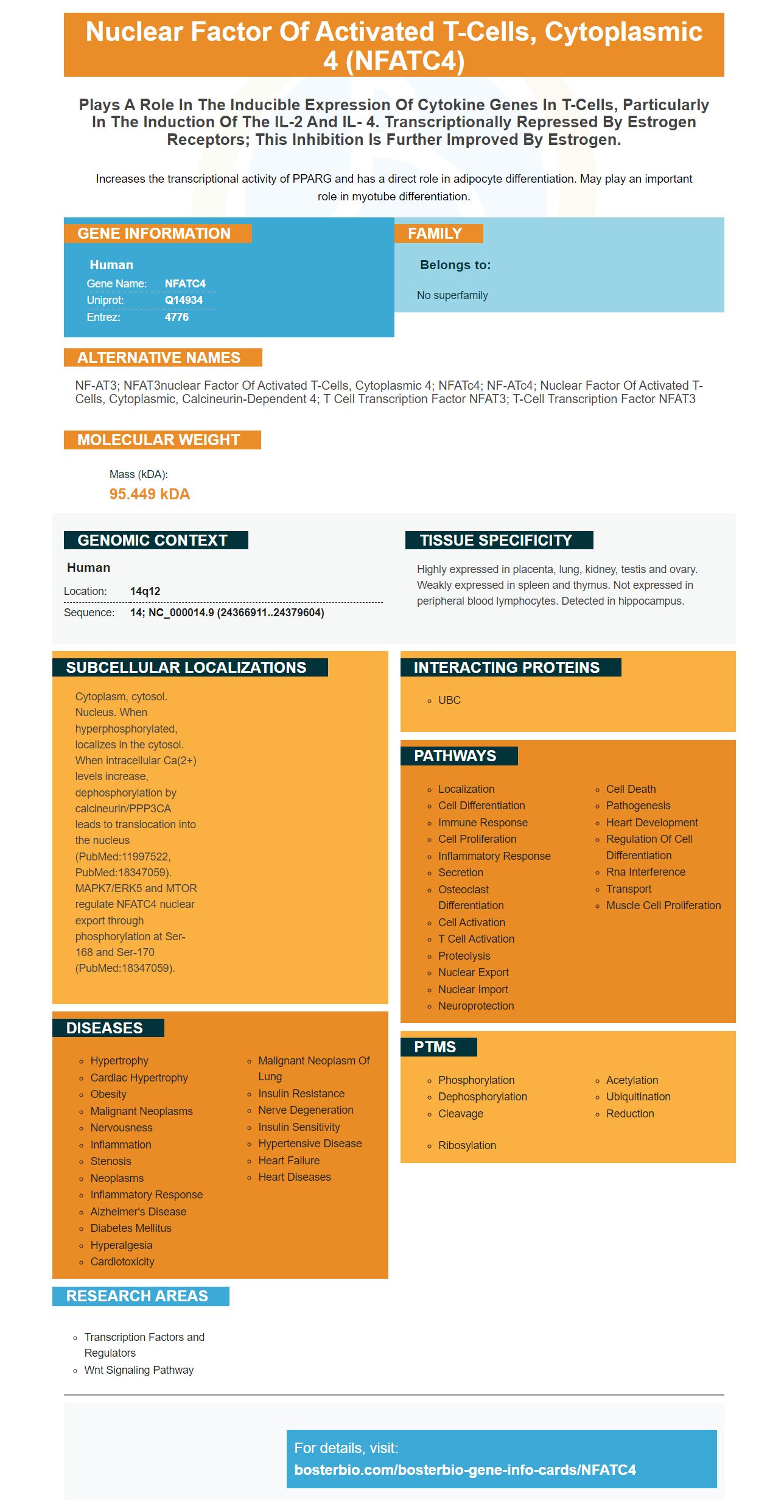
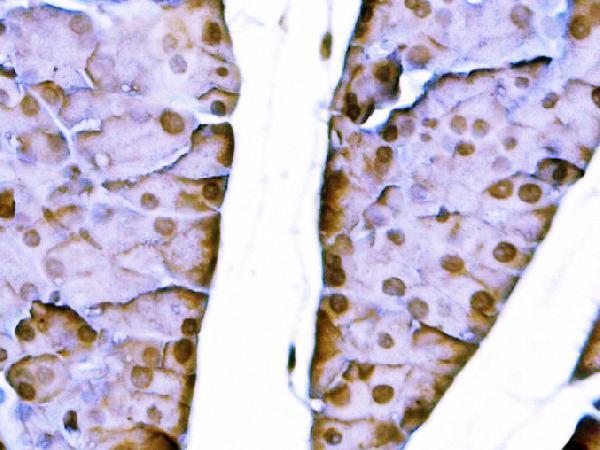
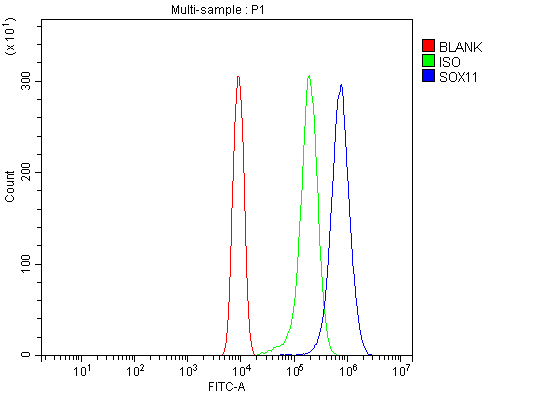
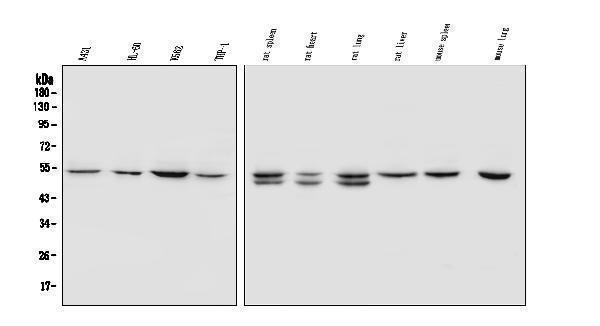
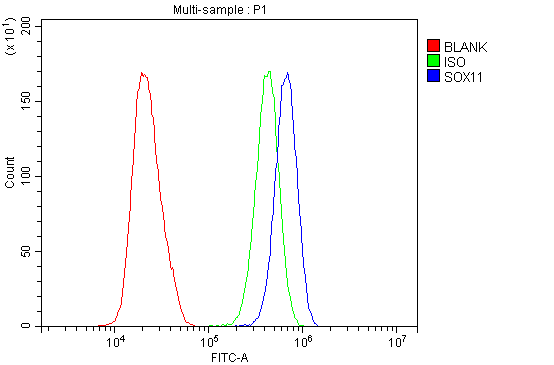


Facts about Nuclear factor of activated T-cells, cytoplasmic 4.
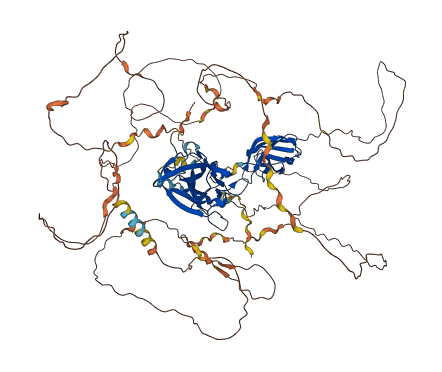
Increases the transcriptional activity of PPARG and has a direct role in adipocyte differentiation. May play an important role in myotube differentiation.
| Human | |
|---|---|
| Gene Name: | NFATC4 |
| Uniprot: | Q14934 |
| Entrez: | 4776 |
| Belongs to: |
|---|
| No superfamily |

NF-AT3; NFAT3nuclear factor of activated T-cells, cytoplasmic 4; NFATc4; NF-ATc4; nuclear factor of activated T-cells, cytoplasmic, calcineurin-dependent 4; T cell transcription factor NFAT3; T-cell transcription factor NFAT3
Mass (kDA):
95.449 kDA

| Human | |
|---|---|
| Location: | 14q12 |
| Sequence: | 14; NC_000014.9 (24366911..24379604) |
Highly expressed in placenta, lung, kidney, testis and ovary. Weakly expressed in spleen and thymus. Not expressed in peripheral blood lymphocytes. Detected in hippocampus.
Cytoplasm, cytosol. Nucleus. When hyperphosphorylated, localizes in the cytosol. When intracellular Ca(2+) levels increase, dephosphorylation by calcineurin/PPP3CA leads to translocation into the nucleus (PubMed:11997522, PubMed:18347059). MAPK7/ERK5 and MTOR regulate NFATC4 nuclear export through phosphorylation at Ser-168 and Ser-170 (PubMed:18347059).




PMID: 7749981 by Hoey T., et al. Isolation of two new members of the NF-AT gene family and functional characterization of the NF-AT proteins.
PMID: 18675896 by Vihma H., et al. Alternative splicing and expression of human and mouse NFAT genes.