This website uses cookies to ensure you get the best experience on our website.


- Table of Contents
Facts about Prokineticin receptor 2.
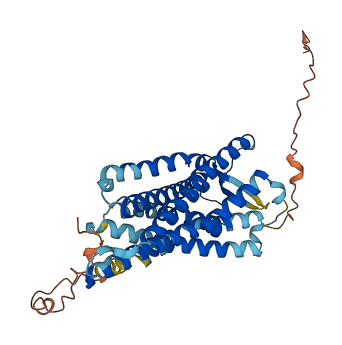
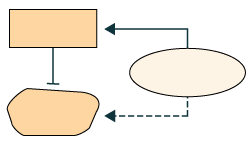
Activation leads to mobilization of calcium, stimulation of phosphoinositide turnover and activation of p44/p42 mitogen-activated protein kinase. .
| Human | |
|---|---|
| Gene Name: | PROKR2 |
| Uniprot: | Q8NFJ6 |
| Entrez: | 128674 |
| Belongs to: |
|---|
| G-protein coupled receptor 1 family |

dJ680N4.3; G protein-coupled receptor 73-like 1; GPR73bG-protein coupled receptor 73-like 1; GPR73L1; GPR73L1Kallmann syndrome 3 (autosomal dominant); GPRg2; GPRg2KAL3; KAL3; PKR2; PKR2PK-R2; Prokineticin R2; prokineticin receptor 2; ProkineticinR2; PROKR2
Mass (kDA):
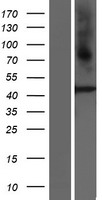
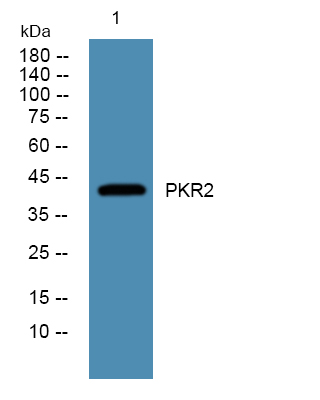
43.996 kDA

| Human | |
|---|---|
| Location: | 20p12.3 |
| Sequence: | 20; NC_000020.11 (5298852..5316732, complement) |
Expressed in the ileocecum, thyroid gland, pituitary gland, salivary gland, adrenal gland, testis, ovary and brain.
Cell membrane; Multi-pass membrane protein.




PMID: 11886876 by Lin D.C.-H., et al. Identification and molecular characterization of two closely related G protein-coupled receptors activated by prokineticins/endocrine gland vascular endothelial growth factor.
PMID: 12427552 by Soga T., et al. Molecular cloning and characterization of prokineticin receptors.