This website uses cookies to ensure you get the best experience on our website.


- Table of Contents
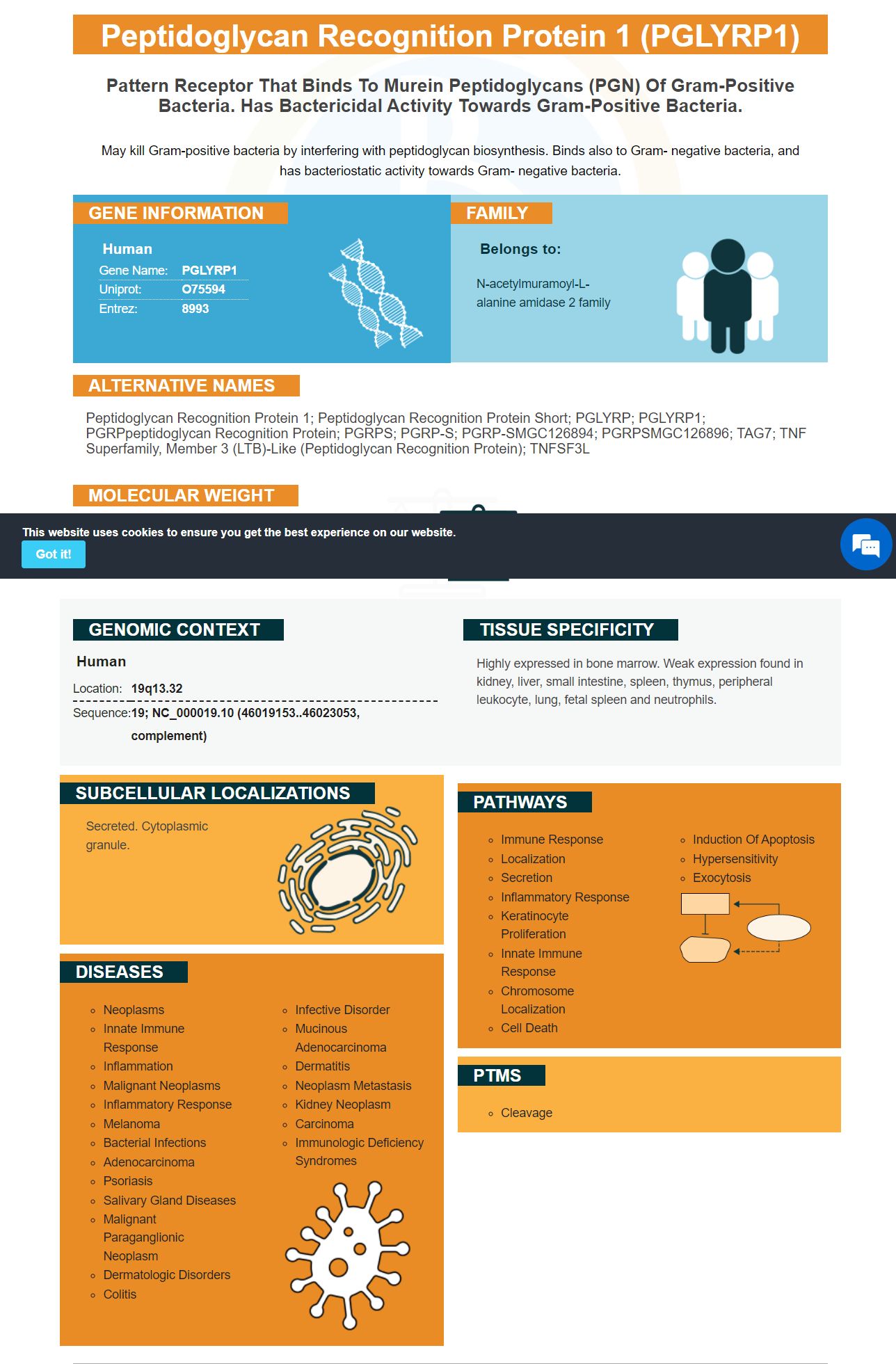
Facts about Peptidoglycan recognition protein 1.
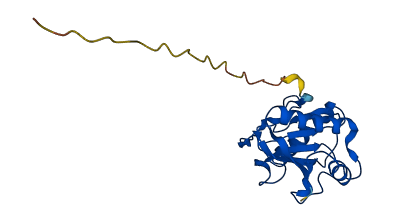
May kill Gram-positive bacteria by interfering with peptidoglycan biosynthesis. Binds also to Gram- negative bacteria, and has bacteriostatic activity towards Gram- negative bacteria.
| Human | |
|---|---|
| Gene Name: | PGLYRP1 |
| Uniprot: | O75594 |
| Entrez: | 8993 |
| Belongs to: |
|---|
| N-acetylmuramoyl-L-alanine amidase 2 family |

peptidoglycan recognition protein 1; Peptidoglycan recognition protein short; PGLYRP; PGLYRP1; PGRPpeptidoglycan recognition protein; PGRPS; PGRP-S; PGRP-SMGC126894; PGRPSMGC126896; TAG7; TNF superfamily, member 3 (LTB)-like (peptidoglycan recognition protein); TNFSF3L
Mass (kDA):
21.731 kDA

| Human | |
|---|---|
| Location: | 19q13.32 |
| Sequence: | 19; NC_000019.10 (46019153..46023053, complement) |
Highly expressed in bone marrow. Weak expression found in kidney, liver, small intestine, spleen, thymus, peripheral leukocyte, lung, fetal spleen and neutrophils.
Secreted. Cytoplasmic granule.



PMID: 9707603 by Kang D., et al. A peptidoglycan recognition protein in innate immunity conserved from insects to humans.
PMID: 11461926 by Liu C., et al. Peptidoglycan recognition proteins: a novel family of four human innate immunity pattern recognition molecules.