This website uses cookies to ensure you get the best experience on our website.


- Table of Contents
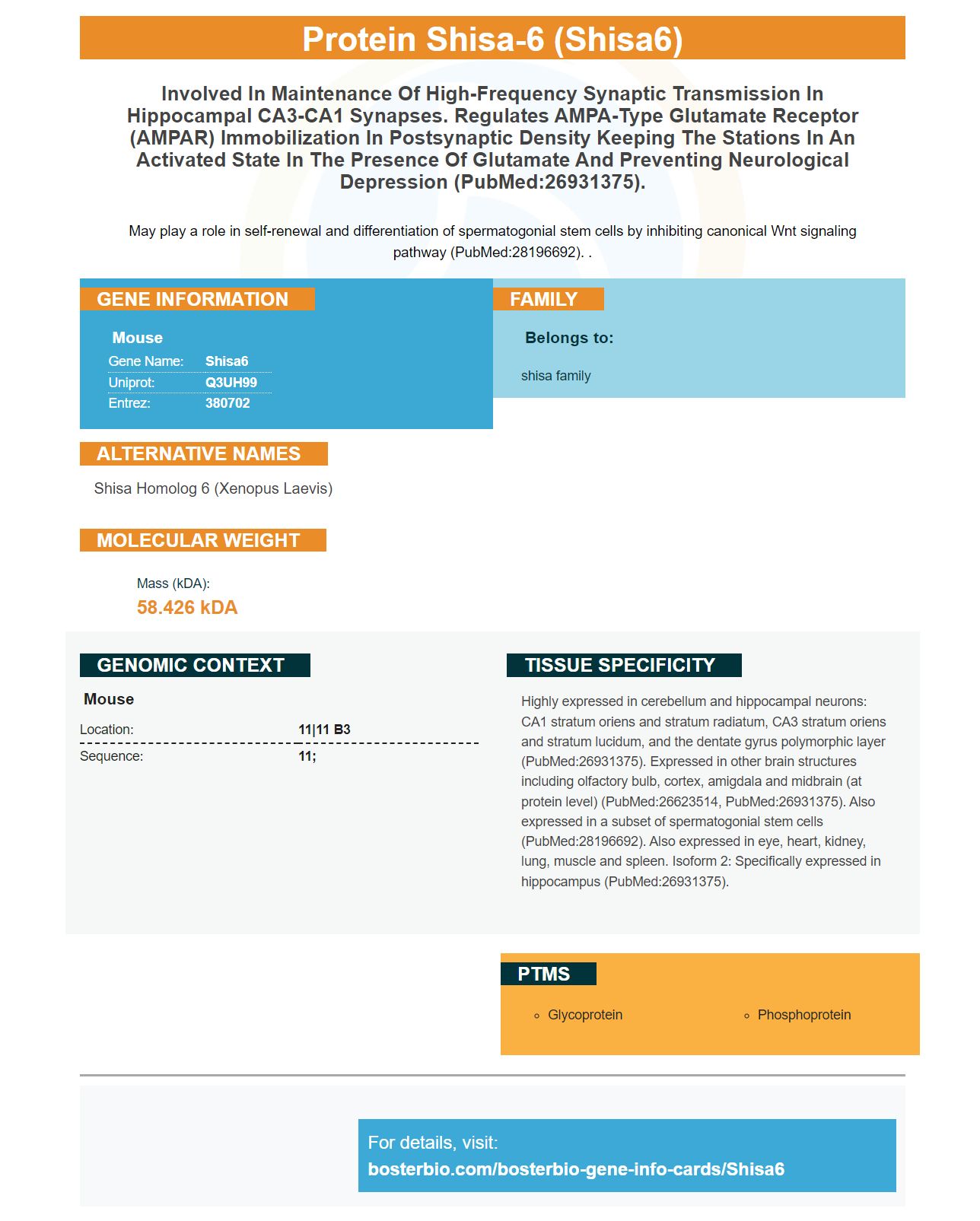
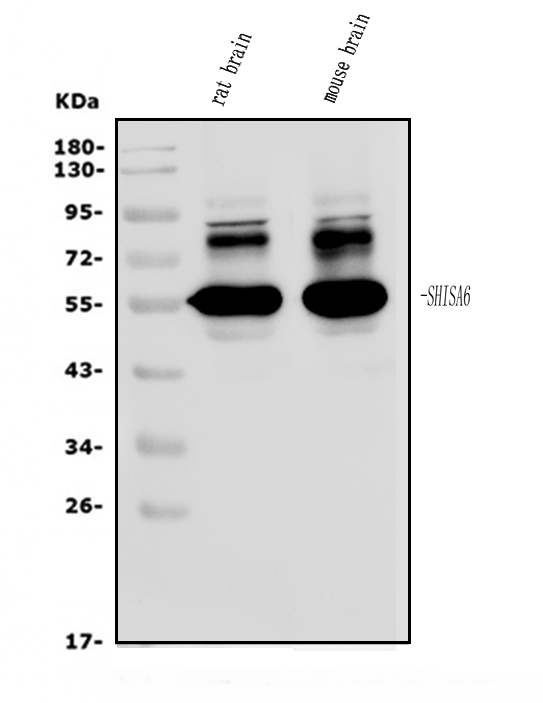
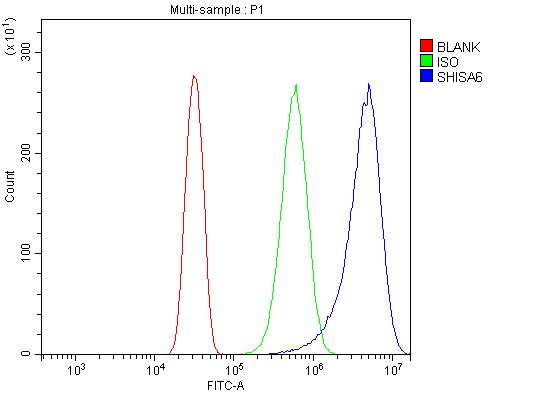
Facts about Protein shisa-6.
May play a role in self-renewal and differentiation of spermatogonial stem cells by inhibiting canonical Wnt signaling pathway (PubMed:28196692). .
| Mouse | |
|---|---|
| Gene Name: | Shisa6 |
| Uniprot: | Q3UH99 |
| Entrez: | 380702 |
| Belongs to: |
|---|
| shisa family |

shisa homolog 6 (Xenopus laevis)
Mass (kDA):
58.426 kDA

| Mouse | |
|---|---|
| Location: | 11|11 B3 |
| Sequence: | 11; |
Highly expressed in cerebellum and hippocampal neurons: CA1 stratum oriens and stratum radiatum, CA3 stratum oriens and stratum lucidum, and the dentate gyrus polymorphic layer (PubMed:26931375). Expressed in other brain structures including olfactory bulb, cortex, amigdala and midbrain (at protein level) (PubMed:26623514, PubMed:26931375). Also expressed in a subset of spermatogonial stem cells (PubMed:28196692). Also expressed in eye, heart, kidney, lung, muscle and spleen. Isoform 2: Specifically expressed in hippocampus (PubMed:26931375).

PMID: 26623514 by Farrow P., et al. Auxiliary subunits of the CKAMP family differentially modulate AMPA receptor properties.
PMID: 26931375 by Klaassen R.V., et al. Shisa6 traps AMPA receptors at postsynaptic sites and prevents their desensitization during synaptic activity.