This website uses cookies to ensure you get the best experience on our website.


- Table of Contents
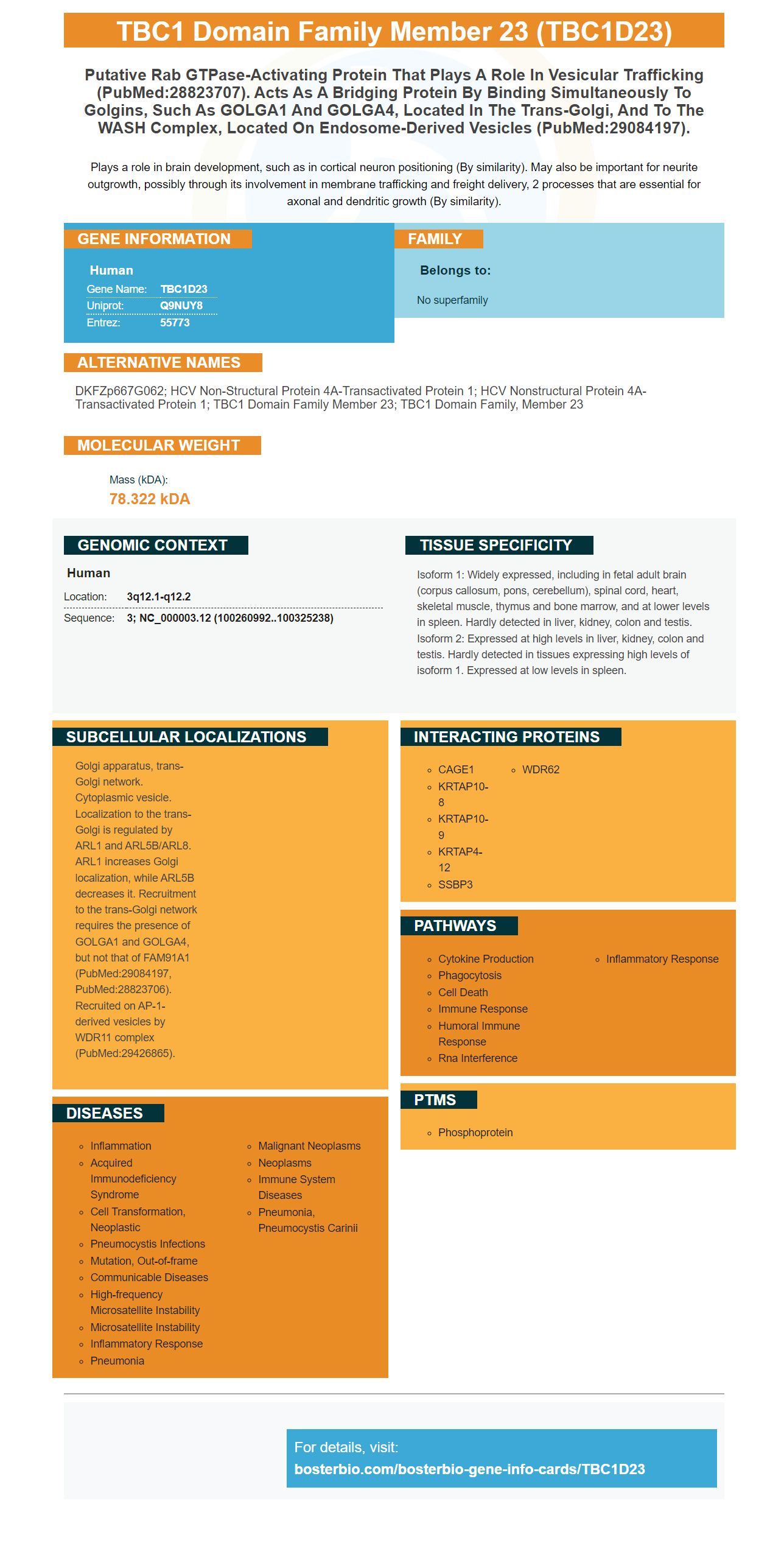
Facts about TBC1 domain family member 23.
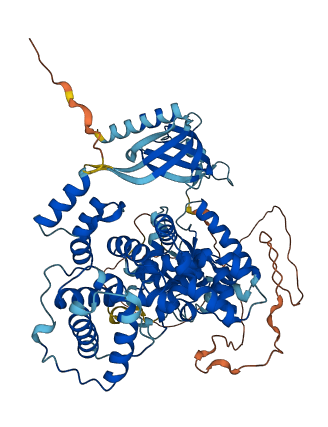
Plays a role in brain development, such as in cortical neuron positioning (By similarity). May also be important for neurite outgrowth, possibly through its involvement in membrane trafficking and freight delivery, 2 processes that are essential for axonal and dendritic growth (By similarity).
| Human | |
|---|---|
| Gene Name: | TBC1D23 |
| Uniprot: | Q9NUY8 |
| Entrez: | 55773 |
| Belongs to: |
|---|
| No superfamily |

DKFZp667G062; HCV non-structural protein 4A-transactivated protein 1; HCV nonstructural protein 4A-transactivated protein 1; TBC1 domain family member 23; TBC1 domain family, member 23
Mass (kDA):
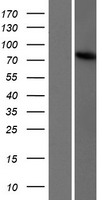
78.322 kDA

| Human | |
|---|---|
| Location: | 3q12.1-q12.2 |
| Sequence: | 3; NC_000003.12 (100260992..100325238) |
Isoform 1: Widely expressed, including in fetal adult brain (corpus callosum, pons, cerebellum), spinal cord, heart, skeletal muscle, thymus and bone marrow, and at lower levels in spleen. Hardly detected in liver, kidney, colon and testis. Isoform 2: Expressed at high levels in liver, kidney, colon and testis. Hardly detected in tissues expressing high levels of isoform 1. Expressed at low levels in spleen.
Golgi apparatus, trans-Golgi network. Cytoplasmic vesicle. Localization to the trans-Golgi is regulated by ARL1 and ARL5B/ARL8. ARL1 increases Golgi localization, while ARL5B decreases it. Recruitment to the trans-Golgi network requires the presence of GOLGA1 and GOLGA4, but not that of FAM91A1 (PubMed:29084197, PubMed:28823706). Recruited on AP-1-derived vesicles by WDR11 complex (PubMed:29426865).


PMID: 19077034 by Ishibashi K., et al. Identification and characterization of a novel Tre-2/Bub2/Cdc16 (TBC) protein that possesses Rab3A-GAP activity.
PMID: 28823707 by Ivanova E.L., et al. Homozygous truncating variants in TBC1D23 cause pontocerebellar hypoplasia and alter cortical development.