This website uses cookies to ensure you get the best experience on our website.


- Table of Contents

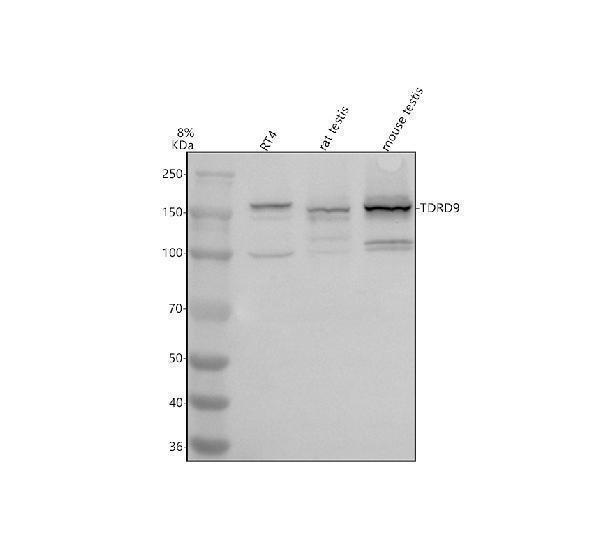
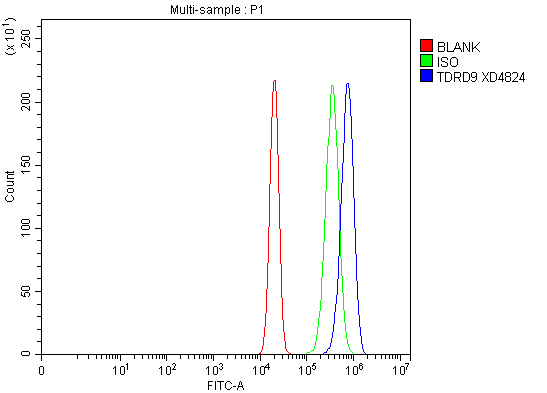
Facts about ATP-dependent RNA helicase TDRD9.
Acts downstream of piRNA biogenesis: exclusively required for transposon silencing in the nucleus, suggesting that it acts as a nuclear effector from the nucleus together with PIWIL4 (PubMed:28633017). .
| Mouse | |
|---|---|
| Gene Name: | Tdrd9 |
| Uniprot: | Q14BI7 |
| Entrez: | 74691 |
| Belongs to: |
|---|
| DEAD box helicase family |

C14orf75; chromosome 14 open reading frame 75; DKFZp434N0820; EC 3.6.1; EC 3.6.4.13; FLJ36164; HIG-1; hypoxia-inducible HIG-1; MGC135025; NET54; putative ATP-dependent RNA helicase TDRD9; tudor domain containing 9; Tudor domain-containing protein 9
Mass (kDA):
155.98 kDA

| Mouse | |
|---|---|
| Location: | 12|12 F1 |
| Sequence: | 12; |
Predominantly expressed in reproductive organs. Detected in mitotic spermatogonia, meiotic spermatocytes (predominantly at the pachytene stage), haploid spermatids in the testis, and in growing oocytes in the ovary (at protein level).


PMID: 20059948 by Shoji M., et al. The TDRD9-MIWI2 complex is essential for piRNA-mediated retrotransposon silencing in the mouse male germline.
PMID: 19584108 by Vagin V.V., et al. Proteomic analysis of murine Piwi proteins reveals a role for arginine methylation in specifying interaction with Tudor family members.