This website uses cookies to ensure you get the best experience on our website.


- Table of Contents


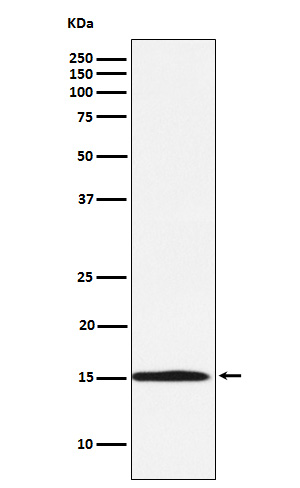

Facts about Polyubiquitin-C.
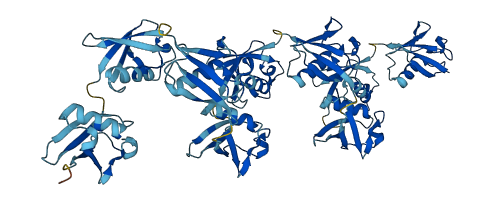
Polyubiquitin chains, when attached to a target protein, have different functions depending on the Lys residue of the ubiquitin that is linked: Lys-6-linked may be involved in DNA repair; Lys-11-linked is involved in ERAD (endoplasmic reticulum-associated degradation) and in cell-cycle regulation; Lys-29-linked is involved in lysosomal degradation; Lys-33-linked is involved in kinase modification; Lys-48-linked is involved in protein degradation via the proteasome; Lys-63-linked is involved in endocytosis, DNA-damage responses as well as in signaling processes leading to activation of the transcription factor NF-kappa-B. Linear polymer chains formed via attachment by the initiator Met lead to cell signaling.
| Human | |
|---|---|
| Gene Name: | UBC |
| Uniprot: | P0CG48 |
| Entrez: | 7316 |
| Belongs to: |
|---|
| ubiquitin family |

ubiquitin C
Mass (kDA):
77.039 kDA

| Human | |
|---|---|
| Location: | 12q24.31 |
| Sequence: | 12; NC_000012.12 (124911646..124914650, complement) |
[Ubiquitin]: Cytoplasm. Nucleus.


PMID: 2988935 by Wiborg O., et al. The human ubiquitin multigene family: some genes contain multiple directly repeated ubiquitin coding sequences.
PMID: 9644242 by Kim N.S., et al. Cloning of human polyubiquitin cDNAs and a ubiquitin-binding assay involving its in vitro translation product.