This website uses cookies to ensure you get the best experience on our website.


- Table of Contents
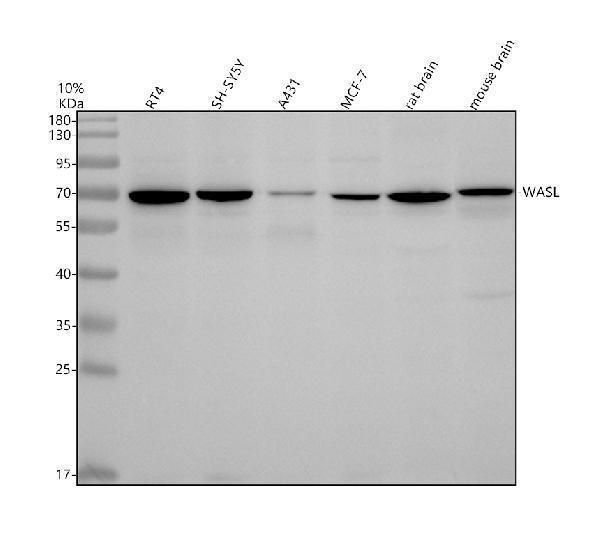
Designing a Western blot for WASL? The guide has the expected band size, antibodies backed by real blot images, the controls to run alongside, and protocols taken from published papers.
Open the WASL Western Blot Guide
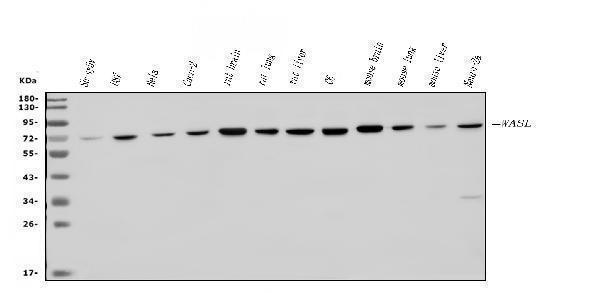
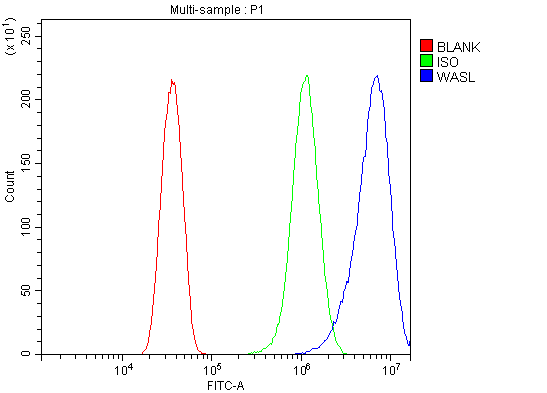
Facts about Neural Wiskott-Aldrich syndrome protein.
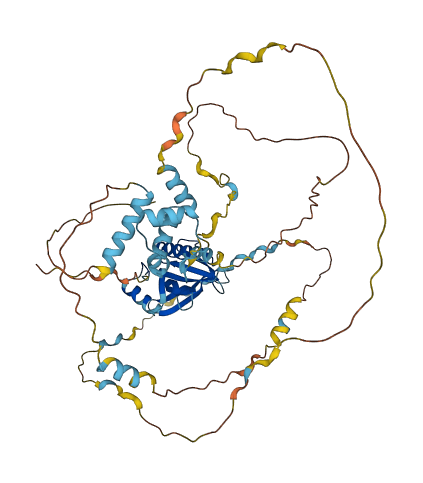
Together with CDC42, involved in the extension and maintenance of the formation of thin, actin-rich surface projections called filopodia (PubMed:9422512). In addition to its function in the cytoplasm, also plays a role in the nucleus by regulating gene transcription, probably by promoting nuclear actin polymerization (PubMed:16767080).
| Human | |
|---|---|
| Gene Name: | WASL |
| Uniprot: | O00401 |
| Entrez: | 8976 |
| Belongs to: |
|---|
| No superfamily |

NWASP; N-WASP; N-WASPneural WiskNWASP; TRS4; WASL; WiskDKFZp779G0847; WiskMGC48327
Mass (kDA):
54.827 kDA

| Human | |
|---|---|
| Location: | 7q31.32 |
| Sequence: | 7; NC_000007.14 (123681943..123749003, complement) |
Cytoplasm, cytoskeleton. Nucleus. Cytoplasm. Preferentially localized in the cytoplasm when phosphorylated and in the nucleus when unphosphorylated (By similarity). Exported from the nucleus by an nuclear export signal (NES)-dependent mechanism to the cytoplasm (By similarity).



PMID: 9322739 by Fukuoka M., et al. Identification of N-WASP homologs in human and rat brain.
PMID: 9422512 by Miki H., et al. Induction of filopodium formation by a WASP-related actin- depolymerizing protein N-WASP.