Western Blot Loading Control Hub

Loading Control Antibodies for Confident Western Blots

Quickly find and order GAPDH, β-actin, tubulin, vinculin and other housekeeping protein antibodies matched to your Western blot target, sample type and experimental conditions.
Why start with this hub?

  • Filter loading control antibodies by molecular weight, cell compartment, species reactivity and application.
  • Review validated WB images, datasheets and citation information for every antibody.
  • Add the right loading control antibody to your cart in minutes and move straight to the bench.
Find My Loading Control

What Are Loading Control Antibodies?

Housekeeping protein antibodies that keep your Western blot quantification trustworthy.

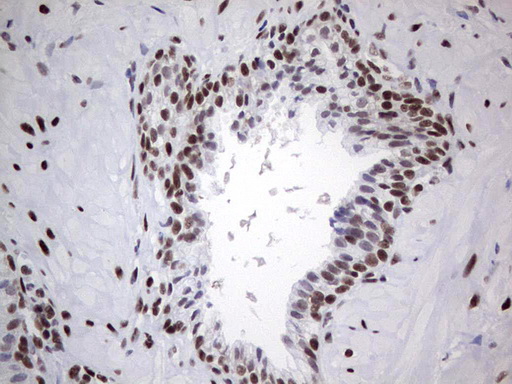
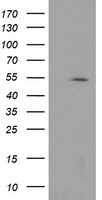
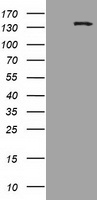
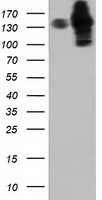
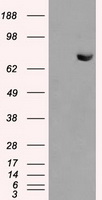
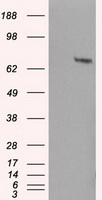
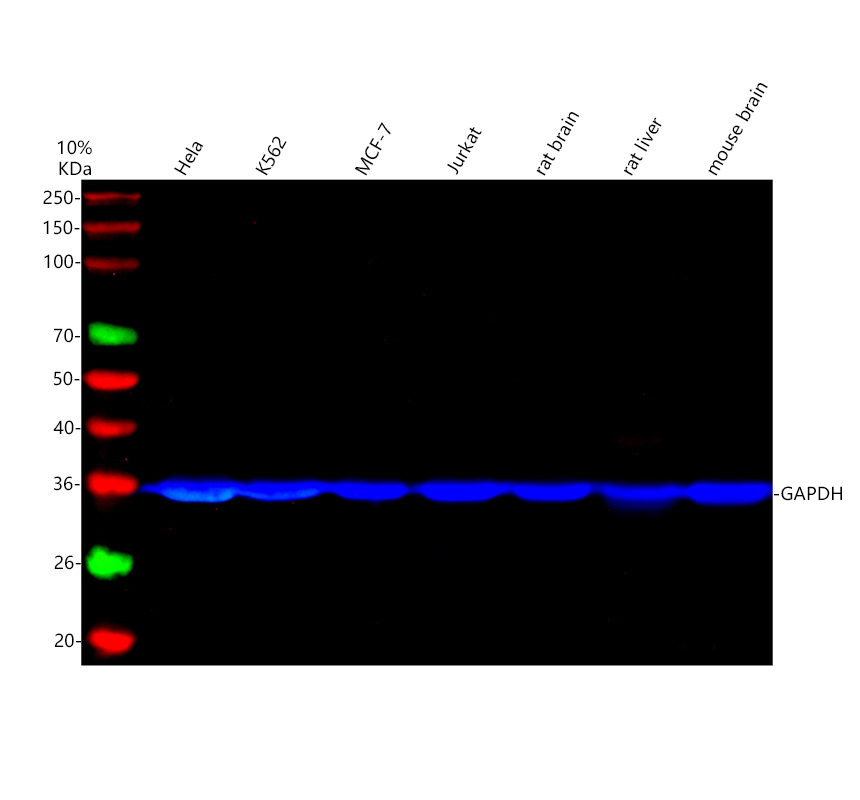
Western blot loading control bands detected by GAPDH antibody

Western blot loading control antibodies are housekeeping protein antibodies used alongside your protein of interest so your data holds up in lab meetings, manuscripts and regulatory reviews. Instead of reporting on a specific pathway, they detect abundantly and relatively stably expressed proteins such as GAPDH, β-actin, tubulin, vinculin or ATP1A1 that should remain largely consistent across lanes, samples and routine treatments.

In a Western blot, these antibodies provide a reference band that acts as an internal standard. By comparing the intensity of your target band to the loading control band, you can normalize for lane-to-lane differences in total protein amount, pipetting, transfer efficiency and exposure time. This turns a Western blot from a picture that “looks right” into semi-quantitative data supported by densitometry-based fold changes.

Because no single housekeeping protein is universal, different sample types and cellular compartments require different loading controls. Whole-cell lysates, nuclear extracts, membrane fractions and mitochondrial preparations often need distinct reference proteins. The sections below organize Boster’s Western blot loading control antibodies by molecular weight and compartment, and provide a simple workflow to help you choose the most appropriate control for each experiment.

Loading Control Selection by Molecular Weight and Compartment

Use this table to match your target’s approximate size and cell compartment to a suitable loading control.

Choose a housekeeping protein whose molecular weight does not overlap your band of interest and that resides in the same cellular compartment as your target (cytosolic, nuclear, membrane or mitochondrial). Then click through to the datasheet for full application and species details.

Compartment / Sample Type Recommended Loading Control MW (kDa) Typical Use
Whole cell / cytosolic lysates GAPDH ~36 General WB loading control for many cytosolic targets across 20–120 kDa.
Whole cell / cytoskeletal β-actin ~42 Classic cytoskeletal marker; avoid when your target runs near 40–45 kDa.
Cytoskeletal-rich samples α/β-tubulin ~50–55 Alternative to GAPDH/β-actin when bands overlap; useful for neurites and microtubule studies.
Membrane / plasma membrane proteins ATP1A1 ~100–110 Plasma membrane marker for normalization of membrane or surface proteins in fractionated samples.
Whole cell / focal adhesion Vinculin ~116 High–molecular weight control when probing lower bands on the same blot.
Nuclear extracts Lamin B1 ~66 Nuclear envelope marker for normalization of nuclear proteins.
Nuclear extracts (chromatin) Histone H3 ~16 Small, abundant chromatin-associated control for histone and nuclear targets.
Mitochondrial fractions VDAC1 / Porin ~30 Mitochondrial outer membrane control for organelle-enriched samples.
Serum / plasma Transferrin ~77 Loading control for serum or plasma protein detection.
Browse All Loading Control Antibodies

The Challenge: Choosing the Right Western Blot Loading Control

You know how to run Western blots, but choosing the right loading control for each target, treatment condition and cellular compartment often still feels like trial and error.

  • Unsure which housekeeping protein fits your target’s molecular weight, cytosolic vs nuclear localization, or membrane fraction.
  • Generic product lists with dozens of GAPDH, β-actin or tubulin antibodies and almost no Western blot–specific guidance.
  • Wasted gels, film and time when the “stable” loading control shifts with treatment (e.g. serum starvation, differentiation, hypoxia).

Is This Western Blot Loading Control Hub for You?

You run Western blots in an academic, hospital or biotech lab and need reliable Western blot loading control antibodies—GAPDH, β-actin, tubulin, vinculin and other housekeeping proteins—without wasting time digging through catalogs.

  • You want a validated housekeeping protein that matches your target’s molecular weight, expression level and cellular compartment the first time.
  • You would rather follow a clear, experiment-focused workflow than guess between similar catalog numbers.

If your ideal outcome is to choose, verify and order the right Western blot loading control antibody in under 5 minutes, this hub is built for you.

Loading Control Selection Workflow

Follow these three steps to match your target’s molecular weight and compartment to the right Western blot loading control antibody.

  • Step 1: Define your target band

    Note your target protein’s expected molecular weight and where it resides (cytosolic, nuclear, membrane or mitochondrial). This will guide you to loading controls that do not overlap your band of interest and live in the same compartment.

  • Step 2: Use the loading control table

    Scan the table by compartment and approximate size to find suitable housekeeping proteins such as GAPDH, β-actin, tubulin, vinculin, Lamin B1, Histone H3 or VDAC1. Shortlist the controls that best match your target and sample type.

  • Step 3: Review data and add to cart

    Click through to each antibody’s datasheet to review Western blot images, species reactivity and applications. Choose the vial size and format you need, add the loading control antibody to your cart, or contact Boster’s scientists for 1-to-1 Western blot support if you are still unsure.

Why Use This Western Blot Loading Control Hub?

Clear, experiment-focused guidance instead of scrolling through generic catalog lists.

This hub is designed for scientists who already know how to run Western blots, but want a faster, more reliable way to choose the right loading control for each target, treatment and compartment.
Key benefits at a glance

  • Match loading controls to your target’s molecular weight and cellular compartment in minutes.
  • Avoid band overlap by selecting housekeeping proteins that sit away from your band of interest.
  • Reduce repeat blots by choosing controls that stay stable across common treatments and time courses.
  • See validated Western blot images, datasheets and citation information in one place.
  • Rely on rigorous QC, performance guarantee and responsive 16/7 technical support from Boster scientists.
  • Use this page as a reusable checklist every time you design a new Western blot experiment.
Browse All Loading Control Antibodies

Frequently Asked Questions: Western Blot Loading Controls

Quick answers about choosing, storing and troubleshooting loading control antibodies.

Q1. How do I choose between GAPDH, β-actin, tubulin and vinculin?

Start by matching your target’s expected molecular weight and compartment. GAPDH and β-actin are classic cytosolic loading controls, but their bands sit around 36–42 kDa, so they can overlap targets in that range. Tubulin (~50–55 kDa) and vinculin (~116 kDa) are useful alternatives when you need a different size window or cytoskeletal marker. Use the selection table and workflow above to find housekeeping proteins that do not overlap your band of interest and live in the same cellular compartment.

If a Boster loading control antibody fails in any listed application or species, contact our technical support team. Every antibody is backed by a performance guarantee—we will investigate the issue and refund or replace the product free of charge if it does not perform as described on the datasheet. This includes cases where the control shows no signal under recommended conditions.

In-stock loading control antibodies typically ship the next business day within the US and Europe using cold-chain packaging to protect activity. As a general guideline, antibodies are stored at −20 °C for up to one year. After reconstitution, keep them at 4 °C for about one month, or aliquot and freeze at −20 °C for longer-term storage. Avoid repeated freeze–thaw cycles and always refer to the individual datasheet for exact instructions.

Yes. Our team of experienced scientists provides 1-to-1 Western blot support 16 hours a day, 7 days a week. Share your target protein, expected molecular weight, cell line or tissue and treatment conditions, and we can recommend the most suitable loading control antibodies and protocols for your experiment.

Browse loading control antibodies

Product
Figures
Species
Applications
Price

no images

Chicken, Human, Mouse, Rat
IHC, WB
$370
Cat # M03989-5
100 μg/vial

1 images

Human, Mouse, Rat
ELISA, WB
$370
Cat # A01843-1
100 μg/vial

22 images

Human, Mouse, Rat
IHC, WB
$523
Cat # M02177-1
100 µl

4 images

Human, Mouse, Rat
Flow Cytometry, IF, IHC-P, WB
$299
Cat # M01280-4
50 µl

4 images

Human
Flow Cytometry, IF, IHC-P, WB
$299
Cat # A00325-2
80 µl

4 images

Dog, Human, Monkey, Mouse, Rat
Flow Cytometry, IF, WB
$523
Cat # M00256-1
100 µl

13 images

Human, Monkey
Flow Cytometry, IHC, WB
$523
Cat # M00595-1
100 µl

10 images

Dog, Human, Monkey, Rat
Flow Cytometry, IF, IHC, WB
$523
Cat # M00595-2
100 µl

6 images

Human
Flow Cytometry, IHC, WB
$523
Cat # M05215-2
100 µl

7 images

Human
IF, IHC, WB
$523
Cat # M05215-1
100 µl

Displaying Items 1-10 of Many

Why Western Blot Scientists Trust Boster Loading Control Antibodies

Rigorous QC, clear guarantees and responsive technical support behind every loading control antibody.

Rigorous QC
Every loading control antibody is tested and screened in Western blot before release.

Performance guarantee
If it fails in a listed application or species, we refund or replace it free of charge.

Risk-free evaluation
Any defective product is replaced or refunded, so you can evaluate controls with confidence.

16/7 scientist support
Experienced WB experts available 16 hours a day, 7 days a week for 1-to-1 troubleshooting.