Customer Testimonials

Peer Reviews from Real Labs

Browse peer-submitted results linked to specific products—ratings, images, and practical notes included. Contribute your own result to strengthen the evidence base and claim rewards after verification.

Video Interviews

See real workflows and decision points—what researchers tried, what worked, and why. Share your story in a short interview and claim rewards!

Get Interview Rewards

Filter by category, reactivity, and host to find the most relevant peer results.

This antibody is highly specific and efficient, suitable for Western blot detection of CRCP protein in MCF-7 cells, with only minor nonspecific bands observed.

Excellent, submitted by on
SKU M04247
Application Western Blot
Sample Human mcf-7 cells
Sample Processing Description RIPA lysis buffer supplemented with a protease inhibitor cocktail was added to the cell culture dish, and the cells were lysed on ice for 30 min. The lysates were then centrifuged, and the supernatants were collected. Protein concentration was determined, and samples were adjusted to equal concentrations. Subsequently, 5× protein loading buffer was added, and the samples were denatured at 100 °C for 10 min. A total of 15 μL of protein sample was loaded per lane for SDS-PAGE electrophoresis.
Other Reagents Blocking buffer
Primary Antibody CRCP Rabbit Monoclonal Antibody
Primary Incubation 1:500, overnight at 4 ℃
Secondary Antibody HRP Conjugated AffiniPure Goat Anti-Rabbit IgG (H+L)
Secondary Incubation 1:2000, 1 hour in room temperature
Detection Substrate: ECL, Imaging system:ChemiDoc MP
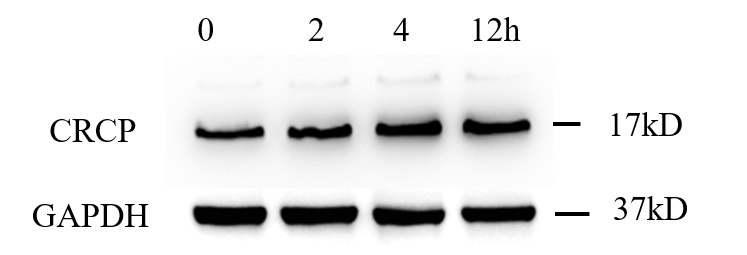
Results Summary As shown in the figure, the expression levels of CRCP protein in MCF-7 cells at different drug treatment time points are presented. The Western blot results obtained with this antibody are clear; although there are a few faint nonspecific bands above, they do not affect result interpretation. It can be observed that the expression of the target protein in MCF-7 cells increases with longer drug treatment times.

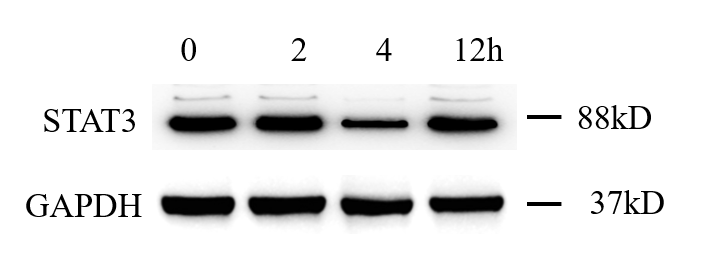
This antibody is highly specific and efficient, suitable for Western blot detection of STAT3 protein in MCF-7 cells, with only minor nonspecific bands observed.

Excellent, submitted by on
SKU M00007
Application Western Blot
Sample Human mcf-7 cells
Sample Processing Description RIPA lysis buffer supplemented with a protease inhibitor cocktail was added to the cell culture dish and incubated on ice for 30 min. The lysates were then centrifuged, and the supernatants were collected. Protein concentration was determined, and samples were adjusted accordingly. Five times protein loading buffer was added, and the samples were denatured at 100 °C for 10 min. A total of 15 μL of protein sample was loaded per lane for SDS-PAGE.
Other Reagents Blocking buffer
Primary Antibody STAT3 Rabbit Monoclonal Antibody
Primary Incubation 1:500, overnight at 4 ℃
Secondary Antibody HRP Conjugated AffiniPure Goat Anti-Rabbit IgG (H+L)
Secondary Incubation 1:2000, 1 hour in room temperature
Detection Substrate: ECL, Imaging system:ChemiDoc MP
Results Summary This antibody is highly specific and efficient, suitable for Western blot detection of STAT3 protein in MCF-7 cells, with only minor nonspecific bands observed.

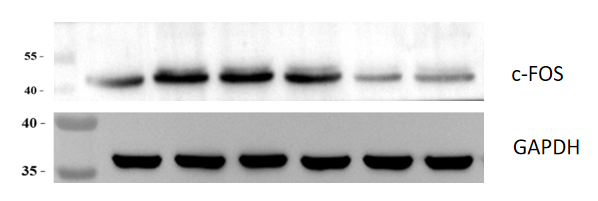
This antibody demonstrates good specificity, with minimal nonspecific bands. The target band is clear and at the correct position, and expression differences between different groups are observable.

Excellent, submitted by on
SKU M00297
Application Western Blot
Sample Mouse hippocampal tissue
Sample Processing Description An Alzheimer’s disease (AD) model was established by injecting streptozotocin (STZ) into the lateral ventricles of mice. Hippocampal tissues were collected after treatment with four different doses of QianCengTa compound, and total protein was extracted.
Other Reagents RIPA lysis buffer,Protease inhibitor,Electrophoresis buffer,Transfer buffer,Blocking buffer
Primary Antibody c-Fos Rabbit Monoclonal Antibody
Primary Incubation 1:2000, overnight at 4 ℃
Secondary Antibody HRP Goat Anti-Rabbit IgG
Secondary Incubation 1:10000, 1 hour in room temperature
Detection Substrate: ECL, Imaging system:ChemiDoc MP
Results Summary c-FOS is a marker of neuronal activation under pathological conditions. Its expression is low in normal brain tissue but elevated in the AD model, and decreases following drug treatment. Lane 1 represents normal hippocampus, lane 2 the AD model hippocampus, lanes 3, 4, and 5 correspond to increasing doses of QianCengTa compound, and lane 6 is the positive control drug. The Western blot results indicate that QianCengTa compound exhibits a therapeutic effect on AD.

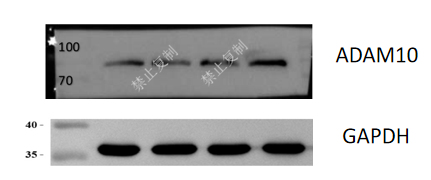
The antibody has good specificity, with a clear target band at the correct position and minimal non-specific bands.

Excellent, submitted by on
SKU M00566
Application Western Blot
Sample Human A549 cells, HCC1833 cells, LU65 cells, PC-9 cells
Sample Processing Description After normal cell culture, total proteins were extracted using RIPA lysis buffer with protease inhibitors. Protein concentration was determined by BCA assay, and then the four samples were adjusted to a uniform concentration of 3 mg/mL using loading buffer.
Other Reagents RIPA lysis buffer, Protease inhibitor, Electrophoresis buffer, Transfer buffer, Blocking buffer
Primary Antibody c-Fos Rabbit Monoclonal Antibody
Primary Incubation 1:2000, overnight at 4 ℃
Secondary Antibody HRP Goat Anti-Rabbit IgG
Secondary Incubation 1:10000, 1 hour in room temperature
Detection Substrate: ECL, Imaging system:ChemiDoc MP
Results Summary The purpose of the experiment is to examine the differences in ADAM10 protein expression among different types of human lung cancer cells, in order to select suitable cells for subsequent experiments.

The antibody shows a clear target band at the correct position, and the results are good.

Excellent, submitted by on
SKU M00297
Application Western Blot
Sample Mouse hippocampal tissue
Sample Processing Description An Alzheimer’s disease (AD) model was induced by intracerebroventricular injection of streptozotocin (STZ) in mice. The mice were subsequently treated with four different doses of Qianlenta Heji, and total protein was extracted from the hippocampal tissues.
Other Reagents RIPA lysis buffer, Protease inhibitor, Electrophoresis buffer, Transfer buffer, Blocking buffer
Primary Antibody c-Fos Rabbit Monoclonal Antibody
Primary Incubation 1:2000, overnight at 4 ℃
Secondary Antibody HRP Goat Anti-Rabbit IgG
Secondary Incubation 1:10000, 1 hour in room temperature
Detection Substrate: ECL, Imaging system:ChemiDoc MP
Results Summary c-FOS serves as a marker of neuronal activation under pathological conditions. Its expression is low in normal brain tissue but elevated in AD model mice, and is reduced after treatment. In the WB assay, lane 1 corresponds to hippocampal tissue from normal mice, lane 2 to AD model mice, lanes 3–5 to hippocampi treated with increasing doses of Qianlenta Heji, and lane 6 to a positive control drug. The results demonstrate that Qianlenta Heji exhibits therapeutic effects in the AD model.

The target band of this antibody is clear and at the correct position, and it performs better than antibodies from other brands.

Excellent, submitted by on
SKU M01245
Application Western Blot
Sample Human keratinocytes isolated from skin
Sample Processing Description Keratinocytes isolated from normal skin tissue.
Other Reagents RIPA lysis buffer, Protease inhibitor, Electrophoresis buffer, Transfer buffer, Blocking buffer
Primary Antibody Albumin Rabbit Monoclonal Antibody
Primary Incubation 1:2000, overnight at 4 ℃
Secondary Antibody HRP Goat Anti-Rabbit IgG
Secondary Incubation 1:10000, 1 hour in room temperature
Detection Substrate: ECL, Imaging system:ChemiDoc MP
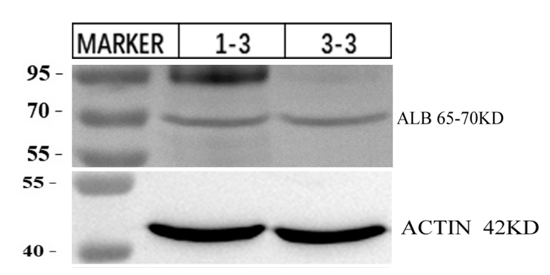
Results Summary Human serum albumin (ALB) is the most abundant protein in plasma, with key functions including maintaining colloid osmotic pressure, transporting substances, providing antioxidant activity, and regulating inflammation. Clinically, ALB is widely used to treat hypoalbuminemia, shock, burns, and other conditions. ALB was long thought to be secreted exclusively by hepatocytes, but recent studies suggest that other cell types may also be capable of synthesizing it. The purpose of this experiment was to verify whether human skin keratinocytes can synthesize ALB. The results show that skin keratinocytes are indeed capable of producing ALB.

The target band of this antibody is clear and at the correct position, with minimal nonspecific bands, and the results are good.

Excellent, submitted by on
SKU M00207-1
Application Western Blot
Sample huaman 293 cells
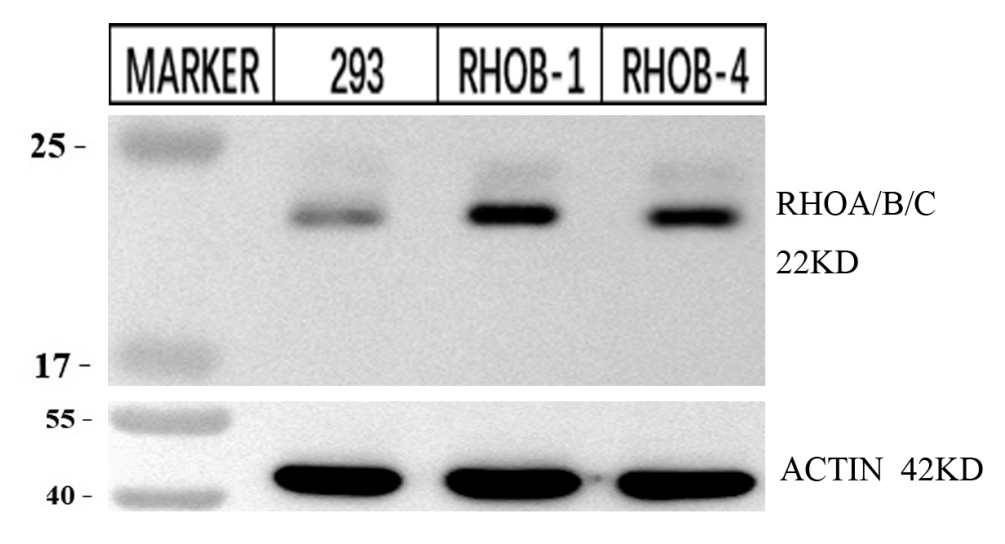
Sample Processing Description RHOB detection was performed using total protein extracted from normal 293 cells and 293 cells with RHOB overexpression.
Other Reagents RIPA lysis buffer, Protease inhibitor, Electrophoresis buffer, Transfer buffer, Blocking buffer
Primary Antibody ATF4 Rabbit Monoclonal Antibody
Primary Incubation 1:2500, overnight at 4 ℃
Secondary Antibody HRP Goat Anti-Rabbit IgG
Secondary Incubation 1:10000, 1 hour in room temperature
Detection Substrate: ECL, Imaging system:ChemiDoc MP
Results Summary We generated a stable RHOB overexpression cell line using 293 cells. The results show that the RHOB expression level in the transfected samples is significantly higher than in the normal 293 cells, indicating successful transfection.

The antibody shows a clear target band at the correct position and has strong affinity for phosphorylated IRE1 protein from pig.

Excellent, submitted by on
SKU M00371
Application Western Blot
Sample Porcine intestinal tissue
Sample Processing Description Intestinal tissues from different segments of pigs infected with swine fever.
Other Reagents RIPA lysis buffer, Protease inhibitor, Electrophoresis buffer, Transfer buffer, Blocking buffer
Primary Antibody ATF4 Rabbit Monoclonal Antibody
Primary Incubation 1:2000, overnight at 4 ℃
Secondary Antibody HRP Goat Anti-Rabbit IgG
Secondary Incubation 1:10000, 1 hour in room temperature
Detection Substrate: ECL, Imaging system:ChemiDoc MP
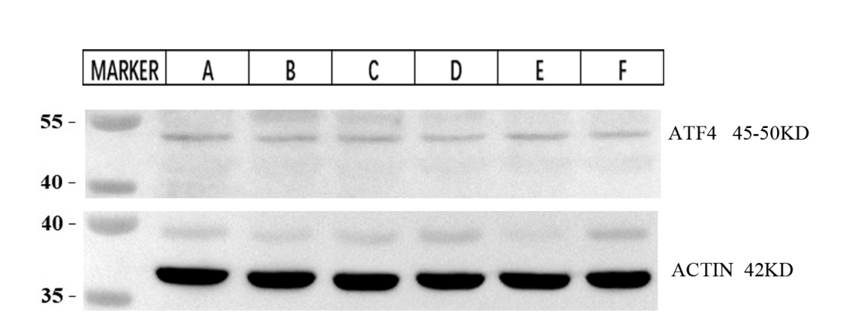
Results Summary ATF4 is a key regulator of the integrated stress response. When cells encounter conditions such as oxidative stress or endoplasmic reticulum stress, the expression of ATF4 is rapidly induced and upregulated. The aim of this experiment is to determine the expression levels of ATF4 protein in different intestinal segments infected with classical swine fever.

The antibody shows a clear target band at the correct molecular weight and exhibits strong affinity for phosphorylated EIF2A protein in pig samples.

Excellent, submitted by on
SKU P04387
Application Western Blot
Sample Porcine intestinal tissue
Sample Processing Description Intestinal tissues from different segments of pigs infected with swine fever.
Other Reagents RIPA lysis buffer, Protease inhibitor, Electrophoresis buffer, Transfer buffer, Blocking buffer
Primary Antibody Anti-Phospho-EIF2S1 (S51) Rabbit Monoclonal Antibody
Primary Incubation 1:2000, overnight at 4 ℃
Secondary Antibody HRP Goat Anti-Rabbit IgG
Secondary Incubation 1:10000, 1 hour in room temperature
Detection Substrate: ECL, Imaging system:ChemiDoc MP
Results Summary Phosphorylation of eIF2α is one of the most important switches controlling intracellular protein synthesis. When cells encounter conditions such as oxidative stress or endoplasmic reticulum stress, phosphorylated eIF2α rapidly suppresses the majority of protein synthesis to help the cell cope with the crisis. The purpose of this experiment is to determine the expression levels of phosphorylated EIF2A protein in different intestinal segments infected with classical swine fever virus.

The antibody shows a clear target band, correct localization, minimal background, and overall good results.

Excellent, submitted by on
SKU P00003
Application Western Blot
Sample mouse 4T1 cells
Sample Processing Description normal 4T1 cells, LPS-stimulated 4T1 cells, cells treated with low, medium, or high doses of the drug, and cells treated with a positive control drug.
Other Reagents RIPA lysis buffer, Protease inhibitor, Electrophoresis buffer, Transfer buffer, Blocking buffer
Primary Antibody Anti-Phospho-mTOR (S2448) Rabbit Monoclonal Antibody
Primary Incubation 1:2500, overnight at 4 ℃
Secondary Antibody HRP Goat Anti-Rabbit IgG
Secondary Incubation 1:10000, 1 hour in room temperature
Detection Substrate: ECL, Imaging system:ChemiDoc MP
Results Summary With equal loading amounts, total MTOR protein levels were similar across all groups. However, phosphorylated MTOR levels showed significant changes: the blank group was the lowest, the model group the highest, and in the drug-treated groups, phosphorylation decreased sequentially from low, medium, to high dose. The positive control group was comparable to the high-dose group.