Customer Testimonials

Peer Reviews from Real Labs

Browse peer-submitted results linked to specific products—ratings, images, and practical notes included. Contribute your own result to strengthen the evidence base and claim rewards after verification.

Video Interviews

See real workflows and decision points—what researchers tried, what worked, and why. Share your story in a short interview and claim rewards!

Get Interview Rewards

Filter by category, reactivity, and host to find the most relevant peer results.

In WB using Anti-CDK1 (Phospho-T450) antibody (Cat# PB9533-50 µL), CDK1 expression in rat colon was increased in the model group and most effectively reduced in the high-dose herbal treatment group, with clear and well-defined target bands.

Excellent, submitted by on
SKU PB9533
Application Western Blot
Sample rat colon tissue
Sample Processing Description Samples were lysed in RIPA buffer containing PMSF protease inhibitor (100:1) for 10 min, centrifuged at 12,000 rpm for 15 min, and the supernatant was mixed with 5× loading buffer, boiled at 100 °C for 10 min, and loaded onto SDS-PAGE.
Other Reagents 5% Non-fat milk
Primary Antibody CDK1 Antibody Picoband®
Primary Incubation 1:1000, overnight at 4 ℃
Secondary Antibody HRP Conjugated AffiniPure Goat Anti-rabbit IgG (H+L)
Secondary Incubation 1:5000, 1 h in RT
Detection Substrate: ECL, Imaging system:ChemiDoc MP
Results Summary The image shows WB results of CDK1 and the loading control Actin in rat colon across different groups; CDK1 expression was elevated in the model group and most effectively reduced in the high-dose herbal treatment group, with clear and distinct target bands.

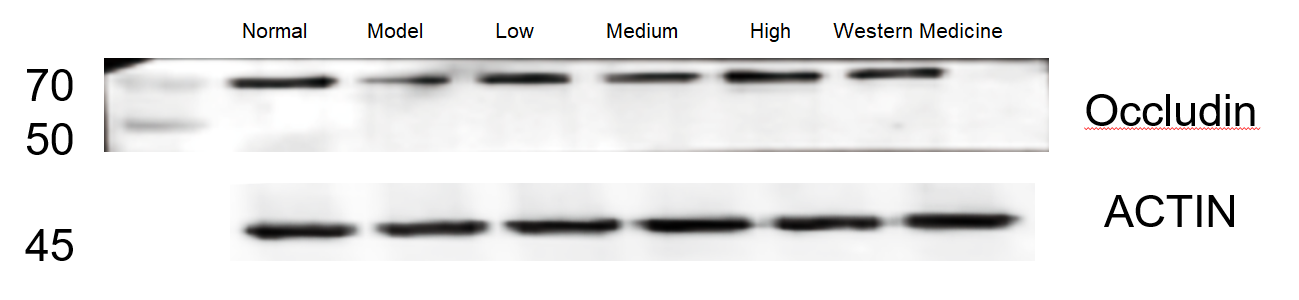
In WB using Occludin antibody (Cat# A01246), clear bands showed decreased Occludin in the model group and best recovery in the high-dose herbal treatment group.

Excellent, submitted by on
SKU A01246
Application Western Blot
Sample rat colon tissue
Sample Processing Description RIPA lysis buffer containing protease inhibitor PMSF (100:1) was used to lyse samples for 10 min, followed by centrifugation at 12,000 rpm for 15 min; the supernatant was mixed with 5× loading buffer, boiled at 100 °C for 10 min, and loaded onto SDS-PAGE.
Other Reagents 5% Non-fat milk
Primary Antibody Occludin OCLN Antibody
Primary Incubation 1:1000, overnight at 4 ℃
Secondary Antibody HRP Conjugated AffiniPure Goat Anti-rabbit IgG (H+L)
Secondary Incubation 1:5000, 1 h in RT
Detection Substrate: ECL substrate, Imaging system:ChemiDoc MP
Results Summary The image shows WB results of Occludin and the loading control Actin in rat colon across different groups; Occludin expression was reduced in the model group, with the high-dose herbal treatment showing the best recovery and clear, well-defined target bands.

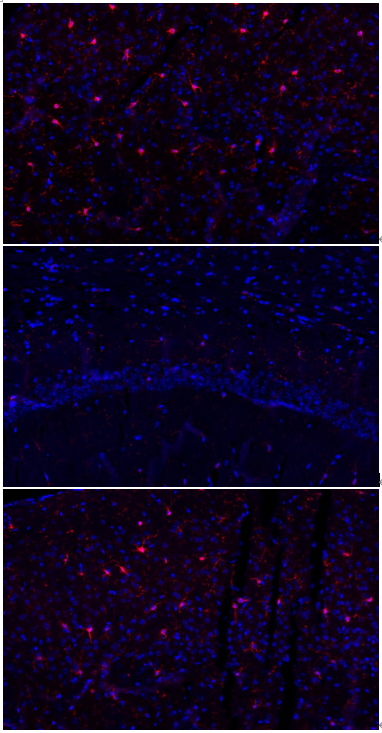
In the IF experiment using Anti-IBA-1 antibody (Cat# M01394-4), the antibody clearly and specifically labeled microglial cells in mouse cerebral infarction tissue, showing distinct staining and well-defined cellular morphology.

Excellent, submitted by on
SKU M01394-4
Application Immunofluorescence
Sample mouse brain tissue
Sample Processing Description Mouse cerebral infarction model; brain tissues were collected, fixed in formaldehyde for 48 hours, and then sagittally paraffin-embedded.
Other ReagentsGoat serum, DAPI Staining Solution, Antifade fluorescence mounting medium.
Primary Antibody Iba1 Rabbit Monoclonal Antibody
Primary Incubation 1:100, overnight at 4 ℃
Secondary Antibody Goat Anti-Rabbit IgG (H+L) Secondary Antibody, Fluoro594 Conjugated (BA1142, Boster)
Secondary Incubation 45 min at 37℃
Detection Imaging system:Leica DMi3000
Results Summary IBA-1 is a well-established marker of microglia in the nervous system. Microglia are the primary immune effector cells in the central nervous system and respond rapidly to CNS injury by proliferating, upregulating or re-expressing MHC antigens, migrating, and adopting a phagocyte-like morphology. In this study, IBA-1 was used to label microglia in cerebral infarction samples, showing clear staining and accurate cellular morphology.

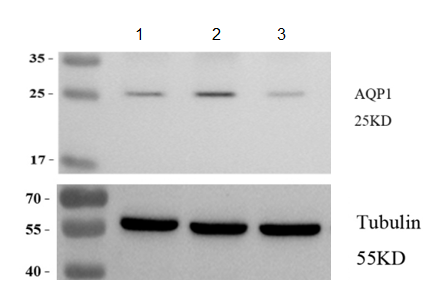
In this Western blot experiment using Anti-AQP1 antibody (Cat# BM5035) on MADB106 rat mammary carcinoma cells, AQP1 protein levels were markedly increased in cells treated with the agonist and significantly decreased in cells treated with the inhibitor.

Excellent, submitted by on
SKU M00865
Application Western blot
Sample MADB106 rat mammary carcinoma cells
Sample Processing Description MADB106 cells under normal culture conditions , MADB106 cells treated with agonist , MADB106 cells treated with inhibitor
Other ReagentsRIPA Lysis Buffer, Protease Inhibitor, Resolving Gel Solution ,Transfer Buffer ,Blocking Buffer
Primary Antibody AQP1 Rabbit Monoclonal Antibody
Primary Incubation 1:3000, overnight at 4 ℃
Secondary Antibody 1:10,000, HRP-conjugated Goat Anti-Rabbit IgG
Secondary Incubation 1h at RT
Detection Substrate: ECL substrate, Imaging system:ChemiDoc MP
Results Summary AQP1 (Aquaporin 1) is the first discovered water channel protein, whose primary function is efficient water transport. Recent studies have revealed that AQP1 plays a critical role in cancer progression, promoting tumor growth in breast cancer by enhancing angiogenesis and cell migration. In this experiment, AQP1 protein levels were markedly increased in cells treated with the agonist and significantly decreased in cells treated with the inhibitor.

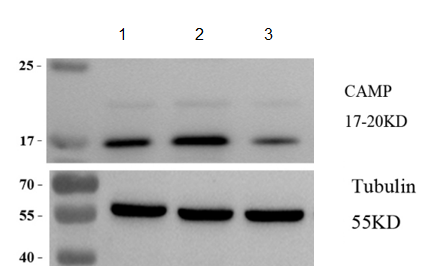
In this WB experiment using Anti-CAMP antibody (Cat# A05475-1) on MADB106 rat mammary carcinoma cells, CAMP protein secretion was markedly increased in cells treated with the agonist and significantly decreased in cells treated with the inhibitor.

Excellent, submitted by on
SKU A05475-1
Application Western blot
Sample MADB106 rat mammary carcinoma cells
Sample Processing Description MADB106 cells under normal culture conditions , MADB106 cells treated with agonist , MADB106 cells treated with inhibitor
Other ReagentsRIPA Lysis Buffer, Protease Inhibitor, Resolving Gel Solution ,Transfer Buffer ,Blocking Buffer
Primary Antibody Camp Antibody Picoband®
Primary Incubation 1:2000, overnight at 4 ℃
Secondary Antibody 1:10,000, HRP-conjugated Goat Anti-Rabbit IgG
Secondary Incubation 1h at 37℃
Detection Substrate: ECL substrate, Imaging system:ChemiDoc MP
Results Summary CAMP, also known as cathelicidin antimicrobial peptide or LL-37, is an important antimicrobial peptide with dual functions: directly killing pathogens and modulating immune responses. It plays a complex role in maintaining the homeostasis of barrier tissues such as skin and in influencing tumor progression. In breast cancer, CAMP may promote tumor development by enhancing angiogenesis and cancer cell proliferation. In this experiment, CAMP secretion was markedly increased in cells treated with the agonist and significantly decreased in cells treated with the inhibitor.

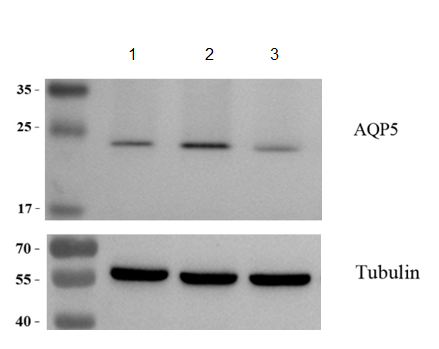
In this Western blot (WB) experiment using Anti-AQP5 antibody (Cat# A03085) on MADB106 rat mammary carcinoma cells, AQP5 protein levels were significantly increased with agonist treatment and markedly reduced with inhibitor treatment.

Excellent, submitted by on
SKU A03085
Application Western blot
Sample MADB106 rat mammary carcinoma cells
Sample Processing Description MADB106 cells under normal culture conditions , MADB106 cells treated with agonist , MADB106 cells treated with inhibitor
Other ReagentsRIPA Lysis Buffer, Protease Inhibitor, Resolving Gel Solution ,Transfer Buffer ,Blocking Buffer
Primary Antibody Aquaporin 5/AQP5 Antibody Picoband®
Primary Incubation 1:2000, overnight at 4 ℃
Secondary Antibody 1:10,000, HRP-conjugated Goat Anti-Rabbit IgG
Secondary Incubation 1h at 37℃
Detection Substrate: ECL substrate, Imaging system:ChemiDoc MP
Results Summary AQP5 (Aquaporin 5) is a transmembrane water channel protein that primarily regulates cellular water transport and plays a critical and complex role in tumor progression. In breast cancer, high AQP5 expression is often associated with increased tumor invasiveness, lymph node metastasis, and poor patient prognosis. In this experiment, AQP5 protein levels were markedly increased in cells treated with the agonist, whereas they were significantly reduced in cells treated with the inhibitor.

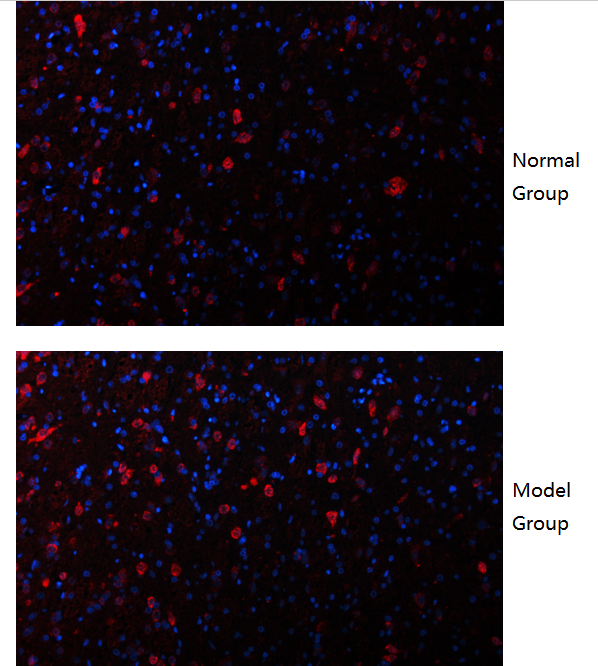
The Anti-c-FOS antibody (M00297) showed clear and specific immunofluorescence staining in mouse brain, with markedly increased c-Fos expression in neurons of the acute ischemic region compared to normal brain.

Excellent, submitted by on
SKU M00297
Application Immunocytochemistry
Sample mouse brain
Sample Processing Description Normal brain tissue and brain tissue from a cerebral infarction model
Other ReagentsGoat serum, DAB Chromogenic Solution, Anti-fade mounting medium
Primary Antibody c-Fos Rabbit Monoclonal Antibody
Primary Incubation 1:200, overnight at 4 ℃
Secondary Antibody DyLight 594 Goat Anti-Rabbit IgG (H+L)
Secondary Incubation 45 min at 37℃
Detection Imaging system:Leica DM2500
Results Summary c-Fos is a marker of activated neural cells, especially neurons. During the acute phase of cerebral infarction, as a strong stress and injury stimulus, it drives c-Fos expression in the brain—particularly in the peri-infarct region—far higher than in normal resting brain. The experimental results show clear staining of positive cells, and the expression levels are consistent with expectations.

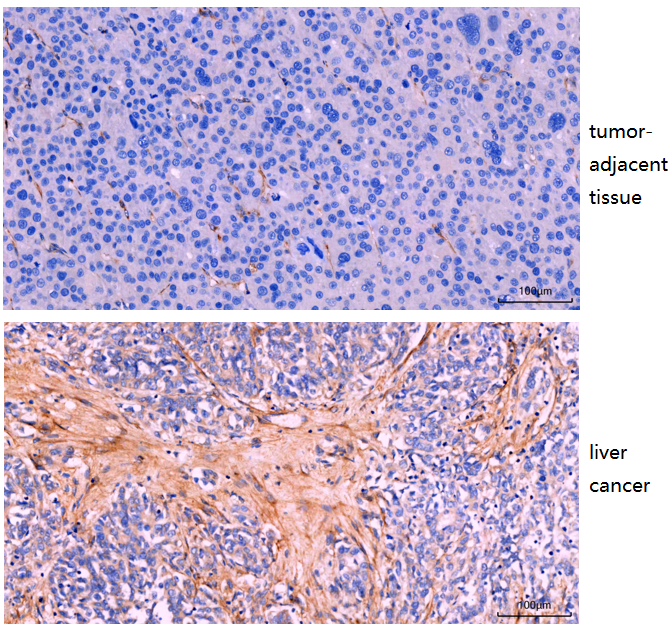
The Anti-FAP antibody (M00422) showed clear and specific IHC staining in human hepatocellular carcinoma, with low expression in adjacent normal tissue and strong expression in tumor stroma.

Excellent, submitted by on
SKU M00422
Application Immunohistochemistry
Sample human liver cancer
Sample Processing Description Collected clinical surgical human hepatocellular carcinoma and adjacent peritumoral tissues were fixed in formalin and embedded in paraffin.
Other ReagentsGoat serum, DAB Chromogenic Solution
Primary Antibody FAP1 Rabbit Monoclonal Antibody
Primary Incubation 1:200, overnight at 4 ℃
Secondary Antibody Two-step IHC kit (Immunohistochemistry kit
Secondary Incubation 30 min at 37℃
Detection Imaging system:Leica DM2500
Results Summary FAP (fibroblast activation protein) expression is mainly associated with stromal cells in the tumor microenvironment and is very low in normal human tissues. Its role in hepatocellular carcinoma (HCC) is complex, but overall it functions as an important pro-tumor factor. High FAP expression is associated with poor prognosis. It can remodel the extracellular matrix, promote tumor invasion and metastasis, and suppress anti-tumor immunity. In this study, FAP showed low expression in peritumoral tissues (close to normal tissue) and high expression in the tumor stroma of HCC.

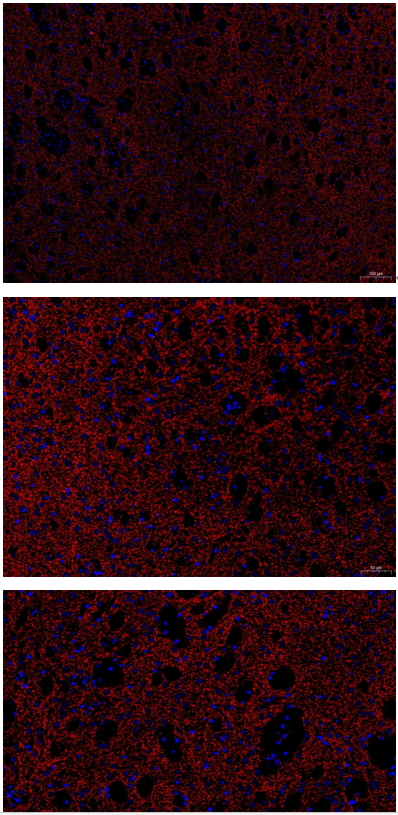
The Anti-TH antibody (M01917) demonstrated excellent specificity and clear fluorescence staining in IF analysis of paraffin-embedded mouse striatum sections, accurately labeling dopaminergic neurons with minimal background.

Excellent, submitted by on
SKU M01917
Application Immunofluorescence
Sample mouse brain
Sample Processing Description Sagittal sections of mouse striatum were fixed in formaldehyde for 48 hours and paraffin-embedded.
Other ReagentsGoat serum,DAPI,Anti-fade mounting medium
Primary Antibody Iba1 Rabbit Monoclonal Antibody
Primary Incubation 1:200, overnight at 4 ℃
Secondary Antibody 1:500, Goat Anti-Rabbit IgG (H+L) Secondary Antibody, Fluoro594 Conjugated
Secondary Incubation 45 min at 37℃
Detection Imaging system:Leica DM2500
Results Summary TH is a marker of catecholaminergic neurons and can specifically label and identify dopaminergic, noradrenergic, and adrenergic neurons. In this experiment, TH immunofluorescence was performed to observe the distribution of dopaminergic neurons in the striatum. The results show clear staining and precise localization.

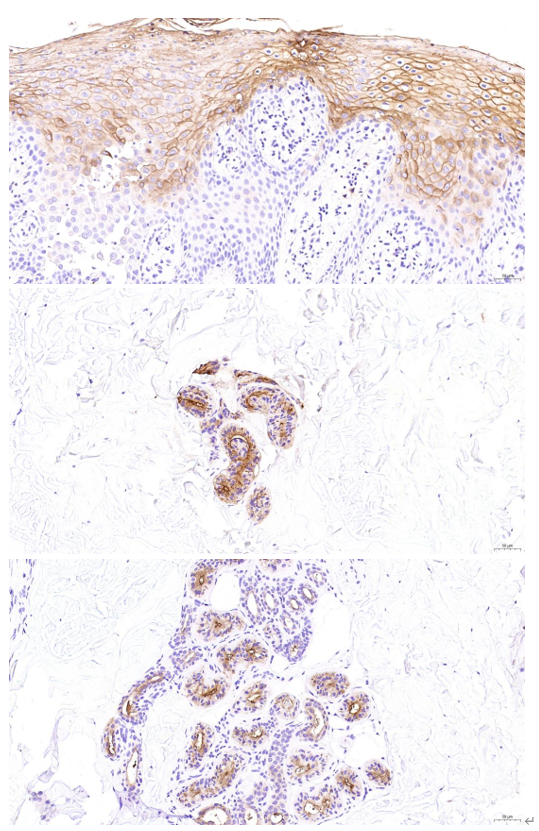
In IHC of human skin cancer sections, the CEACAM5 antibody (A00356) clearly distinguished melanoma from other skin cancers, showing specific staining with low background.

Excellent, submitted by on
SKU M12477-15
Application Immunohistochemistry
Sample normal and preterm human placentas
Sample Processing Description Clinically collected normal and preterm placentas were sectioned longitudinally (with amnion and chorion visible) and prepared as paraffin-embedded sections.
Other ReagentsTris-EDTA Antigen Retrieval Solution, DAB Chromogenic Solution
Primary Antibody Histone H3 (acetyl K27) Rabbit Monoclonal Antibody
Primary Incubation 1:200, overnight at 4 ℃
Secondary Antibody Polymer anti-rabbit IgG-HRP IHC detection kit
Secondary Incubation 45 min at 37℃
Detection Imaging system:Leica DM2500
Results Summary Histone H3 (acetyl K27) is the acetylated form of histone H3 at lysine 27 and serves as a sensitive indicator of epigenetic abnormalities in placental cells; IHC results showed higher expression in preterm placentas than in normal placentas.