Customer Testimonials

Peer Reviews from Real Labs

Browse peer-submitted results linked to specific products—ratings, images, and practical notes included. Contribute your own result to strengthen the evidence base and claim rewards after verification.

Video Interviews

See real workflows and decision points—what researchers tried, what worked, and why. Share your story in a short interview and claim rewards!

Get Interview Rewards

Filter by category, reactivity, and host to find the most relevant peer results.

WB analysis using Anti-EGFR antibody (M00023-2) in mouse hippocampal tissue showed a clear band at the expected molecular weight with low background, demonstrating good specificity and reliable performance.

Excellent, submitted by on
SKU M00023-2
Application Western Blot
Sample mouse hippocampal tissue
Sample Processing Description The left hippocampus was dissected from normal mouse brains, and total protein was extracted.
Other Reagents RIPA lysis buffer, Protease inhibitor, Electrophoresis buffer, Transfer buffer, Blocking buffer
Primary Antibody EGFR (ErbB 1) Monoclonal Antibody
Primary Incubation 1:1000, overnight at 4 ℃
Secondary Antibody HRP-conjugated goat anti-rabbit IgG
Secondary Incubation 1:10000, 1 hour in RT
Detection Substrate: ECL substrate; Image system: ChemiDoc MP
Results Summary EGFR protein is a key molecular switch located on the cell membrane that receives extracellular signals and drives cell proliferation and differentiation through kinase activity. It serves as a central regulator of organ development, tissue homeostasis, and regenerative repair. In this study, hippocampal tissues from two normal mouse brains were used to evaluate the performance of the BDNF antibody. The results showed a clear and correctly positioned target band, indicating that the antibody is functional and works properly.

WB analysis using Anti-CDK2 antibody (M00166) in mouse hippocampal tissue showed a specific band at the expected size with low background, indicating good performance.

Excellent, submitted by on
SKU M00166
Application Western Blot
Sample mouse hippocampal tissue
Sample Processing Description Total protein was extracted from the left hippocampus of normal mouse brain.
Other Reagents RIPA lysis buffer, Protease inhibitor, Electrophoresis buffer, Transfer buffer, Blocking buffer
Primary Antibody CDK2 Rabbit Monoclonal Antibody
Primary Incubation 1:3000, overnight at 4 ℃
Secondary Antibody HRP-conjugated goat anti-rabbit IgG
Secondary Incubation 1:10000, 1 hour in RT
Detection Substrate: ECL substrate; Image system: ChemiDoc MP
Results Summary CDK2 (cyclin-dependent kinase 2) plays a central role in driving the cell cycle and serves as a key node integrating proliferative signaling, DNA damage response, and chemotherapy stress. In this study, hippocampal tissues from two normal mouse brains were used to evaluate the performance of the CDK2 antibody. The results showed a specific band at the expected molecular weight with good signal quality, indicating reliable antibody performance.

WB analysis using Anti-ATP1A1 antibody (M00956) in HepG2 cells showed a clear and specific band at the expected molecular weight, with minimal background, demonstrating excellent antibody performance.

Excellent, submitted by on
SKU M00956
Application Western Blot
Sample human adrenocortical carcinoma tissue
Sample Processing Description Total protein was extracted from clinically collected human adrenocortical carcinoma tissue.
Other Reagents RIPA lysis buffer, Protease inhibitor, Electrophoresis buffer, Transfer buffer, Blocking buffer
Primary Antibody Sodium Potassium ATPase ATP1A1 Rabbit Monoclonal Antibody
Primary Incubation 1:5000, overnight at 4 ℃
Secondary Antibody HRP-conjugated goat anti-rabbit IgG
Secondary Incubation 1:10000, 1h in RT
Detection Substrate: ECL substrate; Image system: ChemiDoc MP
Results Summary ATP1A1 encodes the α1 catalytic subunit of the Na⁺/K⁺-ATPase, whose core physiological function is to maintain the transmembrane sodium and potassium electrochemical gradient, serving as the basis for nearly all vital processes such as neuronal excitability, renal reabsorption, and muscle contraction. In this study, normally cultured HepG2 cells (without any drug treatment) were used to validate the quality of the ATP1A1 antibody. The results showed a clear target band at the correct position with clean background, indicating that the antibody performs well.

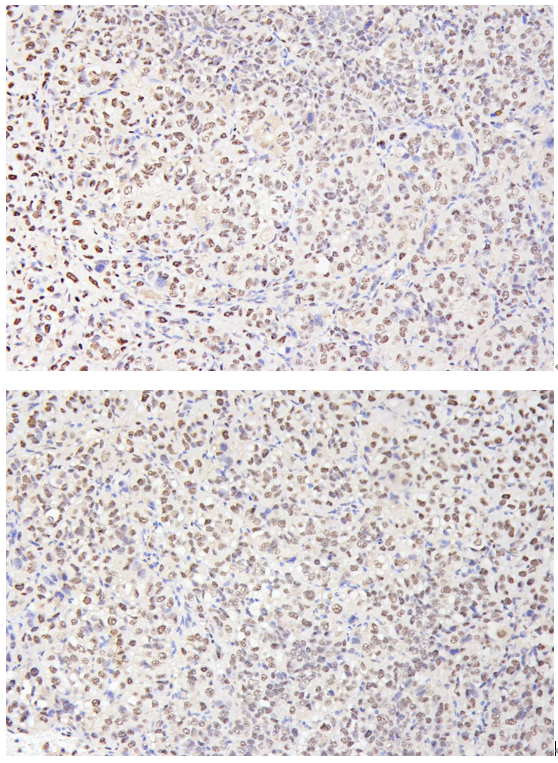
IHC with Anti-Ki67 antibody (M00254-9) in HepG2 xenograft tumors showed clear nuclear staining in proliferating cells, accurately reflecting the proliferation index with low background.

Excellent, submitted by on
SKU M00254-9
Application Immunohistochemistry
Sample HepG2 subcutaneous xenograft in nude mice
Sample Processing Description HepG2 cells were expanded in culture and subcutaneously implanted into nude mice. After 2 weeks of tumor formation, tumor tissues were harvested, fixed in 4% formaldehyde for 48 hours, and then processed for paraffin embedding and sectioning.
Other Reagents Goat serum, DAB chromogen solution
Primary Antibody Ki67 Antibody Picoband® (monoclonal, 5C7)
Primary Incubation 1:200, overnight at 4 ℃
Secondary Antibody Two-step IHC detection kit
Secondary Incubation 30 min in 37℃
Detection Image system: Leica DM2500
Results Summary Ki67 is a key marker of cell proliferation with high specificity, as it is expressed only in actively dividing cells and has a very short half-life, allowing accurate assessment of the proliferation index at the time of sampling. It is widely used in tumor prognosis evaluation (e.g., high Ki67 index in breast cancer is often associated with poor prognosis) and assessment of tissue regenerative activity. In this experiment, clear and distinct nuclear positivity was observed with well-defined staining.

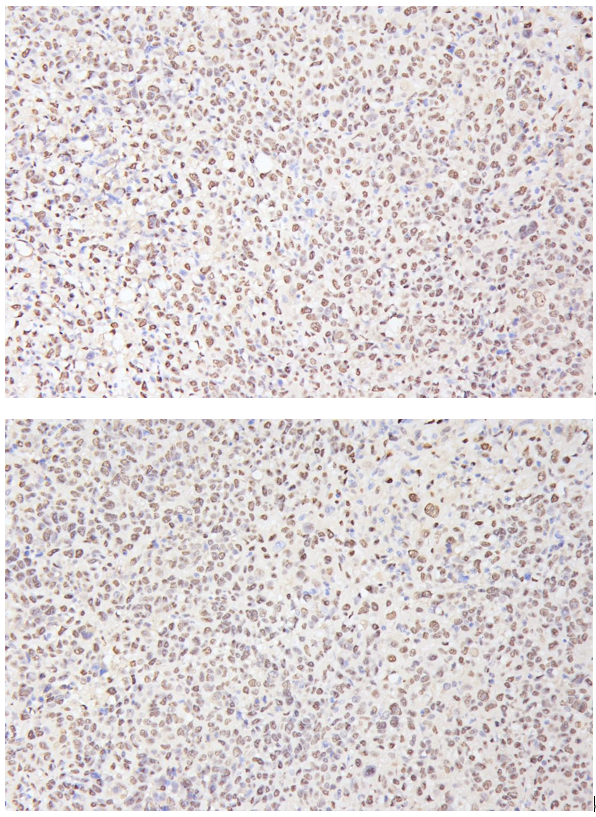
The PCNA antibody (Cat# MA1083) showed clear and distinct nuclear positivity in HepG2-derived subcutaneous tumors, indicating reliable detection.

Excellent, submitted by on
MA1083 Immunohistochemistry
SKU MA1083
Application Immunohistochemistry
Sample HepG2 subcutaneous xenograft in nude mice
Sample Processing Description HepG2 cells were expanded and then implanted subcutaneously into nude mice. After 2 weeks, tumors formed, which were excised, fixed in formalin for 48 hours, and processed for paraffin embedding and sectioning.
Other Reagents Goat serum, DAB chromogen solution
Primary Antibody PCNA Antibody (Monoclonal, PC 10)
Primary Incubation 1:500, overnight at 4 ℃
Secondary Antibody Two-step IHC detection kit
Secondary Incubation 30 min in 37℃
Detection Image system: Leica DM2500
Results Summary PCNA is a key marker for cell proliferation studies; however, besides being a proliferation marker, it is a core component of the DNA replication and repair complex. Its long half-life and involvement in DNA damage repair mean that PCNA positivity does not solely indicate cell proliferation but may also reflect cells responding to DNA damage. Combined with Ki67 staining, it can accurately indicate proliferative status. In our experiment, the staining was clear, with distinct nuclear positivity.

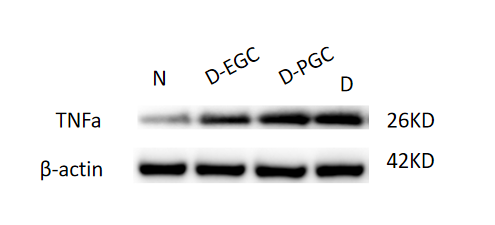
Using the Anti-TNFα antibody (Cat# PA1079) in WB on rat alveolar bone, TNFα levels were highest in diabetes-induced bone defect models and were effectively suppressed by EGCG and PGC-1α treatments, with clear and correctly positioned bands.

Excellent, submitted by on
PA1079 wb
SKU PA1079
Application Western Blot
Sample rat alveolar bone
Sample Processing Description ① Normal mouse hippocampal tissue, ② Hippocampal tissue from Alzheimer’s disease model mouse, ③ Hippocampal tissue from Alzheimer’s disease model mouse treated with a self-developed drug. Total protein was extracted from all samples.
Other Reagents RIPA lysis buffer, Protease inhibitor, Running buffer, Transfer buffer, Blocking buffer
Primary Antibody TNF alpha Antibody Picoband®
Primary Incubation 1:1000, overnight at 4 ℃
Secondary Antibody HRP Conjugated AffiniPure Goat Anti-Rabbit IgG (H+L) (BA1054)
Secondary Incubation 1:10000, 1 h in RT
Detection Substrate: ECL substrate, Image system: ChemiDoc MP
Results Summary TNFα is a typical pro-inflammatory factor that enhances inflammation, inhibits osteogenesis, and promotes bone resorption in bone defect models. The experimental results show that in rat alveolar bone tissue, TNFα levels increase in the following order: ① N: normal rats’ alveolar bone, ② D-EGC: EGCG-treated diabetic bone defect model, ③ D-PGC: PGC-1α-treated diabetic bone defect model, ④ D: diabetic bone defect model, indicating that both EGCG and PGC-1α can suppress TNFα expression.

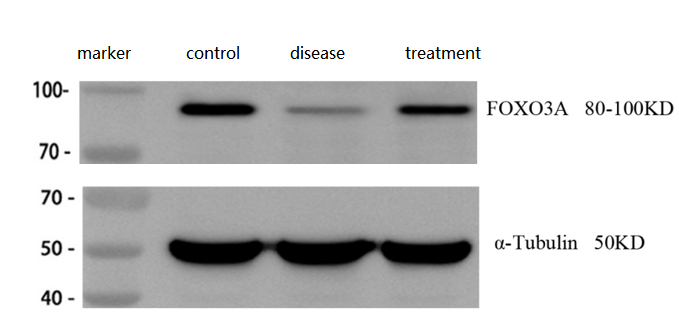
The Anti-FOXO3A antibody (M00252) produced clear, specific bands with low background, and reliably detected expected changes in FOXO3A levels in normal, Alzheimer’s model, and treated mouse hippocampal tissues, demonstrating excellent performance.

Excellent, submitted by on
M00252 wb
SKU M00252
Application Western Blot
Sample mouse brain tissue
Sample Processing Description ① Normal mouse hippocampal tissue, ② Hippocampal tissue from Alzheimer’s disease model mouse, ③ Hippocampal tissue from Alzheimer’s disease model mouse treated with a self-developed drug. Total protein was extracted from all samples.
Other Reagents RIPA lysis buffer, Protease inhibitor, Running buffer, Transfer buffer, Blocking buffer
Primary Antibody TNF alpha Antibody Picoband®
Primary Incubation 1:2000, overnight at 4 ℃
Secondary Antibody HRP Conjugated AffiniPure Goat Anti-Rabbit IgG (H+L) (BA1054)
Secondary Incubation 1:10000, 1 h in RT
Detection Substrate: ECL substrate, Image system: ChemiDoc MP
Results Summary FOXO3a is a key member of the FOXO transcription factor family, playing a central regulatory role in cellular processes such as stress response, apoptosis, autophagy, metabolism, and antioxidation. In Alzheimer’s disease, FOXO3a is known to exert neuroprotective effects. Experimental results show that FOXO3a protein levels are significantly decreased in the brains of Alzheimer’s model mice, while treatment leads to a noticeable increase.

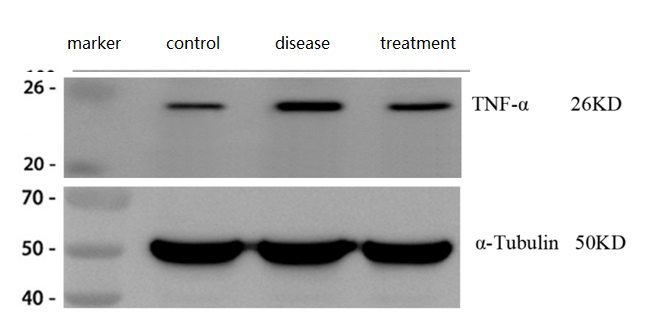
TNFα Antibody (PA1079) shows clear, specific bands in mouse brain tissues by WB, with elevated expression in Alzheimer’s disease models and reduced levels after treatment, consistent with expected results.

Excellent, submitted by on
PA1079 wb
SKU PA1079
Application Western Blot
Sample mouse brain tissue
Sample Processing Description ① Normal mouse hippocampal tissue, ② Hippocampal tissue from Alzheimer’s disease model mouse, ③ Hippocampal tissue from Alzheimer’s disease model mouse treated with a self-developed drug. Total protein was extracted from all samples.
Other Reagents RIPA lysis buffer, Protease inhibitor, Running buffer, Transfer buffer, Blocking buffer
Primary Antibody TNF alpha Antibody Picoband®
Primary Incubation 1:1000, overnight at 4 ℃
Secondary Antibody HRP Conjugated AffiniPure Goat Anti-Rabbit IgG (H+L) (BA1054)
Secondary Incubation 1:10000, 1 h in RT
Detection Substrate: ECL substrate, Image system: ChemiDoc MP
Results Summary TNFα (tumor necrosis factor-alpha) is a key pro-inflammatory cytokine in the immune system, playing an essential role in normal immune defense and tissue homeostasis, with levels typically rising rapidly after inflammation. The results showed that TNFα expression was significantly increased in the brains of Alzheimer’s disease model mice and decreased after treatment.

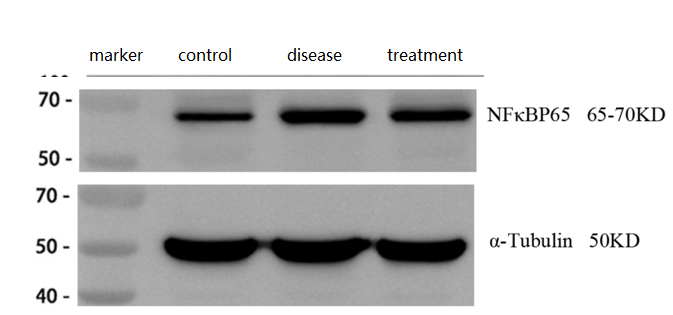
P65 Antibody (A00284-1) shows clear, specific bands with low background in mouse brain tissues by WB, with elevated expression in Alzheimer’s disease models and reduced levels after treatment, consistent with the expected results.

Excellent, submitted by on
A00284-1 wb
SKU A00284-1
Application Western Blot
Sample mouse brain tissue
Sample Processing Description ① Normal mouse hippocampal tissue, ② Hippocampal tissue from Alzheimer’s disease model mouse, ③ Hippocampal tissue from Alzheimer’s disease model mouse treated with a self-developed drug. Total protein was extracted from all samples.
Other Reagents RIPA lysis buffer, Protease inhibitor, Running buffer, Transfer buffer, Blocking buffer
Primary Antibody NF-kB p65/RELA Antibody Picoband®
Primary Incubation 1:2000, overnight at 4 ℃
Secondary Antibody HRP Conjugated AffiniPure Goat Anti-Rabbit IgG (H+L) (BA1054)
Secondary Incubation 1:10000, 1 h in RT
Detection Substrate: ECL substrate, Image system: ChemiDoc MP
Results Summary NF-κB p65 (RelA) is one of the most classical and essential subunits of the NF-κB transcription factor family. In Alzheimer’s disease, activation of p65 can initiate neuroprotective programs in neurons. The results showed that p65 expression was significantly increased in the brains of Alzheimer’s disease model mice and decreased after treatment, consistent with the expected outcomes.

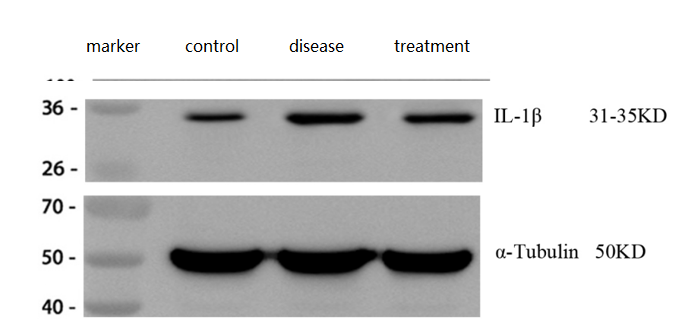
IL-1β Antibody (A00101) shows clear, specific bands with low background in mouse brain tissues by WB, with elevated expression in Alzheimer’s disease models and reduced levels after treatment, demonstrating excellent antibody performance.

Excellent, submitted by on
A00101 wb
SKU A00101
Application Western Blot
Sample mouse brain tissue
Sample Processing Description ① Normal mouse hippocampal tissue, ② Hippocampal tissue from Alzheimer’s disease model mice, ③ Hippocampal tissue from Alzheimer’s disease model mice treated with a self-developed drug. Total protein was extracted from all samples.
Other Reagents RIPA lysis buffer, Protease inhibitor, Running buffer, Transfer buffer, Blocking buffer
Primary Antibody N Cadherin/CDH2 Antibody Picoband®
Primary Incubation 1:2000, overnight at 4 ℃
Secondary Antibody HRP Conjugated AffiniPure Goat Anti-Rabbit IgG (H+L) (BA1054)
Secondary Incubation 1:10000, 1 h in RT
Detection Substrate: ECL substrate, Image system: ChemiDoc MP
Results Summary IL-1β is a key member of the interleukin-1 family and a potent pro-inflammatory cytokine. It plays a crucial role in immune defense, inflammatory responses, and tissue repair, and its levels typically increase rapidly following inflammation. The results showed that IL-1β expression was significantly elevated in the brains of Alzheimer’s disease model mice and decreased after treatment.