This website uses cookies to ensure you get the best experience on our website.


- Table of Contents
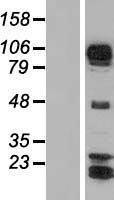
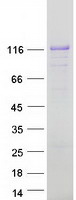
Designing a Western blot for AFAP1? The guide has the expected band size, antibodies backed by real blot images, the controls to run alongside, and protocols taken from published papers.
Open the AFAP1 Western Blot GuideDesigning an IHC experiment for AFAP1? The guide has the expected staining pattern, antigen retrieval and fixation, antibodies backed by real IHC images, the tissue controls to run alongside, and protocols taken from published papers.
Open the AFAP1 IHC Guide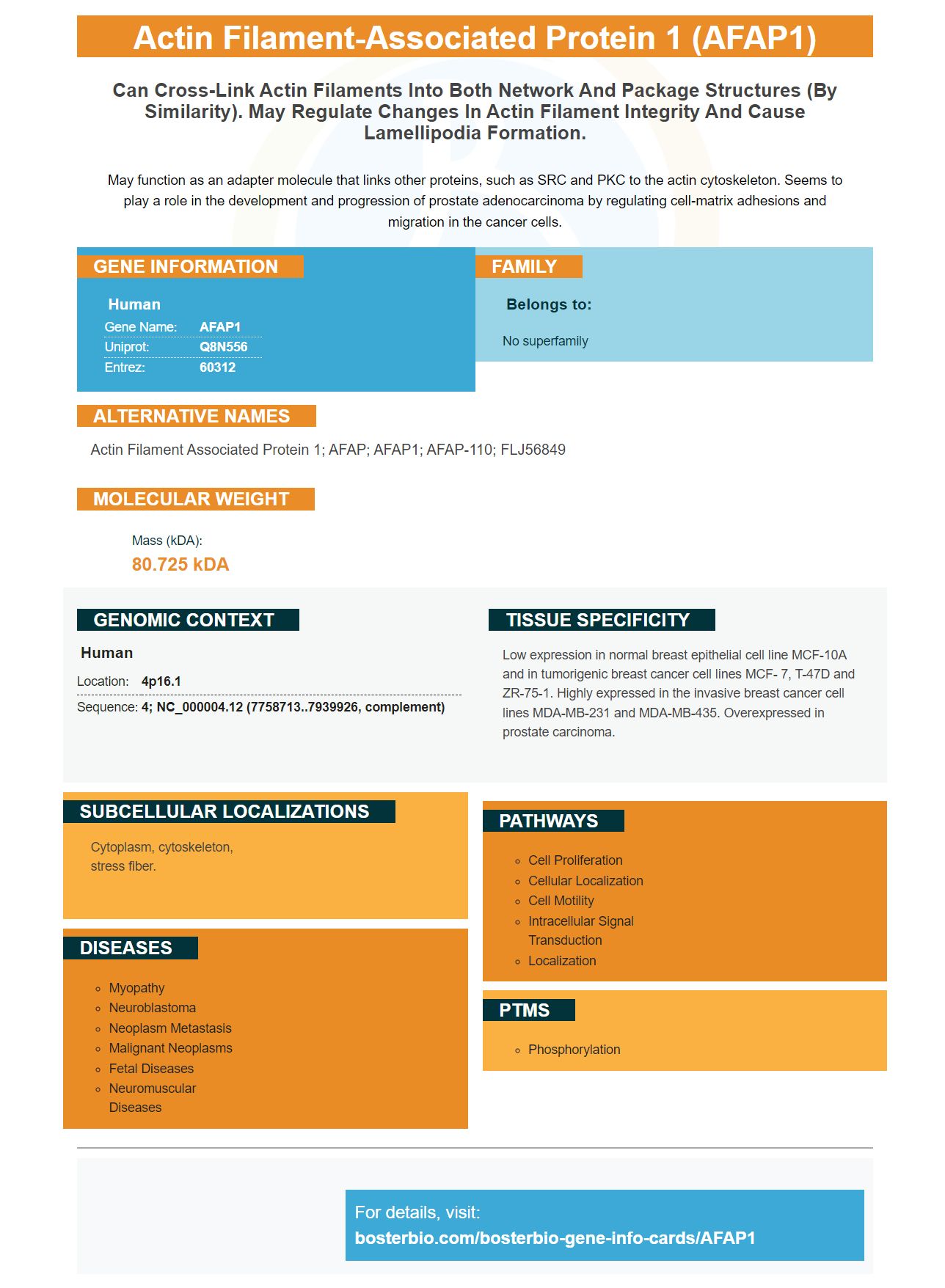
Facts about Actin filament-associated protein 1.
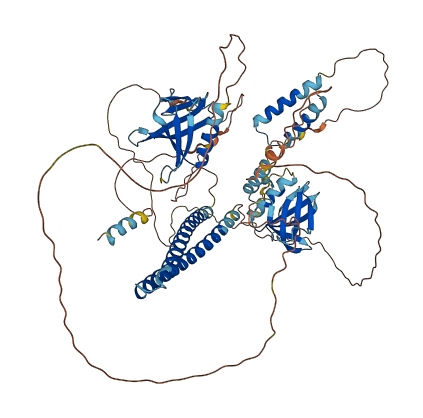
May function as an adapter molecule that links other proteins, such as SRC and PKC to the actin cytoskeleton. Seems to play a role in the development and progression of prostate adenocarcinoma by regulating cell-matrix adhesions and migration in the cancer cells.
| Human | |
|---|---|
| Gene Name: | AFAP1 |
| Uniprot: | Q8N556 |
| Entrez: | 60312 |
| Belongs to: |
|---|
| No superfamily |

actin filament associated protein 1; AFAP; AFAP1; AFAP-110; FLJ56849
Mass (kDA):
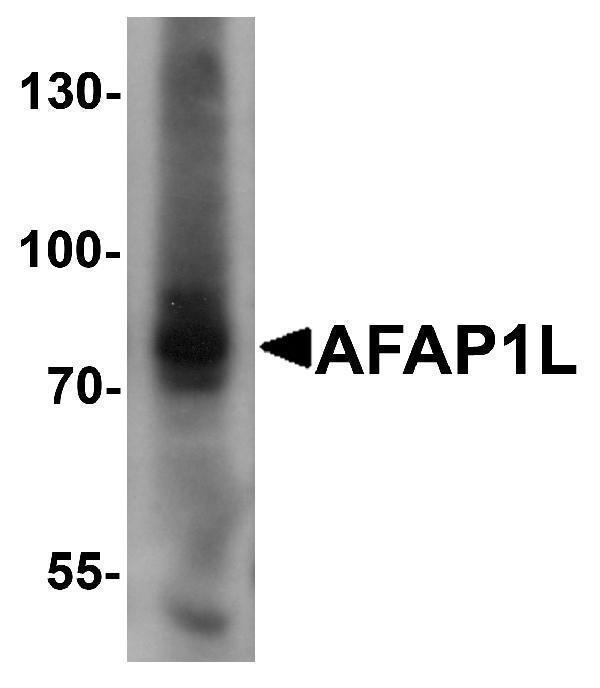
80.725 kDA

| Human | |
|---|---|
| Location: | 4p16.1 |
| Sequence: | 4; NC_000004.12 (7758713..7939926, complement) |
Low expression in normal breast epithelial cell line MCF-10A and in tumorigenic breast cancer cell lines MCF- 7, T-47D and ZR-75-1. Highly expressed in the invasive breast cancer cell lines MDA-MB-231 and MDA-MB-435. Overexpressed in prostate carcinoma.
Cytoplasm, cytoskeleton, stress fiber.


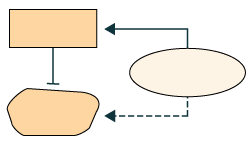

PMID: 15485829 by Han B., et al. Conversion of mechanical force into biochemical signaling.
PMID: 17520695 by Dorfleutner A., et al. AFAP-110 is required for actin stress fiber formation and cell adhesion in MDA-MB-231 breast cancer cells.