This website uses cookies to ensure you get the best experience on our website.


- Table of Contents
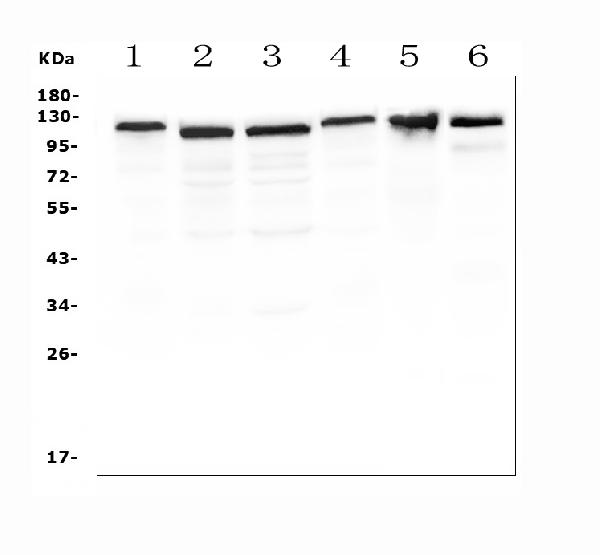
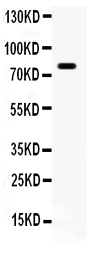
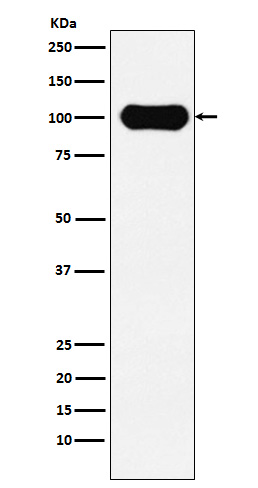
Designing a Western blot for APBB1? The guide has the expected band size, antibodies backed by real blot images, the controls to run alongside, and protocols taken from published papers.
Open the APBB1 Western Blot Guide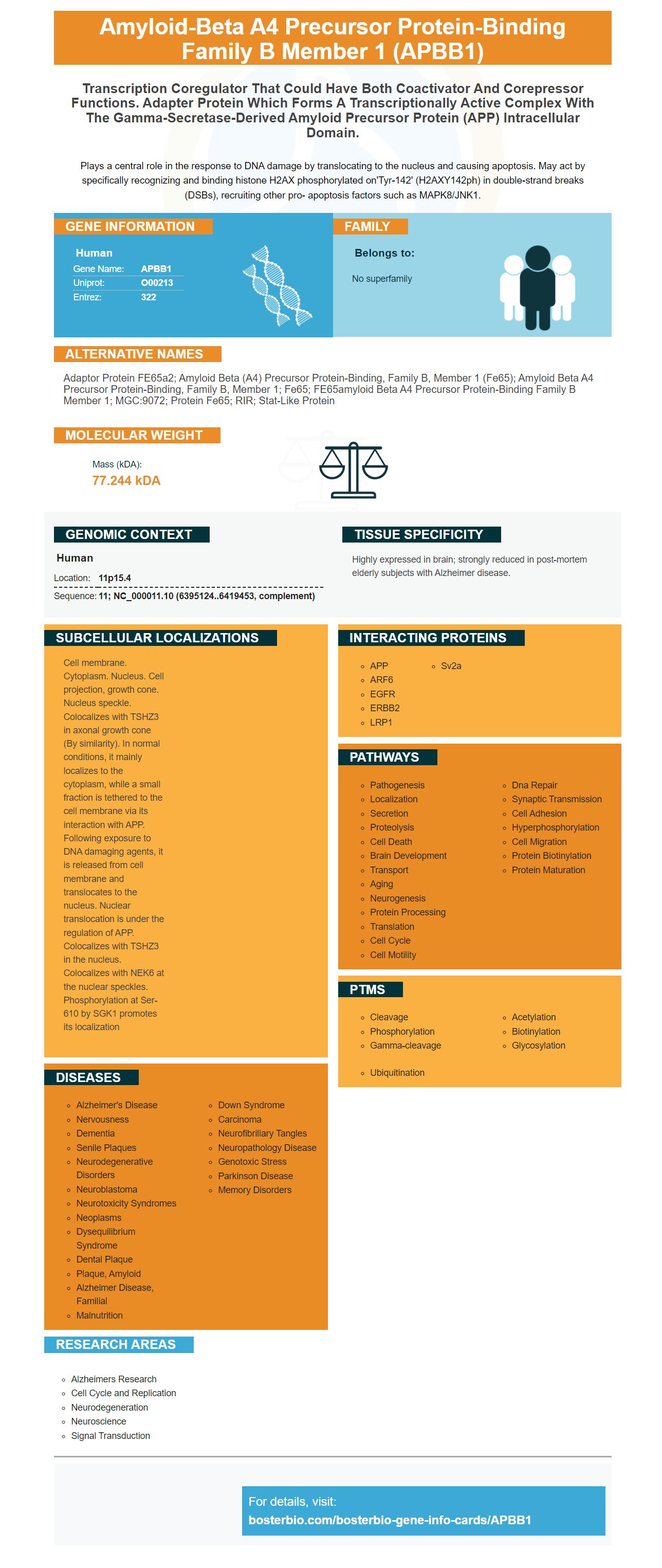


Facts about Amyloid-beta A4 precursor protein-binding family B member 1.

Plays a central role in the response to DNA damage by translocating to the nucleus and causing apoptosis. May act by specifically recognizing and binding histone H2AX phosphorylated on'Tyr-142' (H2AXY142ph) in double-strand breaks (DSBs), recruiting other pro- apoptosis factors such as MAPK8/JNK1.
| Human | |
|---|---|
| Gene Name: | APBB1 |
| Uniprot: | O00213 |
| Entrez: | 322 |
| Belongs to: |
|---|
| No superfamily |

adaptor protein FE65a2; amyloid beta (A4) precursor protein-binding, family B, member 1 (Fe65); amyloid beta A4 precursor protein-binding, family B, member 1; Fe65; FE65amyloid beta A4 precursor protein-binding family B member 1; MGC:9072; Protein Fe65; RIR; stat-like protein
Mass (kDA):
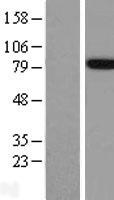
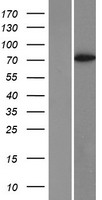
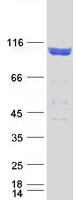
77.244 kDA

| Human | |
|---|---|
| Location: | 11p15.4 |
| Sequence: | 11; NC_000011.10 (6395124..6419453, complement) |
Highly expressed in brain; strongly reduced in post-mortem elderly subjects with Alzheimer disease.
Cell membrane. Cytoplasm. Nucleus. Cell projection, growth cone. Nucleus speckle. Colocalizes with TSHZ3 in axonal growth cone (By similarity). In normal conditions, it mainly localizes to the cytoplasm, while a small fraction is tethered to the cell membrane via its interaction with APP. Following exposure to DNA damaging agents, it is released from cell membrane and translocates to the nucleus. Nuclear translocation is under the regulation of APP. Colocalizes with TSHZ3 in the nucleus. Colocalizes with NEK6 at the nuclear speckles. Phosphorylation at Ser-610 by SGK1 promotes its localization





PMID: 8894693 by Bressler S.L., et al. cDNA cloning and chromosome mapping of the human Fe65 gene: interaction of the conserved cytoplasmic domains of the human beta- amyloid precursor protein and its homologues with the mouse Fe65 protein.
PMID: 9799084 by Hu Q., et al. The human FE65 gene: genomic structure and an intronic biallelic polymorphism associated with sporadic dementia of the Alzheimer type.