This website uses cookies to ensure you get the best experience on our website.


- Table of Contents
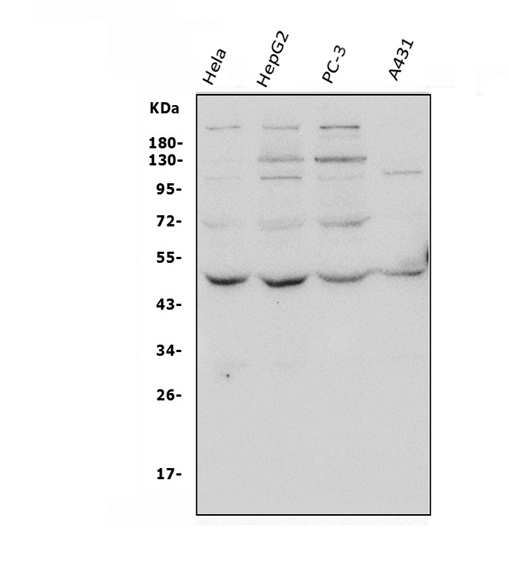
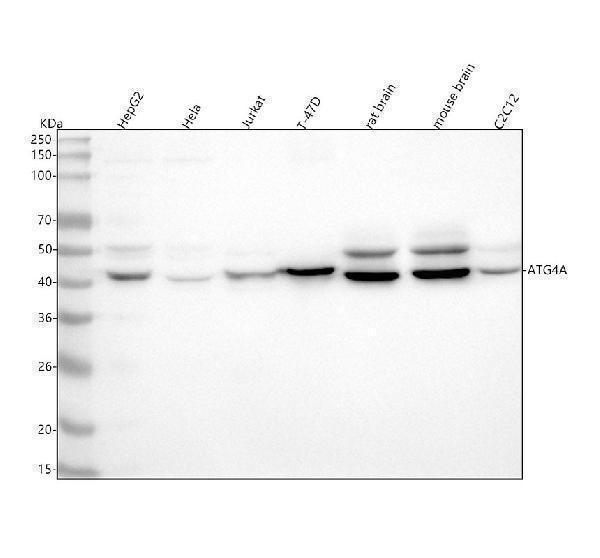
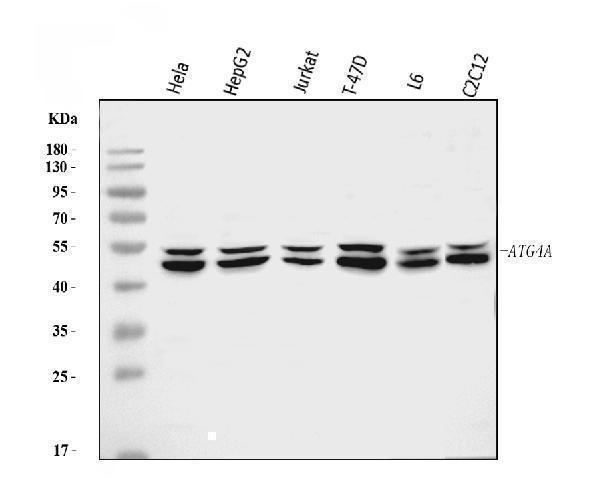
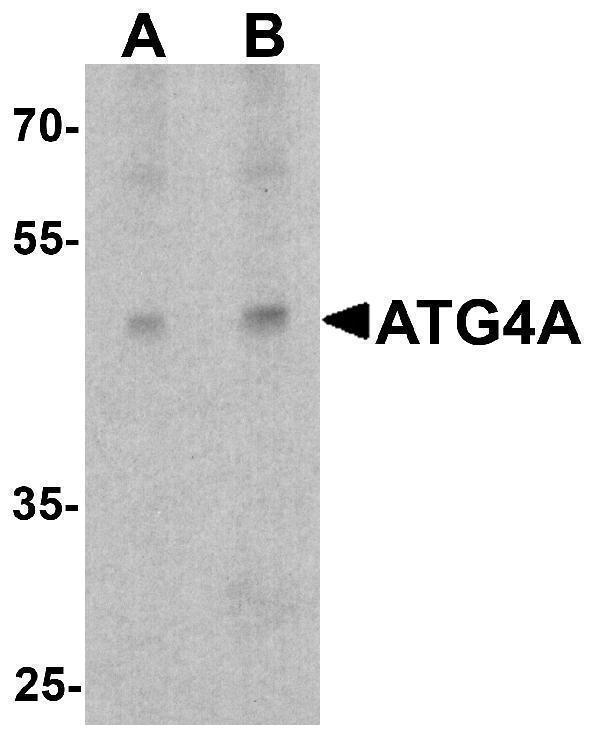
Designing a Western blot for Cysteine protease ATG4A? The guide has the expected band size, antibodies backed by real blot images, the controls to run alongside, and protocols taken from published papers.
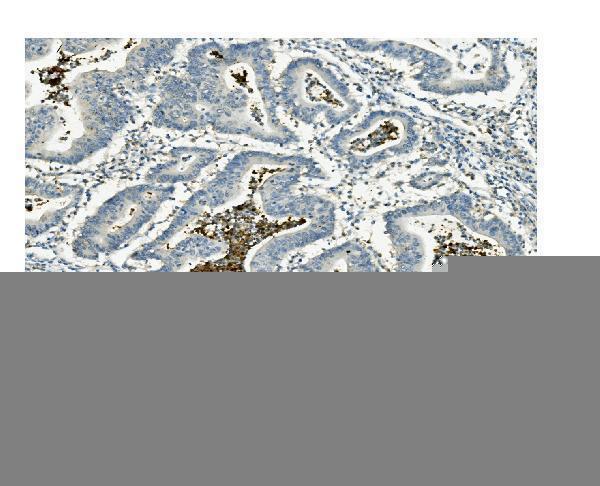
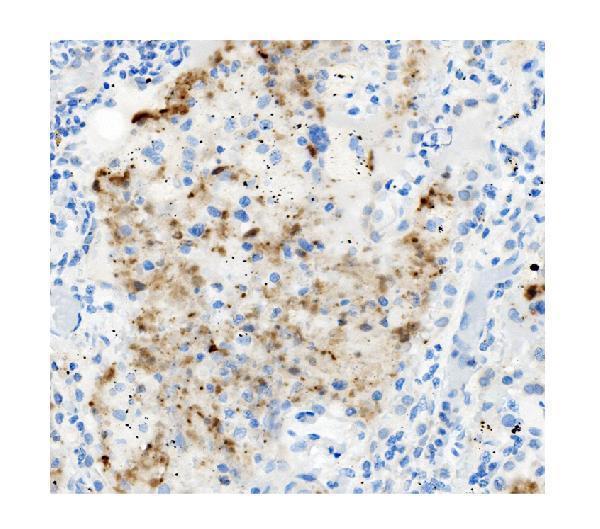
Open the ATG4A Western Blot GuideDesigning an IHC experiment for Cysteine protease ATG4A? The guide has the expected staining pattern, antigen retrieval and fixation, antibodies backed by real IHC images, the tissue controls to run alongside, and protocols taken from published papers.
Open the ATG4A IHC Guide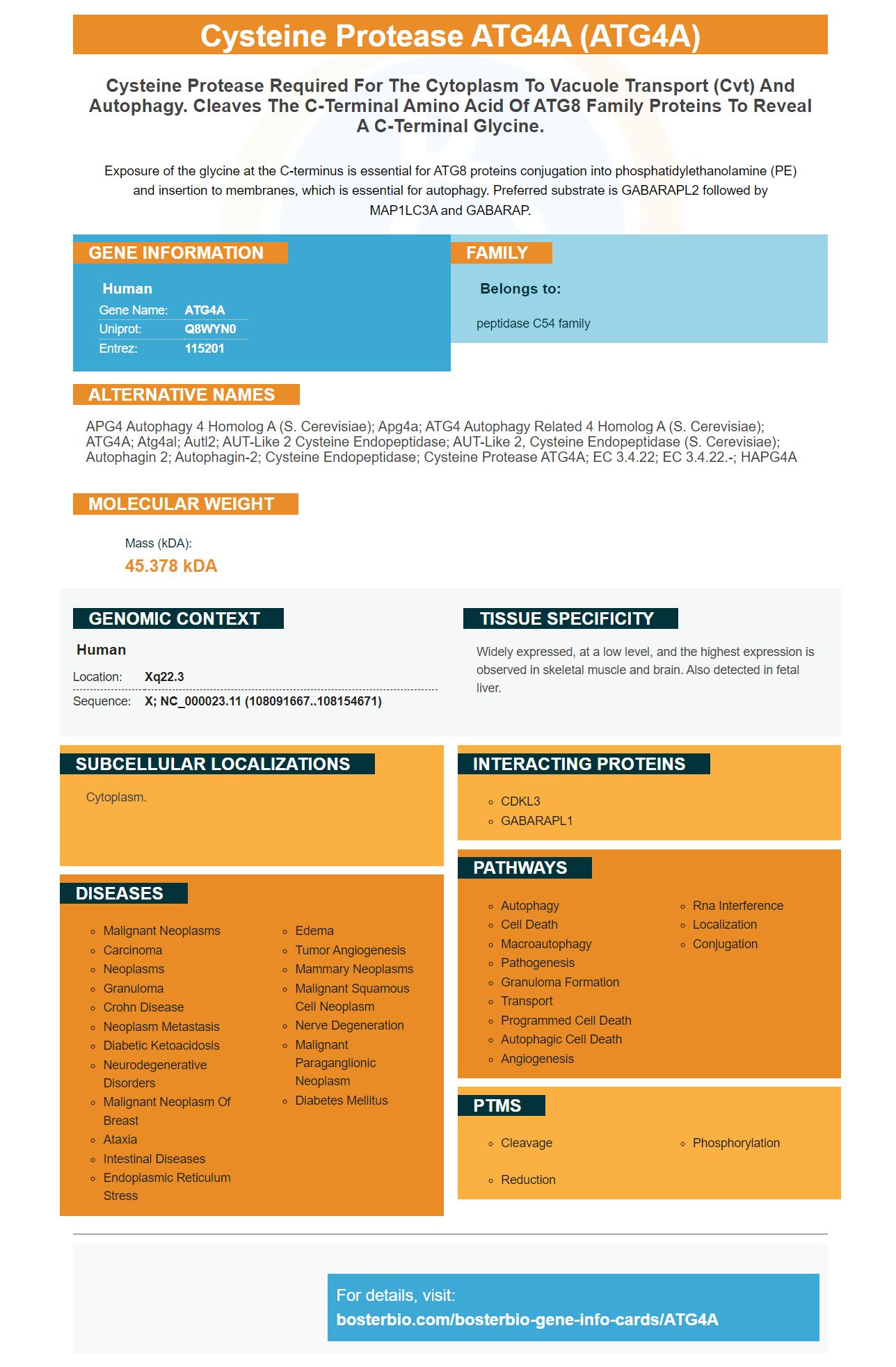
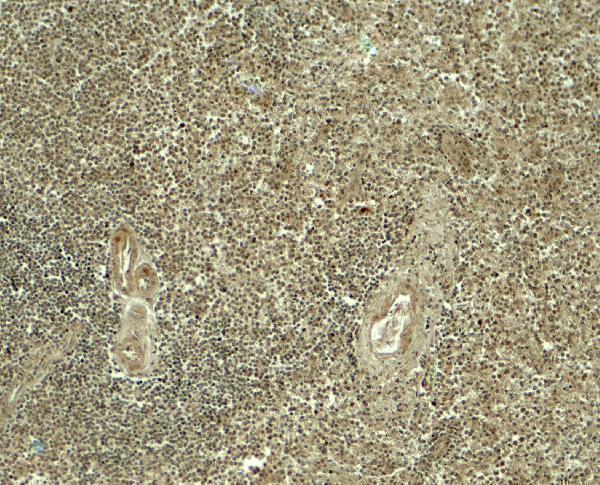
Facts about Cysteine protease ATG4A.
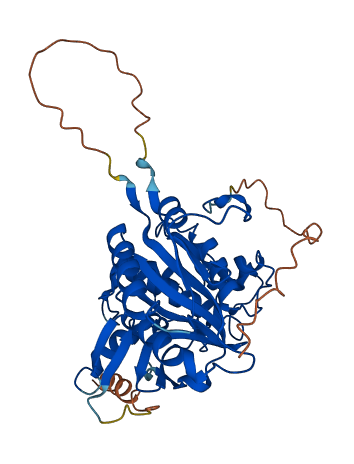
Exposure of the glycine at the C-terminus is essential for ATG8 proteins conjugation into phosphatidylethanolamine (PE) and insertion to membranes, which is essential for autophagy. Preferred substrate is GABARAPL2 followed by MAP1LC3A and GABARAP.
| Human | |
|---|---|
| Gene Name: | ATG4A |
| Uniprot: | Q8WYN0 |
| Entrez: | 115201 |
| Belongs to: |
|---|
| peptidase C54 family |

APG4 autophagy 4 homolog A (S. cerevisiae); Apg4a; ATG4 autophagy related 4 homolog A (S. cerevisiae); ATG4A; Atg4al; Autl2; AUT-like 2 cysteine endopeptidase; AUT-like 2, cysteine endopeptidase (S. cerevisiae); Autophagin 2; autophagin-2; cysteine endopeptidase; cysteine protease ATG4A; EC 3.4.22; EC 3.4.22.-; hAPG4A
Mass (kDA):
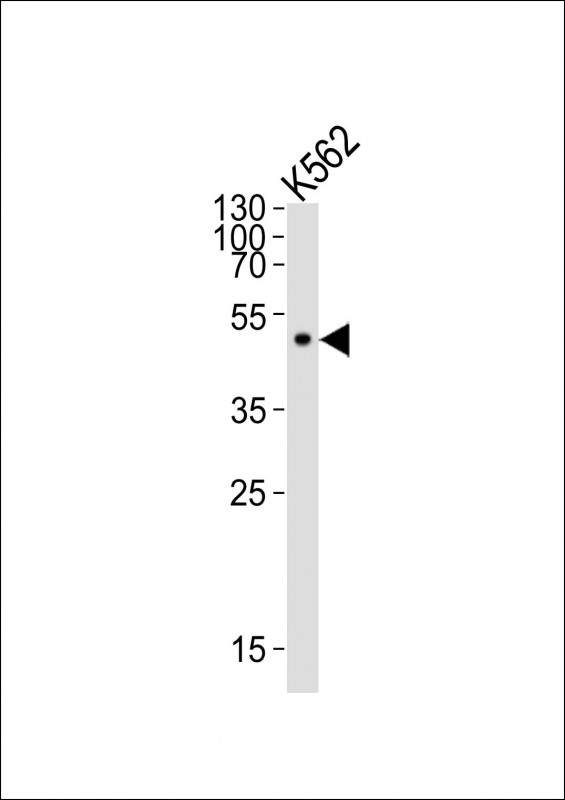
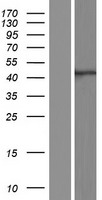
45.378 kDA

| Human | |
|---|---|
| Location: | Xq22.3 |
| Sequence: | X; NC_000023.11 (108091667..108154671) |
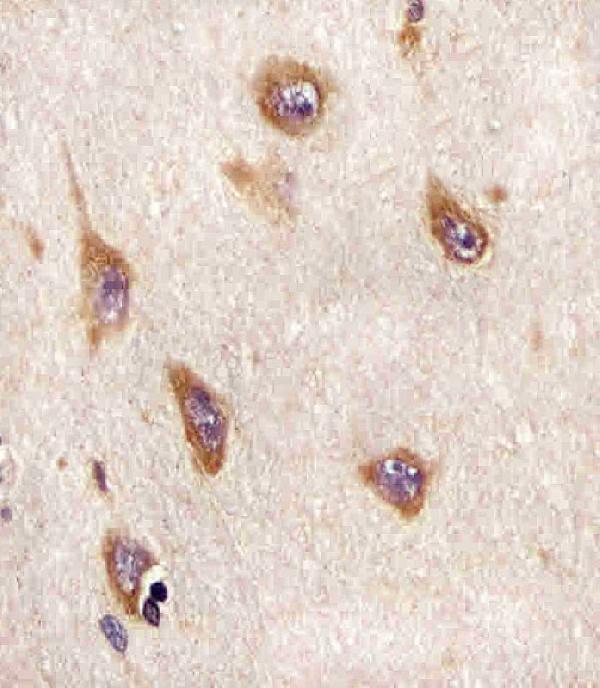
Widely expressed, at a low level, and the highest expression is observed in skeletal muscle and brain. Also detected in fetal liver.
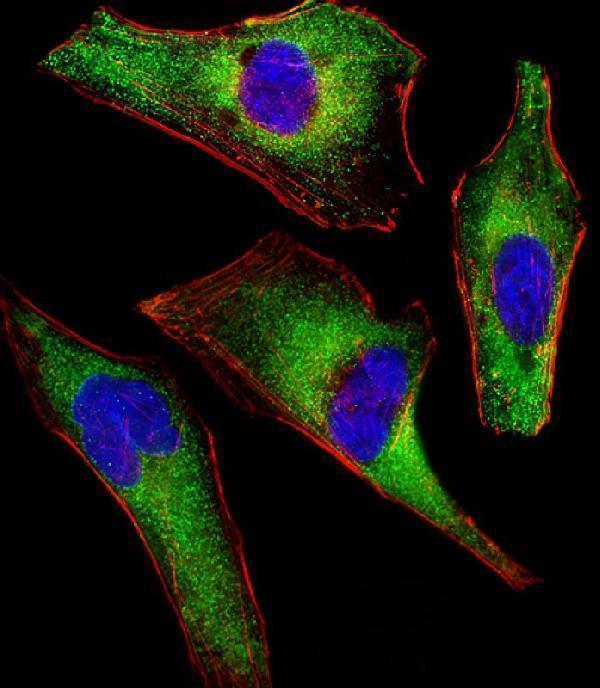
Cytoplasm.




PMID: 12446702 by Marino G., et al. Human autophagins, a family of cysteine proteinases potentially implicated in cell degradation by autophagy.
PMID: 15169837 by Kabeya Y., et al. LC3, GABARAP and GATE16 localize to autophagosomal membrane depending on form-II formation.