This website uses cookies to ensure you get the best experience on our website.


- Table of Contents
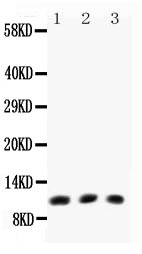
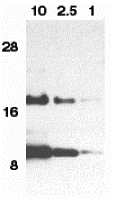
Designing a Western blot for Eotaxin? The guide has the expected band size, antibodies backed by real blot images, the controls to run alongside, and protocols taken from published papers.
Open the CCL11 Western Blot Guide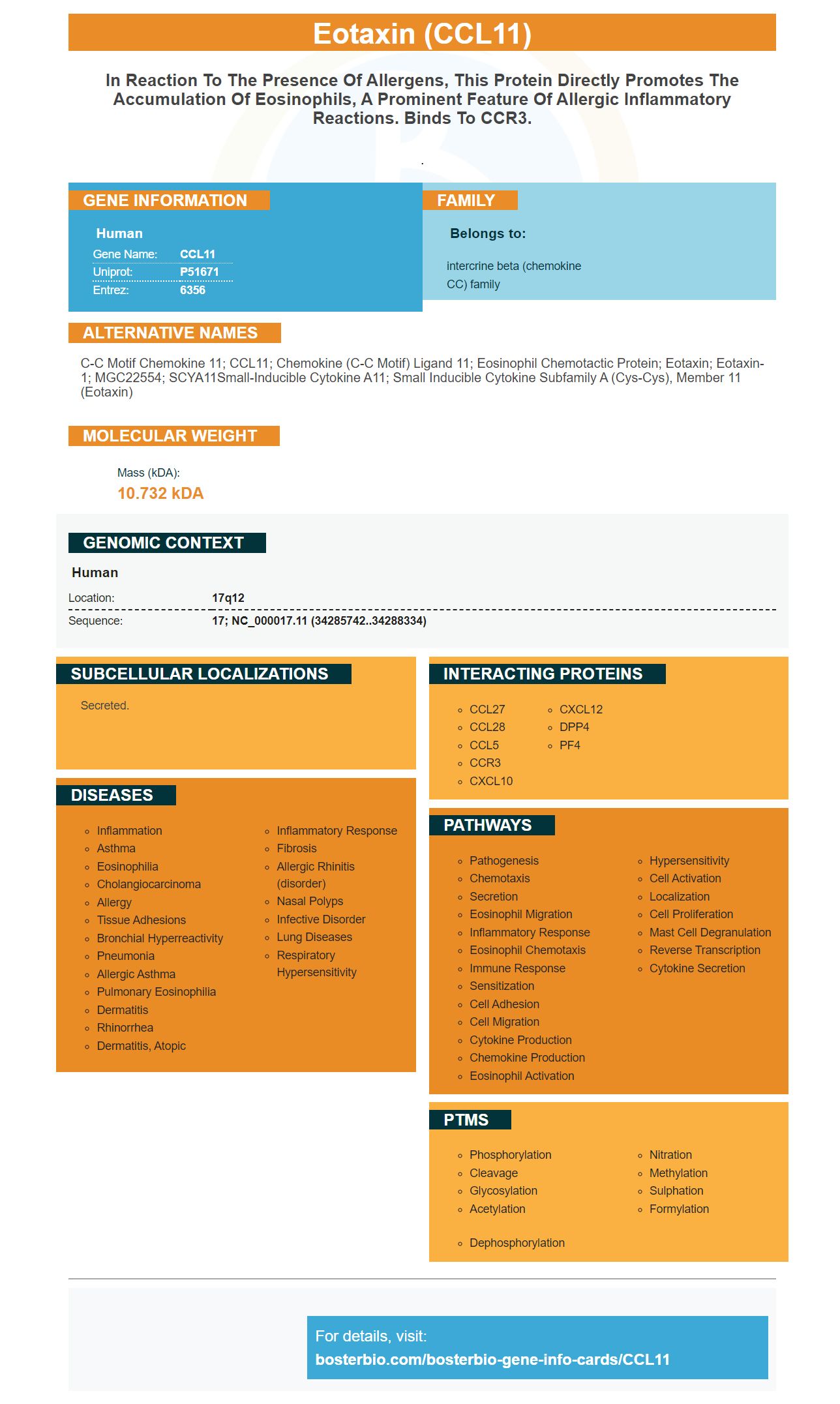

Facts about Eotaxin.
.
| Human | |
|---|---|
| Gene Name: | CCL11 |
| Uniprot: | P51671 |
| Entrez: | 6356 |
| Belongs to: |
|---|
| intercrine beta (chemokine CC) family |

C-C motif chemokine 11; CCL11; chemokine (C-C motif) ligand 11; Eosinophil chemotactic protein; Eotaxin; eotaxin-1; MGC22554; SCYA11Small-inducible cytokine A11; small inducible cytokine subfamily A (Cys-Cys), member 11 (eotaxin)
Mass (kDA):
10.732 kDA

| Human | |
|---|---|
| Location: | 17q12 |
| Sequence: | 17; NC_000017.11 (34285742..34288334) |
Secreted.


PMID: 8597956 by Garcia-Zepeda E.A., et al. Human eotaxin is a specific chemoattractant for eosinophil cells and provides a new mechanism to explain tissue eosinophilia.
PMID: 8609214 by Ponath P.D., et al. Cloning of the human eosinophil chemoattractant, eotaxin. Expression, receptor binding, and functional properties suggest a mechanism for the selective recruitment of eosinophils.
*More publications can be found for each product on its corresponding product page