This website uses cookies to ensure you get the best experience on our website.


- Table of Contents
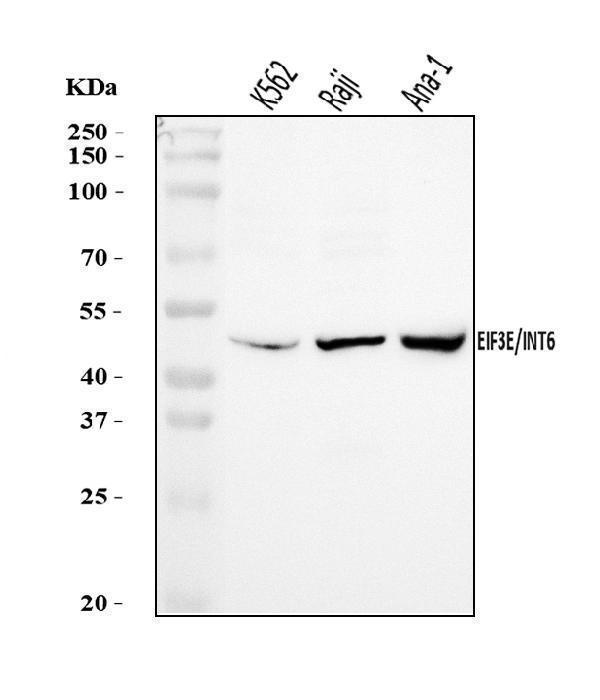
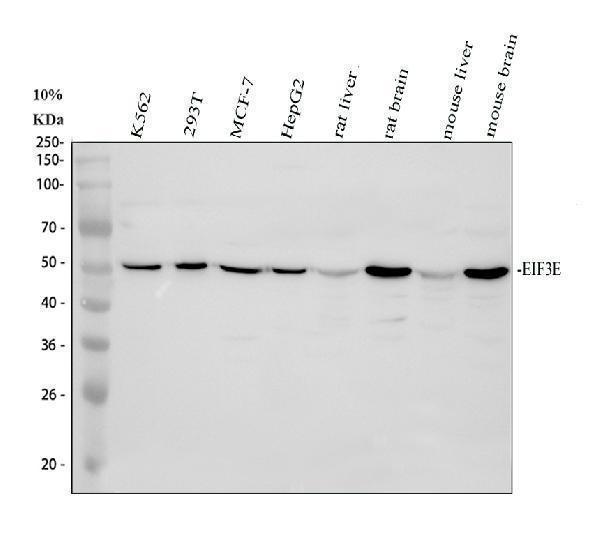
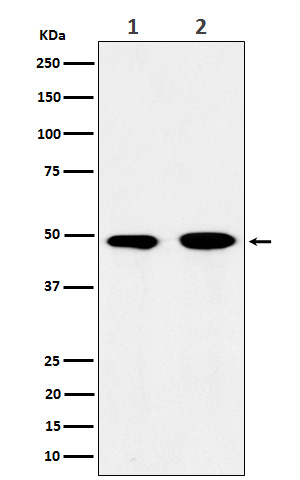
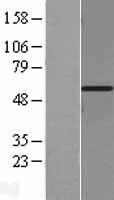
Designing a Western blot for EIF3E? The guide has the expected band size, antibodies backed by real blot images, the controls to run alongside, and protocols taken from published papers.
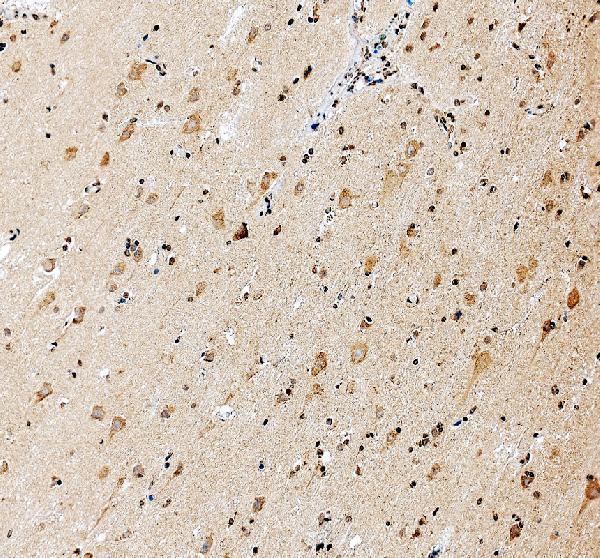
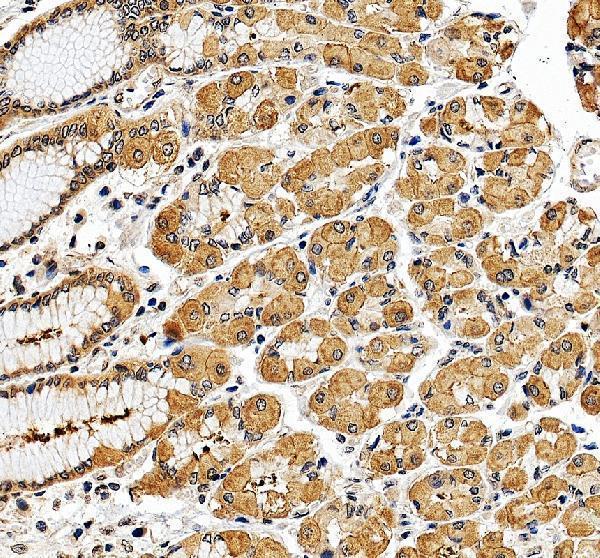
Open the EIF3E Western Blot GuideDesigning an IHC experiment for EIF3E? The guide has the expected staining pattern, antigen retrieval and fixation, antibodies backed by real IHC images, the tissue controls to run alongside, and protocols taken from published papers.
Open the EIF3E IHC Guide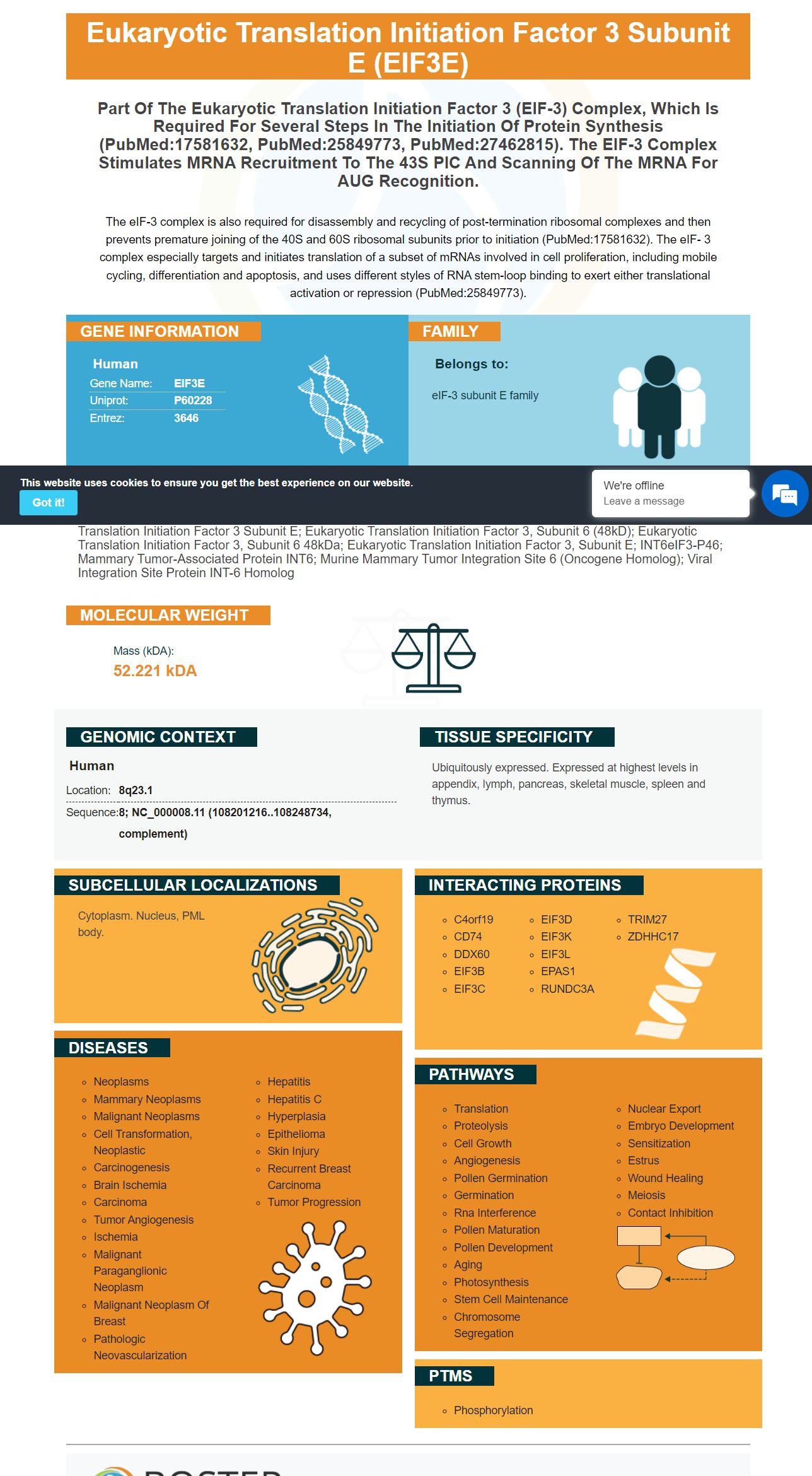
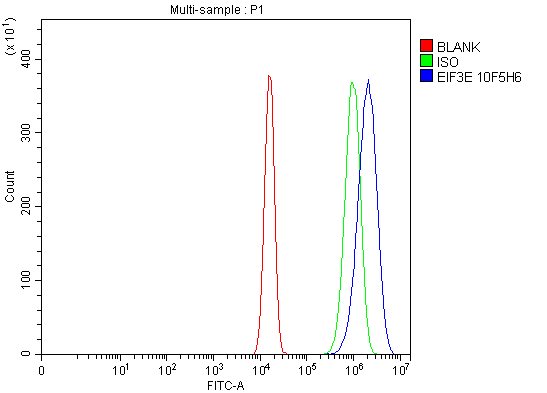
Facts about Eukaryotic translation initiation factor 3 subunit E.
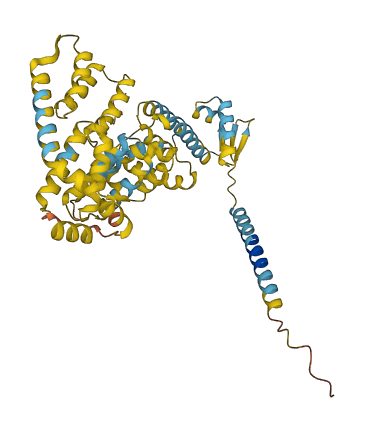
The eIF-3 complex is also required for disassembly and recycling of post-termination ribosomal complexes and then prevents premature joining of the 40S and 60S ribosomal subunits prior to initiation (PubMed:17581632). The eIF- 3 complex especially targets and initiates translation of a subset of mRNAs involved in cell proliferation, including mobile cycling, differentiation and apoptosis, and uses different styles of RNA stem-loop binding to exert either translational activation or repression (PubMed:25849773).
| Human | |
|---|---|
| Gene Name: | EIF3E |
| Uniprot: | P60228 |
| Entrez: | 3646 |
| Belongs to: |
|---|
| eIF-3 subunit E family |

eIF-3 p48; eIF3e; eIF3-p48; EIF3S6EIF3-P48; Eukaryotic translation initiation factor 3 subunit 6; eukaryotic translation initiation factor 3 subunit E; eukaryotic translation initiation factor 3, subunit 6 (48kD); eukaryotic translation initiation factor 3, subunit 6 48kDa; eukaryotic translation initiation factor 3, subunit E; INT6eIF3-p46; mammary tumor-associated protein INT6; murine mammary tumor integration site 6 (oncogene homolog); Viral integration site protein INT-6 homolog
Mass (kDA):
52.221 kDA

| Human | |
|---|---|
| Location: | 8q23.1 |
| Sequence: | 8; NC_000008.11 (108201216..108248734, complement) |
Ubiquitously expressed. Expressed at highest levels in appendix, lymph, pancreas, skeletal muscle, spleen and thymus.
Cytoplasm. Nucleus, PML body.




PMID: 9295280 by Asano K., et al. The translation initiation factor eIF3-p48 subunit is encoded by int- 6, a site of frequent integration by the mouse mammary tumor virus genome.
PMID: 9403073 by Miyazaki S., et al. The chromosome location of the human homolog of the mouse mammary tumor-associated gene INT6 and its status in human breast carcinomas.