This website uses cookies to ensure you get the best experience on our website.


- Table of Contents
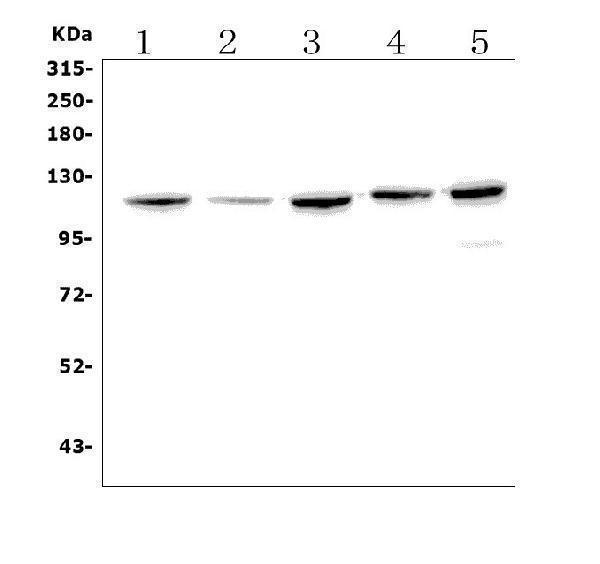
Designing a Western blot for Ephrin type-B receptor 2? The guide has the expected band size, antibodies backed by real blot images, the controls to run alongside, and protocols taken from published papers.
Open the EPHB2 Western Blot Guide

Facts about Ephrin type-B receptor 2.
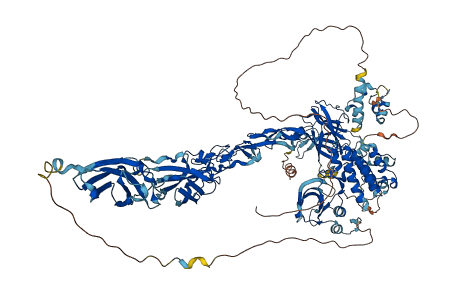
Involved in the guidance of commissural axons, that form a significant interhemispheric connection between the 2 temporal lobes of the cerebral cortex. Also involved in guidance of contralateral inner ear efferent growth cones at the midline and of retinal ganglion cell axons to the optic disk.
| Human | |
|---|---|
| Gene Name: | EPHB2 |
| Uniprot: | P29323 |
| Entrez: | 2048 |
| Belongs to: |
|---|
| protein kinase superfamily |

CAPB; Cek5; Drt; DRTEphB2; EC 2.7.10; EC 2.7.10.1; EK5; elk-related tyrosine kinase; EPH receptor B2; eph tyrosine kinase 3; EphB2; EPH-like kinase 5; ephrin type-B receptor 2; EPHT3MGC87492; EPTH3; Erk; ERKHek5; Hek5; Nuk; PCBC; protein-tyrosine kinase HEK5; Qek2; Renal carcinoma antigen NY-REN-47; Sek3; Tyro5; Tyrosine-protein kinase receptor EPH-3; Tyrosine-protein kinase TYRO5
Mass (kDA):
117.493 kDA

| Human | |
|---|---|
| Location: | 1p36.12 |
| Sequence: | 1; NC_000001.11 (22710770..22921500) |
Brain, heart, lung, kidney, placenta, pancreas, liver and skeletal muscle. Preferentially expressed in fetal brain.
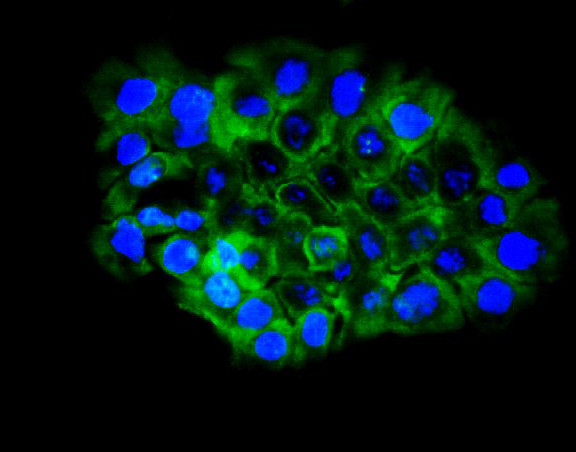
Cell membrane; Single-pass type I membrane protein. Cell projection, axon. Cell projection, dendrite.




PMID: 8033077 by Kiyokawa E., et al. Overexpression of ERK, an EPH family receptor protein tyrosine kinase, in various human tumors.
PMID: 8589679 by Ikegaki N., et al. Molecular characterization and chromosomal localization of DRT (EPHT3): a developmentally regulated human protein-tyrosine kinase gene of the EPH family.