This website uses cookies to ensure you get the best experience on our website.


- Table of Contents
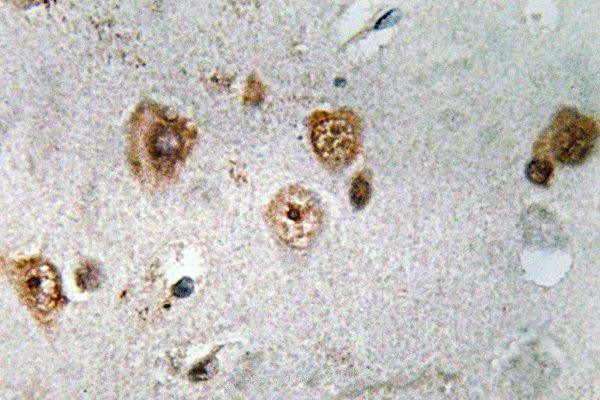
Designing an IHC experiment for NCOA3? The guide has the expected staining pattern, antigen retrieval and fixation, antibodies backed by real IHC images, the tissue controls to run alongside, and protocols taken from published papers.
Open the NCOA3 IHC Guide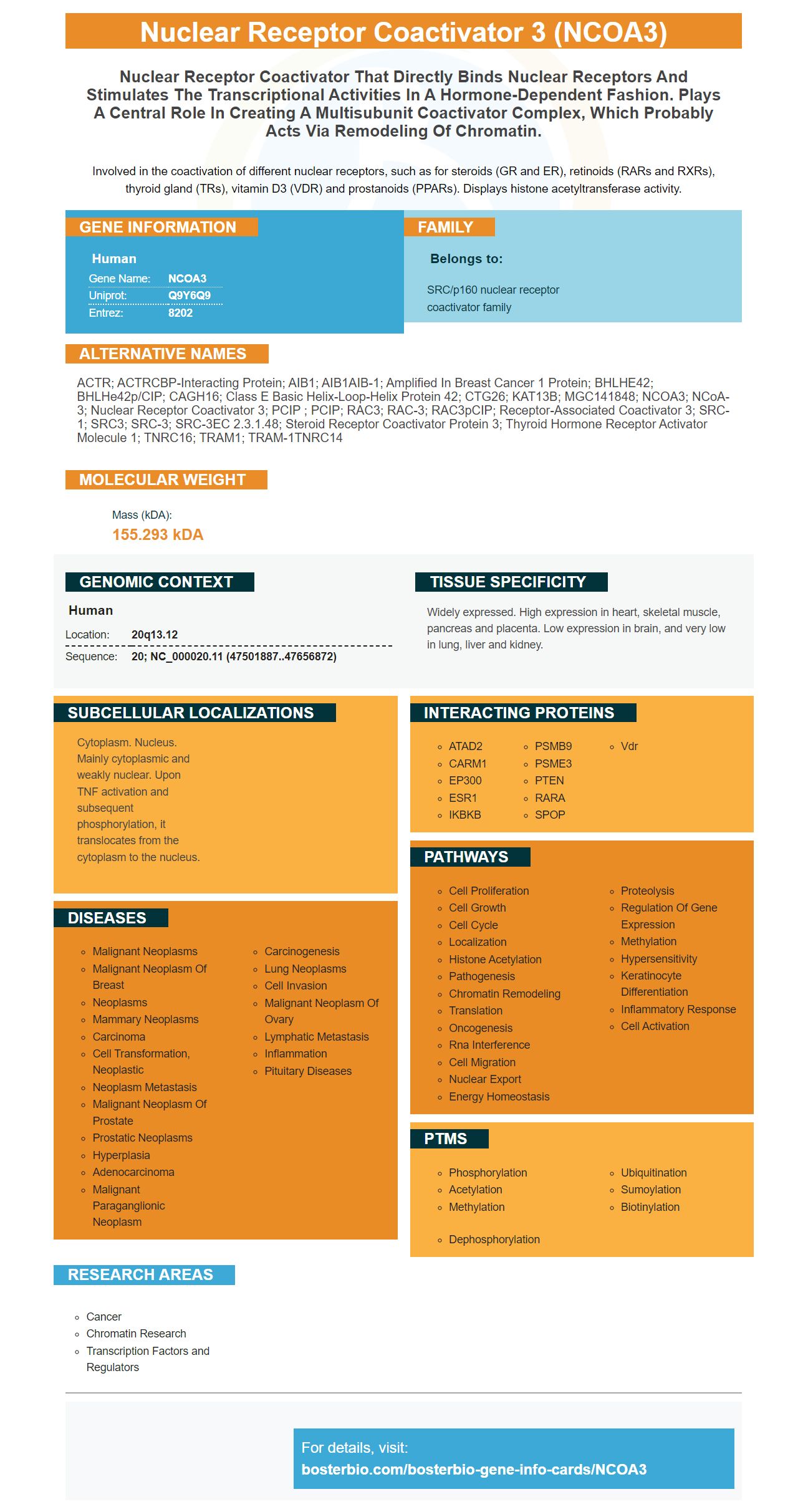
Facts about Nuclear receptor coactivator 3.
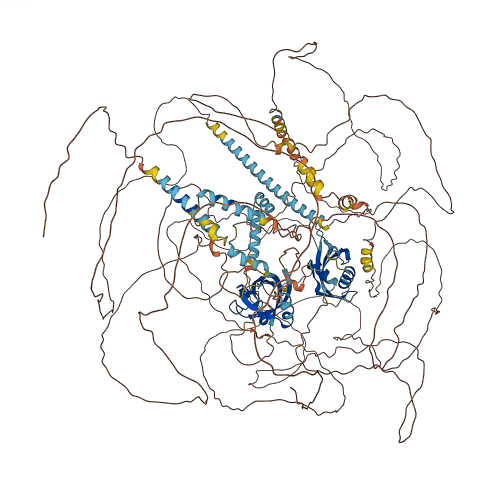
Involved in the coactivation of different nuclear receptors, such as for steroids (GR and ER), retinoids (RARs and RXRs), thyroid gland (TRs), vitamin D3 (VDR) and prostanoids (PPARs). Displays histone acetyltransferase activity.
| Human | |
|---|---|
| Gene Name: | NCOA3 |
| Uniprot: | Q9Y6Q9 |
| Entrez: | 8202 |
| Belongs to: |
|---|
| SRC/p160 nuclear receptor coactivator family |

ACTR; ACTRCBP-interacting protein; AIB1; AIB1AIB-1; Amplified in breast cancer 1 protein; BHLHE42; bHLHe42p/CIP; CAGH16; Class E basic helix-loop-helix protein 42; CTG26; KAT13B; MGC141848; NCOA3; NCoA-3; nuclear receptor coactivator 3; pCIP ; pCIP; RAC3; RAC-3; RAC3pCIP; Receptor-associated coactivator 3; SRC-1; SRC3; SRC-3; SRC-3EC 2.3.1.48; Steroid receptor coactivator protein 3; Thyroid hormone receptor activator molecule 1; TNRC16; TRAM1; TRAM-1TNRC14
Mass (kDA):
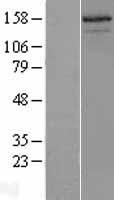
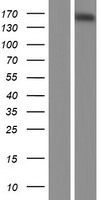
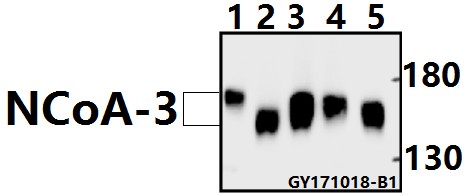
155.293 kDA

| Human | |
|---|---|
| Location: | 20q13.12 |
| Sequence: | 20; NC_000020.11 (47501887..47656872) |
Widely expressed. High expression in heart, skeletal muscle, pancreas and placenta. Low expression in brain, and very low in lung, liver and kidney.
Cytoplasm. Nucleus. Mainly cytoplasmic and weakly nuclear. Upon TNF activation and subsequent phosphorylation, it translocates from the cytoplasm to the nucleus.


PMID: 9346901 by Takeshita A., et al. TRAM-1, a novel 160-kDa thyroid hormone receptor activator molecule, exhibits distinct properties from steroid receptor coactivator-1.
PMID: 9267036 by Chen H., et al. Nuclear receptor coactivator ACTR is a novel histone acetyltransferase and forms a multimeric activation complex with P/CAF and CBP/p300.