This website uses cookies to ensure you get the best experience on our website.


- Table of Contents
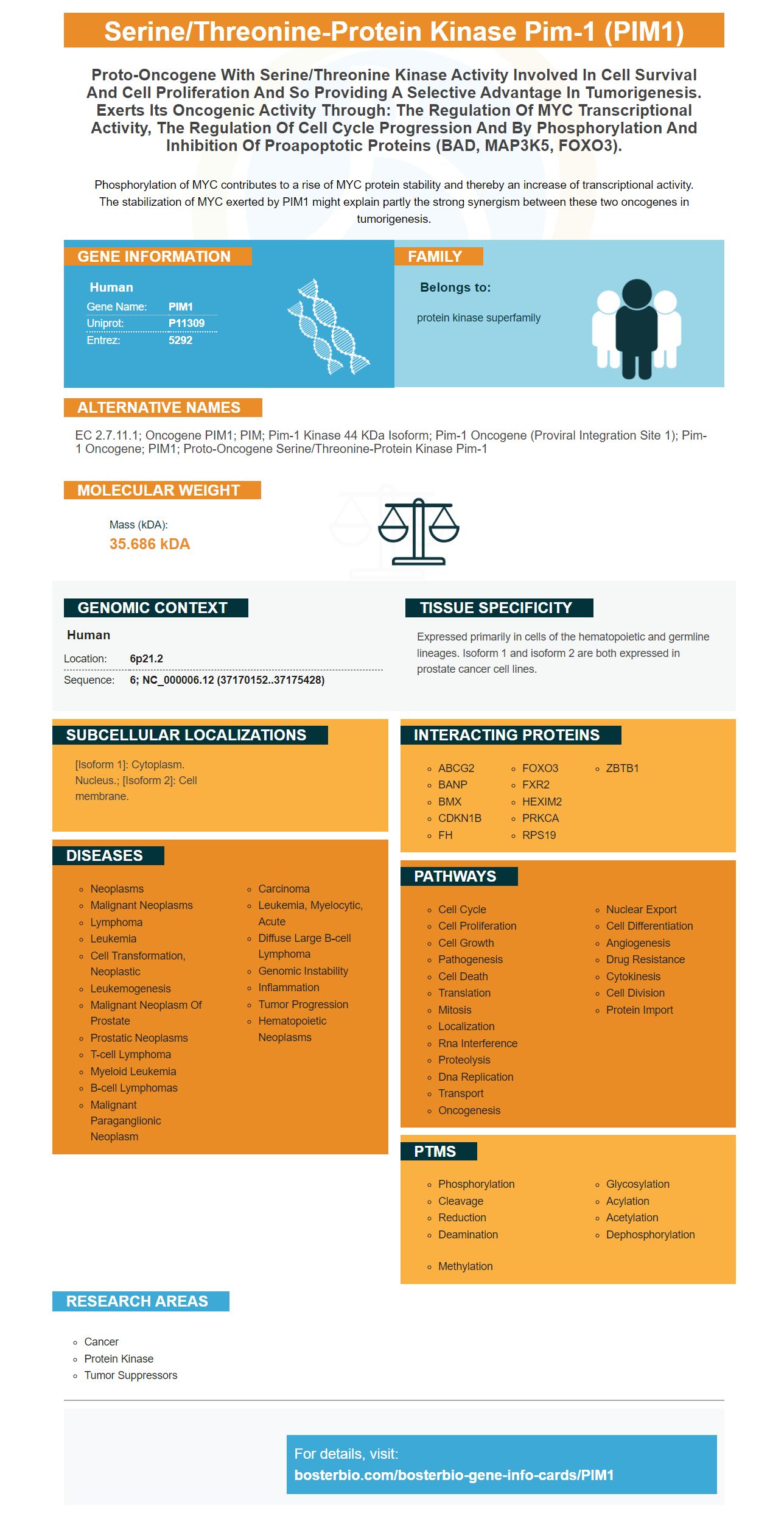



Facts about Serine/threonine-protein kinase pim-1.
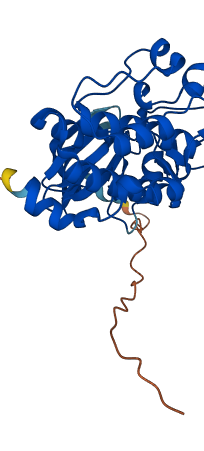
Phosphorylation of MYC contributes to a rise of MYC protein stability and thereby an increase of transcriptional activity. The stabilization of MYC exerted by PIM1 might explain partly the strong synergism between these two oncogenes in tumorigenesis.
| Human | |
|---|---|
| Gene Name: | PIM1 |
| Uniprot: | P11309 |
| Entrez: | 5292 |
| Belongs to: |
|---|
| protein kinase superfamily |

EC 2.7.11.1; Oncogene PIM1; PIM; pim-1 kinase 44 kDa isoform; pim-1 oncogene (proviral integration site 1); pim-1 oncogene; PIM1; proto-oncogene serine/threonine-protein kinase pim-1
Mass (kDA):
35.686 kDA

| Human | |
|---|---|
| Location: | 6p21.2 |
| Sequence: | 6; NC_000006.12 (37170152..37175428) |
Expressed primarily in cells of the hematopoietic and germline lineages. Isoform 1 and isoform 2 are both expressed in prostate cancer cell lines.
[Isoform 1]: Cytoplasm. Nucleus.; [Isoform 2]: Cell membrane.





PMID: 2205533 by Reeves R., et al. Primary structure of the putative human oncogene, pim-1.
PMID: 3475233 by Zakut-Houri R., et al. The cDNA sequence and gene analysis of the human pim oncogene.
*More publications can be found for each product on its corresponding product page