This website uses cookies to ensure you get the best experience on our website.


- Table of Contents
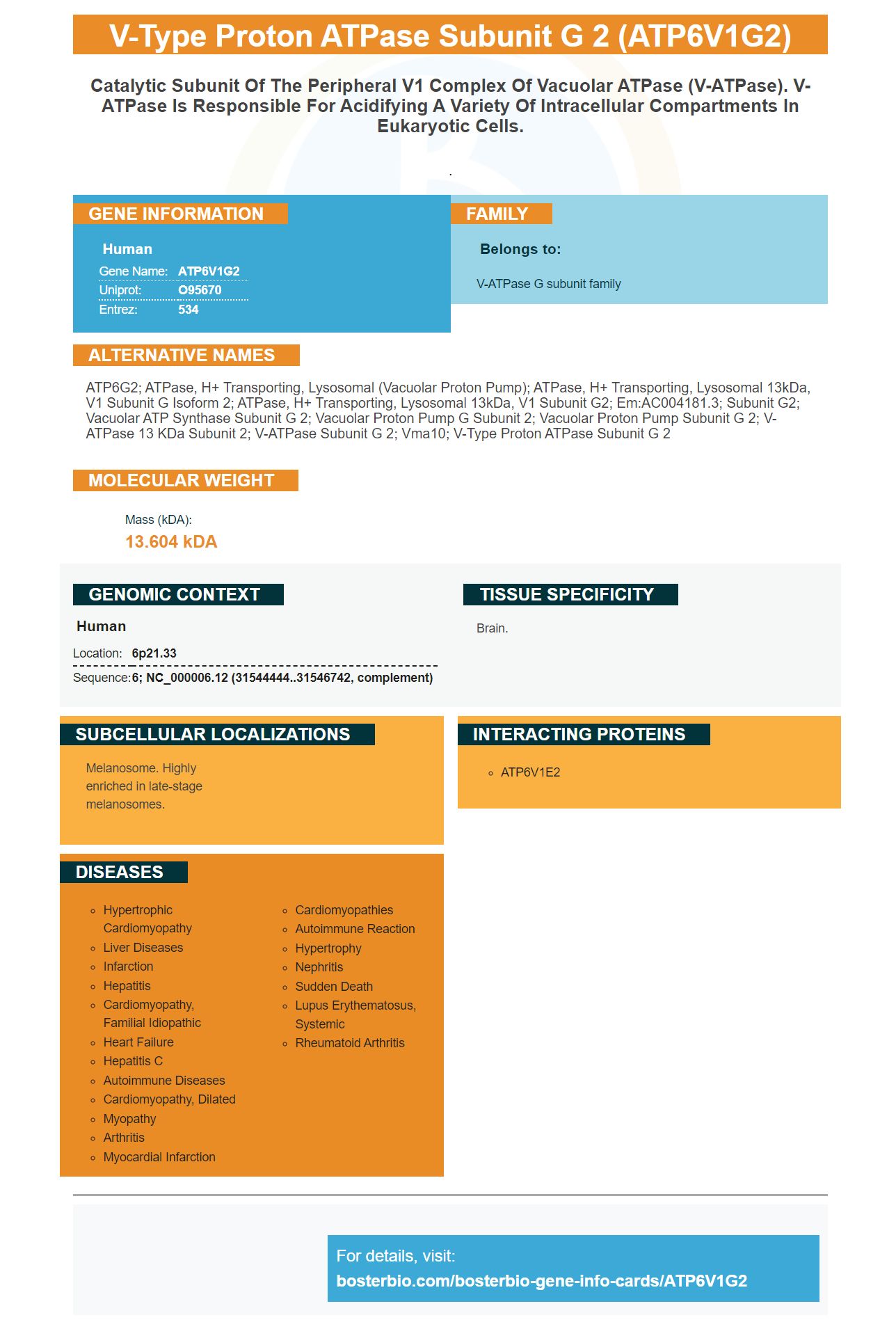
Facts about V-type proton ATPase subunit G 2.
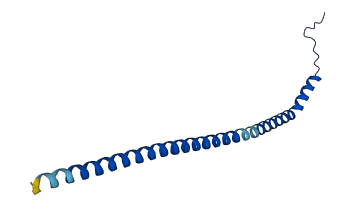
.
| Human | |
|---|---|
| Gene Name: | ATP6V1G2 |
| Uniprot: | O95670 |
| Entrez: | 534 |
| Belongs to: |
|---|
| V-ATPase G subunit family |

ATP6G2; ATPase, H+ transporting, lysosomal (vacuolar proton pump); ATPase, H+ transporting, lysosomal 13kDa, V1 subunit G isoform 2; ATPase, H+ transporting, lysosomal 13kDa, V1 subunit G2; Em:AC004181.3; subunit G2; vacuolar ATP synthase subunit G 2; vacuolar proton pump G subunit 2; Vacuolar proton pump subunit G 2; V-ATPase 13 kDa subunit 2; V-ATPase subunit G 2; Vma10; V-type proton ATPase subunit G 2
Mass (kDA):
13.604 kDA

| Human | |
|---|---|
| Location: | 6p21.33 |
| Sequence: | 6; NC_000006.12 (31544444..31546742, complement) |
Brain.
Melanosome. Highly enriched in late-stage melanosomes.




PMID: 10202016 by Neville M.J., et al. A new member of the Ig superfamily and a V-ATPase G subunit are among the predicted products of novel genes close to the TNF locus in the human MHC.
PMID: 16702430 by Shiina T., et al. Rapid evolution of major histocompatibility complex class I genes in primates generates new disease alleles in humans via hitchhiking diversity.