This website uses cookies to ensure you get the best experience on our website.


- Table of Contents
3 Citations 7 Q&As
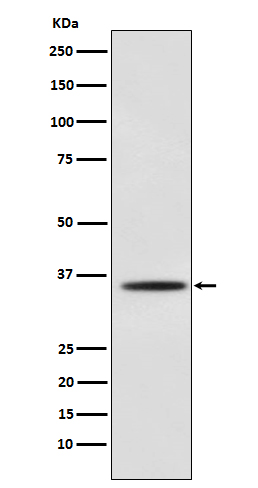
1 Citations

Facts about Myogenin.
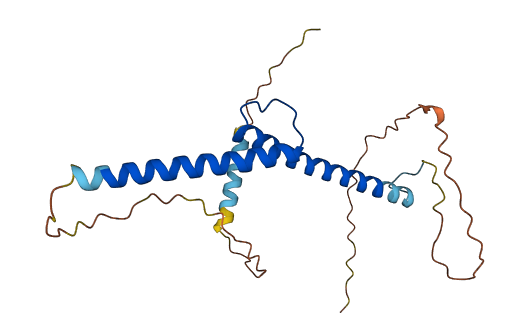
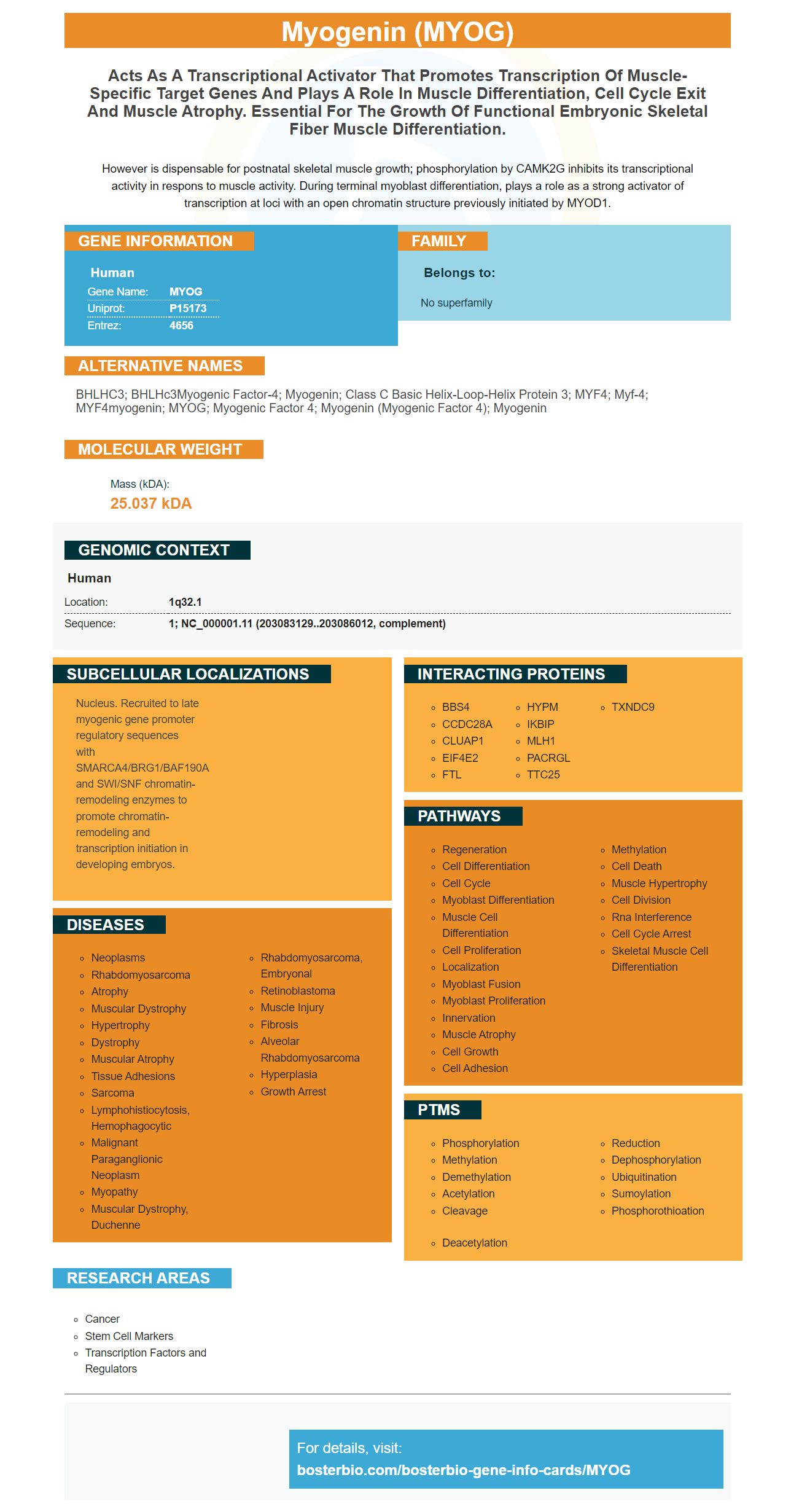
However is dispensable for postnatal skeletal muscle growth; phosphorylation by CAMK2G inhibits its transcriptional activity in respons to muscle activity. During terminal myoblast differentiation, plays a role as a strong activator of transcription at loci with an open chromatin structure previously initiated by MYOD1.
| Human | |
|---|---|
| Gene Name: | MYOG |
| Uniprot: | P15173 |
| Entrez: | 4656 |
| Belongs to: |
|---|
| No superfamily |

BHLHC3; bHLHc3Myogenic factor-4; myogenin; Class C basic helix-loop-helix protein 3; MYF4; myf-4; MYF4myogenin; MYOG; Myogenic factor 4; myogenin (myogenic factor 4); Myogenin
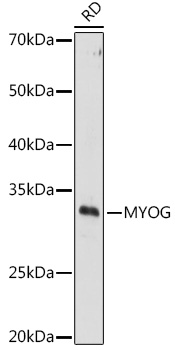
Mass (kDA):
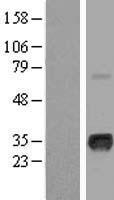
25.037 kDA

| Human | |
|---|---|
| Location: | 1q32.1 |
| Sequence: | 1; NC_000001.11 (203083129..203086012, complement) |
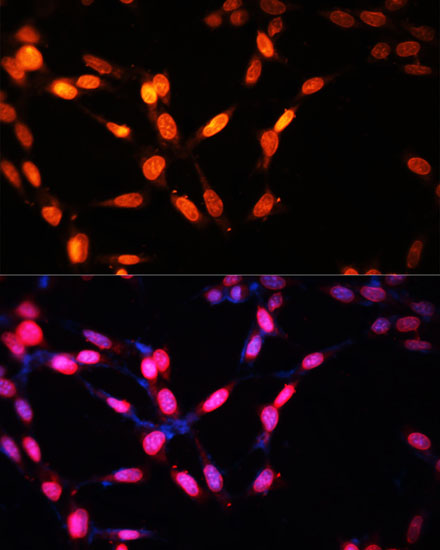
Nucleus. Recruited to late myogenic gene promoter regulatory sequences with SMARCA4/BRG1/BAF190A and SWI/SNF chromatin-remodeling enzymes to promote chromatin-remodeling and transcription initiation in developing embryos.



PMID: 2583111 by Braun T., et al. Differential expression of myogenic determination genes in muscle cells: possible autoactivation by the Myf gene products.
PMID: 1659574 by Salminen A., et al. Transcription of the muscle regulatory gene Myf4 is regulated by serum components, peptide growth factors and signaling pathways involving G proteins.