This website uses cookies to ensure you get the best experience on our website.


- Table of Contents
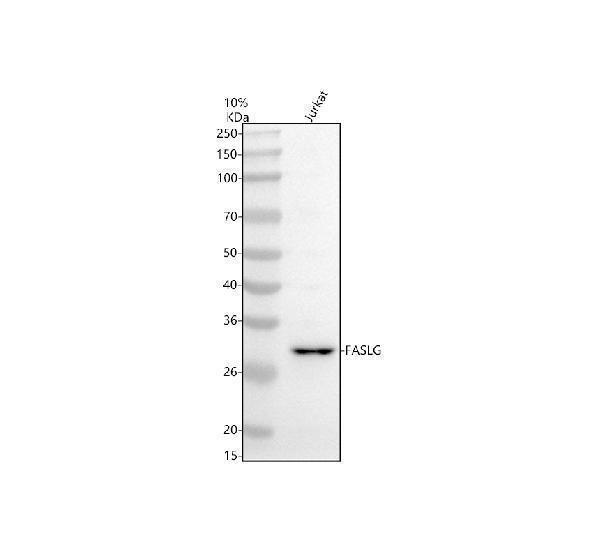
Designing a Western blot for FASLG? The guide has the expected band size, antibodies backed by real blot images, the controls to run alongside, and protocols taken from published papers.
Open the FASLG Western Blot Guide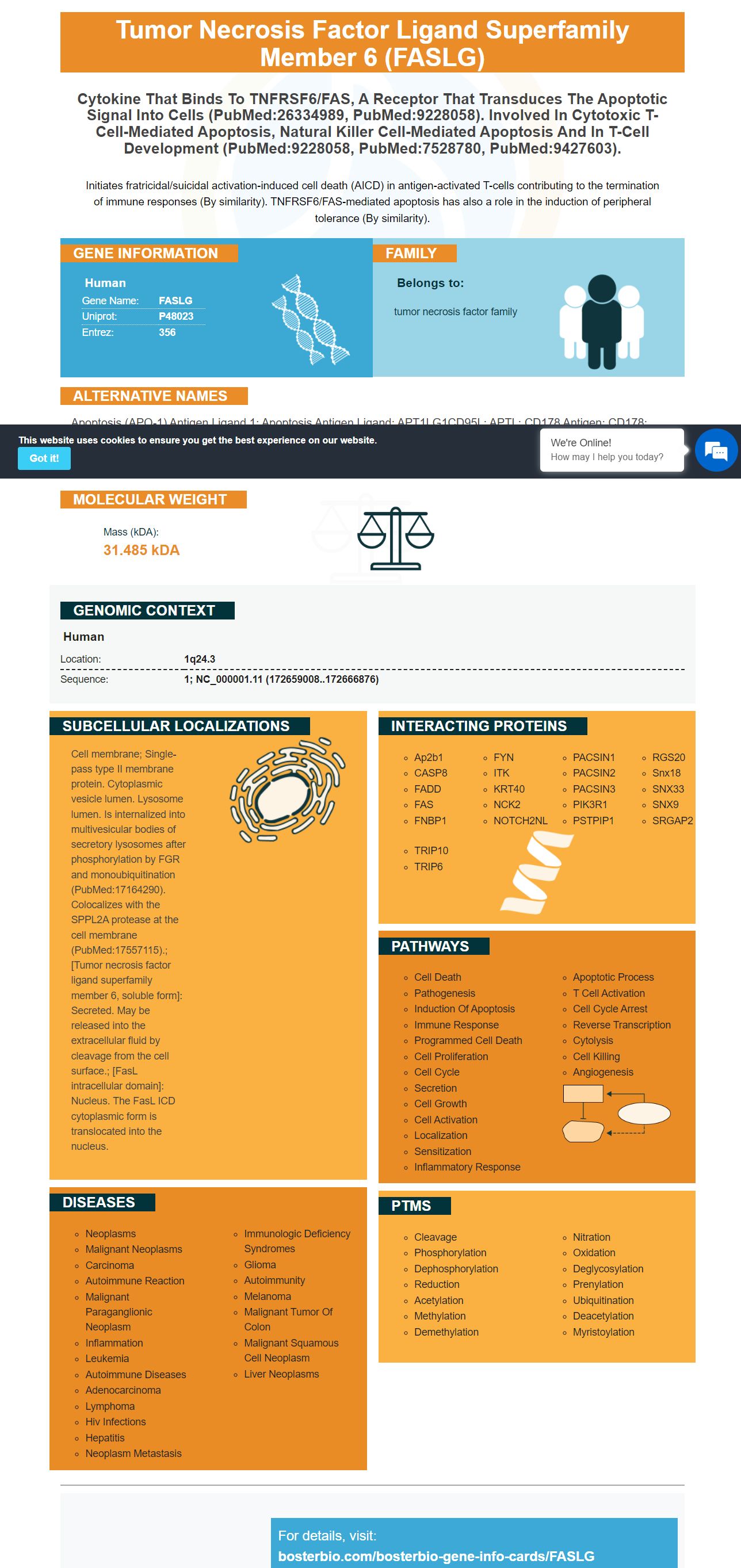
4 Citations

5 Citations

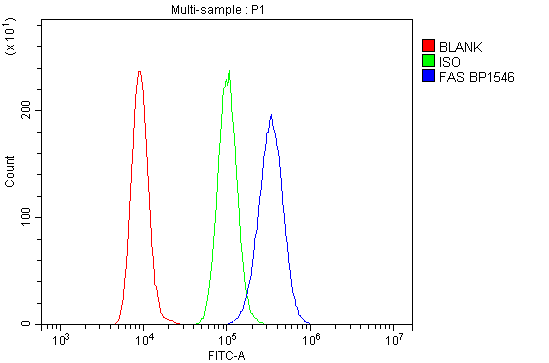


Facts about Tumor necrosis factor ligand superfamily member 6.
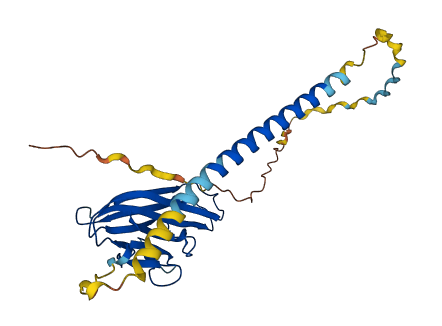
Initiates fratricidal/suicidal activation-induced cell death (AICD) in antigen-activated T-cells contributing to the termination of immune responses (By similarity). TNFRSF6/FAS-mediated apoptosis has also a role in the induction of peripheral tolerance (By similarity).
| Human | |
|---|---|
| Gene Name: | FASLG |
| Uniprot: | P48023 |
| Entrez: | 356 |
| Belongs to: |
|---|
| tumor necrosis factor family |

apoptosis (APO-1) antigen ligand 1; Apoptosis antigen ligand; APT1LG1CD95L; APTL; CD178 antigen; CD178; CD95L; CD95-L; Fas antigen ligand; Fas ligand (TNF superfamily, member 6); Fas Ligand; FASLCD95 ligand; FASLG; TNFSF6; TNFSF6FasL; tumor necrosis factor (ligand) superfamily, member 6; tumor necrosis factor ligand superfamily member 6
Mass (kDA):
31.485 kDA

| Human | |
|---|---|
| Location: | 1q24.3 |
| Sequence: | 1; NC_000001.11 (172659008..172666876) |
Cell membrane; Single-pass type II membrane protein. Cytoplasmic vesicle lumen. Lysosome lumen. Is internalized into multivesicular bodies of secretory lysosomes after phosphorylation by FGR and monoubiquitination (PubMed:17164290). Colocalizes with the SPPL2A protease at the cell membrane (PubMed:17557115).; [Tumor necrosis factor ligand superfamily member 6, soluble form]: Secreted. May be released into the extracellular fluid by cleavage from the cell surface.; [FasL intracellular domain]: Nucleus. The FasL ICD cytoplasmic form is translocated into the nucleus.


PMID: 7528780 by Alderson M.; Fas ligand mediates activation-induced cell death in human T lymphocytes.
PMID: 7826947 by Takahashi T., et al. Human Fas ligand: gene structure, chromosomal location and species specificity.
*More publications can be found for each product on its corresponding product page