Anti-CDK1 Antibody Picoband® (monoclonal, 2G11)

CDK1 antibody

Boster Bio Anti-CDK1 Antibody Picoband® (monoclonal, 2G11) catalog # M00209-6. Tested in Flow Cytometry, IHC, WB applications. This antibody reacts with Human, Mouse, Rat. The brand Picoband indicates this is a premium antibody that guarantees superior quality, high affinity, and strong signals with minimal background in Western blot applications. Only our best-performing antibodies are designated as Picoband, ensuring unmatched performance. Cited in 4 publication(s).

Product Info Summary

SKU: M00209-6
Size: 100 μg/vial
Reactive Species: Human, Mouse, Rat
Host: Mouse
Application: Flow Cytometry, IHC, WB

Customers Who Bought This Also Bought

Product Name

Anti-CDK1 Antibody Picoband® (monoclonal, 2G11)

View all CDK1 Antibodies

SKU/Catalog Number

M00209-6

Size

100 μg/vial

Form

Lyophilized

Description

Boster Bio Anti-CDK1 Antibody Picoband® (monoclonal, 2G11) catalog # M00209-6. Tested in Flow Cytometry, IHC, WB applications. This antibody reacts with Human, Mouse, Rat. The brand Picoband indicates this is a premium antibody that guarantees superior quality, high affinity, and strong signals with minimal background in Western blot applications. Only our best-performing antibodies are designated as Picoband, ensuring unmatched performance.

Storage & Handling

Store at -20˚C for one year from date of receipt. After reconstitution, at 4˚C for one month. It can also be aliquotted and stored frozen at -20˚C for six months. Avoid repeated freeze-thaw cycles.

Cite This Product

Anti-CDK1 Antibody Picoband® (monoclonal, 2G11) (Boster Biological Technology, Pleasanton CA, USA, Catalog # M00209-6)

Host

Mouse

Contents

Each vial contains 4mg Trehalose, 0.9mg NaCl, 0.2mg Na2HPO4, 0.05mg NaN3.

Clonality

Monoclonal

Clone Number

2G11

Isotype

Mouse IgG2b

Immunogen

E.coli-derived human CDK1 recombinant protein (Position: L66-M297). Human CDK1 shares 97.8% and 98.3% amino acid (aa) sequence identity with mouse and rat CDK1, respectively.

Cross-reactivity

No cross-reactivity with other proteins.

Reactive Species

M00209-6 is reactive to CDK1 in Human, Mouse, Rat

Observed Molecular Weight

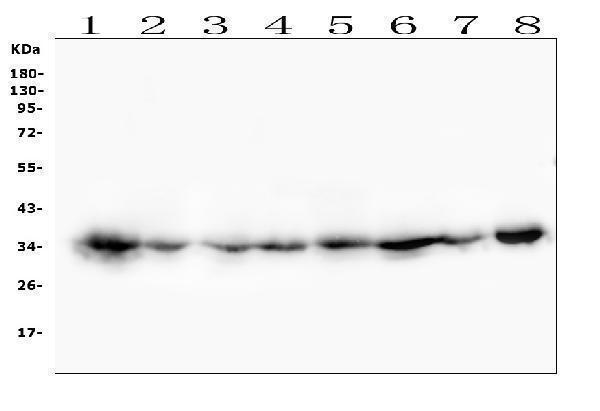
34 kDa

Calculated molecular weight

34.1 kDa

Background of CDK1

CDC2, Cell Division Cycle 2, is also known as CDK1 (Cyclin-dependent Kinase 1). CDC2 is a catalytic subunit of a protein kinase complex, called the M-phase promoting factor that induces entry into mitosis and is universal among eukaryotes. In HeLa cells CDC2 is the most abundant phosphotyrosine-containing protein and its phosphotyrosine content is subject to cell cycle regulation. CDC2 gene is located on chromosome 10.

Antibody Validation

Boster validates all antibodies on WB, IHC, ICC, Immunofluorescence, and ELISA with known positive control and negative samples to ensure specificity and high affinity, including thorough antibody incubations.

View more details

Applications

M00209-6 is guaranteed for Flow Cytometry, IHC, WB Boster Guarantee

Assay Dilutions Recommendation

The recommendations below provide a starting point for assay optimization. The actual working concentration varies and should be decided by the user.

Western blot, 0.1-0.5μg/ml
Immunohistochemistry (Paraffin-embedded Section), 0.5-1μg/ml
Flow Cytometry (Fixed), 1-3μg/1x106 cells

Positive Control

WB: human HEK293 whole cell, human A549 whole cell, human HepG2 whole cell, human THP-1 whole cell, human PANC-1 whole cell, human SW620 whole cell, rat RH35 whole cell, mouse NIH/3T3 whole cell,
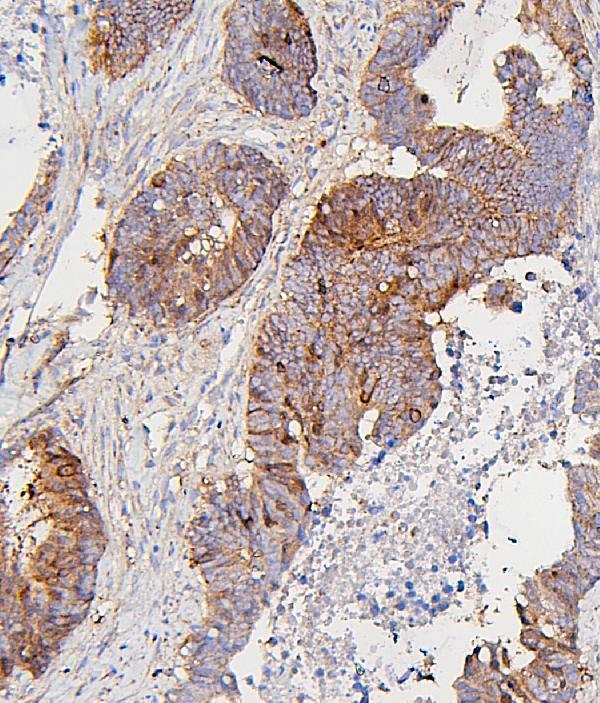
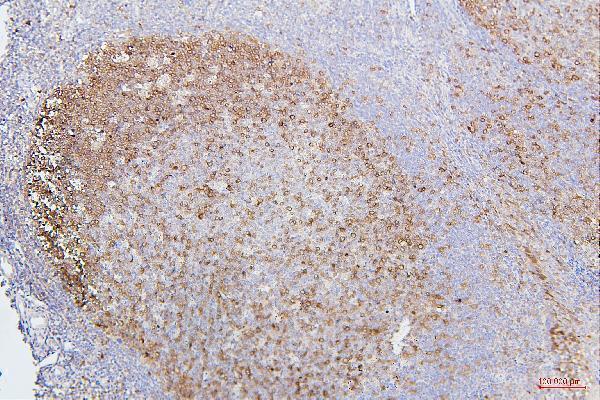
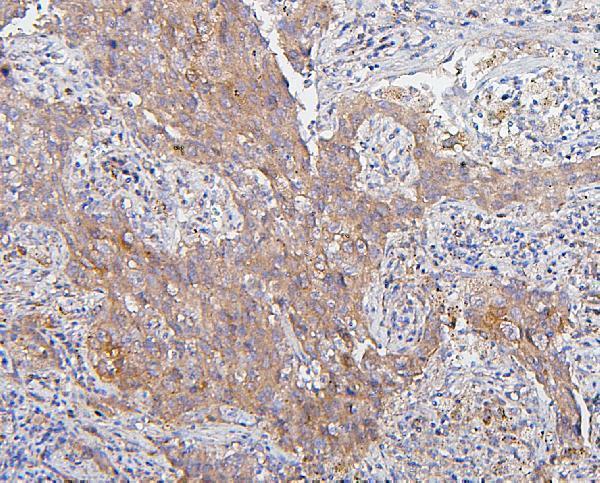
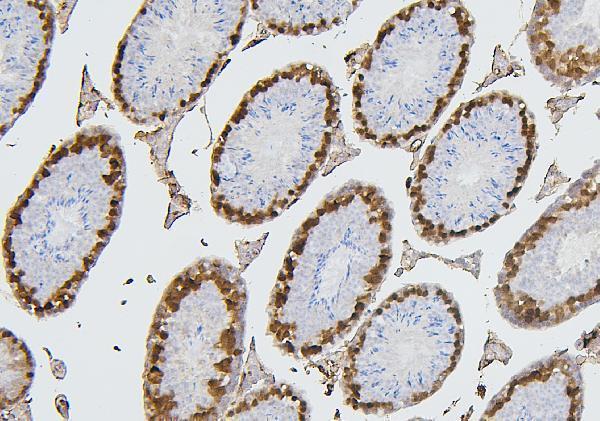
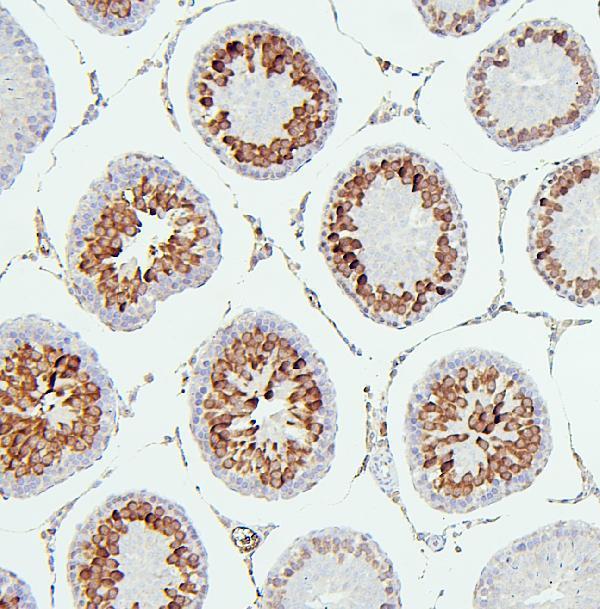
IHC: human colon cancer tissue, human tonsil tissue, human lung cancer tissue, mouse testis tissue, rat testis tissue
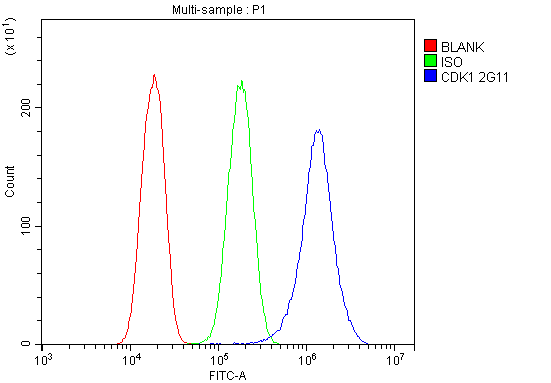
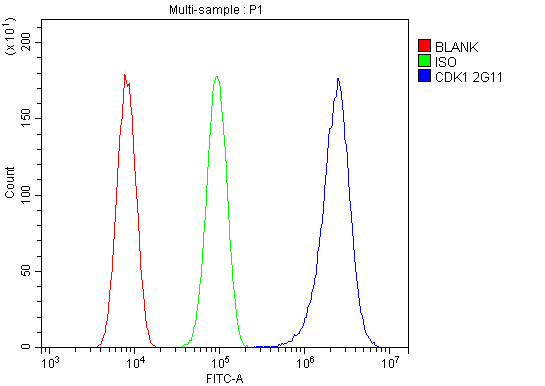
FCM: PC-3 cell, U20S cell

Validation Images & Assay Conditions

Loading publications

No publications found

Do you have publications using this product? Share with us and receive a reward. Contact us for more information.

Publications not available. Please try again later.

Product has been cited in publications

No results found matching your query

  • Published: --- Journal: --- Application: --- Impact Factor: --- Species: --- PMID: --- View Article

Have you used Anti-CDK1 Antibody Picoband® (monoclonal, 2G11)?

Share your experimental results or join a short interview to earn up to $1,000 in product credits or other rewards.

0 Reviews For Anti-CDK1 Antibody Picoband® (monoclonal, 2G11)

Have a question?

Find answers in Q&As, reviews.

Can't find your answer?

Submit your question

5 Customer Q&As for Anti-CDK1 Antibody Picoband® (monoclonal, 2G11)

Question

Our team were well pleased with the WB result of your anti-CDK1 antibody (monoclonal, 2G11). However we have seen positive staining in leukemic t-cell nucleus. cytoplasm. mitochondrion. using this antibody. Is that expected? Could you tell me where is CDK1 supposed to be expressed?

Verified Customer

Verified customer

Asked: 2019-10-24

Answer

From what I have seen in literature, leukemic t-cell does express CDK1. Generally CDK1 expresses in nucleus. cytoplasm. mitochondrion. Regarding which tissues have CDK1 expression, here are a few articles citing expression in various tissues:
Cervix carcinoma, Pubmed ID: 18220336, 18669648, 18691976, 20068231
Cervix carcinoma, and Erythroleukemia, Pubmed ID: 23186163
Leukemic T-cell, Pubmed ID: 19690332
Lymphoblast, Pubmed ID: 14654843
Mammary cancer, Pubmed ID: 9515786, 14702039
Skin, Pubmed ID: 15489334

Boster Scientific Support

Answered: 2019-10-24

Question

We have observed staining in rat cervix carcinoma. Any tips? Is anti-CDK1 antibody (monoclonal, 2G11) supposed to stain cervix carcinoma positively?

Verified Customer

Verified customer

Asked: 2019-10-03

Answer

Based on literature cervix carcinoma does express CDK1. Based on Uniprot.org, CDK1 is expressed in intestine, mammary cancer, skin, lymphoblast, cervix carcinoma, leukemic t-cell, cervix carcinoma erythroleukemia, among other tissues. Regarding which tissues have CDK1 expression, here are a few articles citing expression in various tissues:
Cervix carcinoma, Pubmed ID: 18220336, 18669648, 18691976, 20068231
Cervix carcinoma, and Erythroleukemia, Pubmed ID: 23186163
Leukemic T-cell, Pubmed ID: 19690332
Lymphoblast, Pubmed ID: 14654843
Mammary cancer, Pubmed ID: 9515786, 14702039
Skin, Pubmed ID: 15489334

Boster Scientific Support

Answered: 2019-10-03

Question

We ordered your anti-CDK1 antibody (monoclonal, 2G11) for Flow Cytometry on skin in the past. I am using human, and We are going to use the antibody for WB next. I would like examining skin as well as cervix carcinoma in our next experiment. Could you please give me some suggestion on which antibody would work the best for WB?

Verified Customer

Verified customer

Asked: 2019-05-23

Answer

I looked at the website and datasheets of our anti-CDK1 antibody (monoclonal, 2G11) and it appears that M00209-6 has been tested on human in both Flow Cytometry and WB. Thus M00209-6 should work for your application. Our Boster satisfaction guarantee will cover this product for WB in human even if the specific tissue type has not been validated. We do have a comprehensive range of products for WB detection and you can check out our website bosterbio.com to find out more information about them.

Boster Scientific Support

Answered: 2019-05-23

Question

We are currently using anti-CDK1 antibody (monoclonal, 2G11) M00209-6 for human tissue, and we are content with the Flow Cytometry results. The species of reactivity given in the datasheet says human, mouse, rat. Is it true that the antibody can work on dog tissues as well?

R. Li

Verified customer

Asked: 2013-07-01

Answer

The anti-CDK1 antibody (monoclonal, 2G11) (M00209-6) has not been tested for cross reactivity specifically with dog tissues, though there is a good chance of cross reactivity. We have an innovator award program that if you test this antibody and show it works in dog you can get your next antibody for free. Please contact me if I can help you with anything.

Boster Scientific Support

Answered: 2013-07-01

Question

Our lab want to know about using your anti-CDK1 antibody (monoclonal, 2G11) for cell division studies. Has this antibody been tested with western blotting on a549 whole cell lysates? We would like to see some validation images before ordering.

B. Parker

Verified customer

Asked: 2013-03-06

Answer

I appreciate your inquiry. This M00209-6 anti-CDK1 antibody (monoclonal, 2G11) is validated on human a549, a549 whole cell lysates, hepg2 whole cell lysates, sw620 whole cell lysates, rat rh35 whole cell lysates, u20s cells. It is guaranteed to work for Flow Cytometry, IHC-P, WB in human, mouse, rat. Our Boster guarantee will cover your intended experiment even if the sample type has not been be directly tested.

Boster Scientific Support

Answered: 2013-03-06

Order DetailsPrice
M00209-6

100μg

$370
M00209-6-Fluoro488

100 μg Fluoro488 conjugated (liquid)

$570
M00209-6-Fluoro550

100 μg Fluoro550 conjugated (liquid)

$570
M00209-6-Fluoro594

100 μg Fluoro594 conjugated (liquid)

$570
M00209-6-Fluoro647

100 μg Fluoro647 conjugated (liquid)

$670
M00209-6-APC

100 μg APC conjugated (liquid)

$820
M00209-6-FITC

100 μg FITC conjugated (liquid)

$570
M00209-6-Cy3

100 μg Cy3 conjugated (liquid)

$570
M00209-6-Biotin

100 μg Biotin conjugated (liquid)

$570
M00209-6-HRP

100 μg HRP conjugated (liquid)

$570
M00209-6-PE

100 μg PE conjugated (liquid)

$820
M00209-6-carrier-free

Carrier Free

$370
Rainbow Button View conjugates

Free Secondary Antibody

FREE  $95.00
FREE  $95.00
$40.00  $80.00
$65.00  $130.00
$67.50  $135.00
$75.00  $150.00
$30.00  $60.00
$75.00  $150.00
$55.00  $110.00
Choose an option to show lead time.
Get A Quote
In stock
Order Product
M00209-6
Buy one primary antibody get one 0.5ml HRP or Biotin secondary antibody for free.
*Sample sizes are prepared on demand and will take extra lead time. (cannot be conjugated)
$370.00

Troubleshooting

troubleshooting-box-image

Download troubleshooting handbooks for IHC, Western blot and ELISA for FREE.

Download Free PDFs Now

Boster Guarantee

Guaranteed product quality

Guaranteed product quality

We promise all of our products perform as described in datasheets.

This product is for Research Use Only. Not for use in diagnostic procedures.

Update date: Apr 12, 2026