Product Info Summary
| SKU: | PB9951 |
|---|---|
| Size: | 100 μg/vial |
| Reactive Species: | Mouse |
| Host: | Rabbit |
| Application: | IHC, WB |
Customers Who Bought This Also Bought
Product info
Product Name
Anti-ISG15 Antibody Picoband®
SKU/Catalog Number
PB9951
PB1000 is an alternative SKU for this antibody, used in previous lots.
Size
100 μg/vial
Form
Lyophilized
Description
Boster Bio Anti-ISG15 Antibody Picoband® catalog # PB9951. Tested in IHC, WB applications. This antibody reacts with Mouse. The brand Picoband indicates this is a premium antibody that guarantees superior quality, high affinity, and strong signals with minimal background in Western blot applications. Only our best-performing antibodies are designated as Picoband, ensuring unmatched performance.
Storage & Handling
Store at -20˚C for one year from date of receipt. After reconstitution, at 4˚C for one month. It can also be aliquotted and stored frozen at -20˚C for six months. Avoid repeated freeze-thaw cycles.
Cite This Product
Anti-ISG15 Antibody Picoband® (Boster Biological Technology, Pleasanton CA, USA, Catalog # PB9951)
Host
Rabbit
Contents
Each vial contains antibody formulated with stabilizing components, 0.9 mg NaCl, 0.2 mg Na2HPO4, and 0.05 mg NaN3.
*This antibody is supplied in a stabilized formulation.
Compatibility with conjugation reactions depends on the chemistry of the conjugation method used.
For conjugation methods that are not compatible with the stabilizing components present in this formulation, a carrier-free antibody format is required.
Clonality
Polyclonal
Isotype
Rabbit IgG
Immunogen
E.coli-derived mouse ISG15 recombinant protein (Position: A2-G155). Mouse ISG15 shares 65.8% amino acid (aa) sequence identity with human ISG15.
Cross-reactivity
No cross-reactivity with other proteins
Reactive Species
PB9951 is reactive to Isg15 in Mouse
Observed Molecular Weight
17 kDa
Calculated molecular weight
17.9 kDa
Background of Isg15
Interferon-stimulated gene 15 (ISG15) is a 17 kDA secreted protein that in humans is encoded by the ISG15 gene. The protein encoded by this gene is a ubiquitin-like protein that is conjugated to intracellular target proteins upon activation by interferon-alpha and interferon-beta. Several functions have been ascribed to the encoded protein, including chemotactic activity towards neutrophils, direction of ligated target proteins to intermediate filaments, cell-to-cell signaling, and antiviral activity during viral infections. While conjugates of this protein have been found to be noncovalently attached to intermediate filaments, this protein is sometimes secreted.
Antibody Validation
Boster validates all antibodies on WB, IHC, ICC, Immunofluorescence, and ELISA with known positive control and negative samples to ensure specificity and high affinity, including thorough antibody incubations.
Application & Images
Applications
PB9951 is guaranteed for IHC, WB Boster Guarantee
Assay Dilutions Recommendation
The recommendations below provide a starting point for assay optimization. The actual working concentration varies and should be decided by the user.
Immunohistochemistry (Paraffin-embedded Section), 0.5-1μg/ml, Mouse
Western blot, 0.1-0.5μg/ml, Mouse
Positive Control
WB: mouse spleen tissue
IHC: mouse kidney tissue
Validation Images & Assay Conditions
Click image to see more details
Western blot analysis of ISG15/Ucrp using anti-ISG15/Ucrp antibody (PB9951).
Electrophoresis was performed on a 5-20% SDS-PAGE gel at 70V (Stacking gel) / 90V (Resolving gel) for 2-3 hours. The sample well of each lane was loaded with 30 ug of sample under reducing conditions.
Lane 1: mouse spleen tissue lysates.
After electrophoresis, proteins were transferred to a nitrocellulose membrane at 150 mA for 50-90 minutes. Blocked the membrane with 5% non-fat milk/TBS for 1.5 hour at RT. The membrane was incubated with rabbit anti-ISG15/Ucrp antigen affinity purified polyclonal antibody (Catalog # PB9951) at 0.5 μg/mL overnight at 4°C, then washed with TBS-0.1%Tween 3 times with 5 minutes each and probed with a goat anti-rabbit IgG-HRP secondary antibody at a dilution of 1:5000 for 1.5 hour at RT. The signal is developed using an Enhanced Chemiluminescent detection (ECL) kit (Catalog # EK1002) with Tanon 5200 system. A specific band was detected for ISG15/Ucrp at approximately 17 kDa. The expected band size for ISG15/Ucrp is at 18 kDa.
Click image to see more details
IHC analysis of ISG15/Ucrp using anti-ISG15/Ucrp antibody (PB9951).
ISG15/Ucrp was detected in paraffin-embedded section of mouse kidney tissues. Heat mediated antigen retrieval was performed in citrate buffer (pH6, epitope retrieval solution) for 20 mins. The tissue section was blocked with 10% goat serum. The tissue section was then incubated with 1μg/ml rabbit anti-ISG15/Ucrp Antibody (PB9951) overnight at 4°C. Biotinylated goat anti-rabbit IgG was used as secondary antibody and incubated for 30 minutes at 37°C. The tissue section was developed using Strepavidin-Biotin-Complex (SABC)(Catalog # SA1022) with DAB as the chromogen.
Click image to see more details
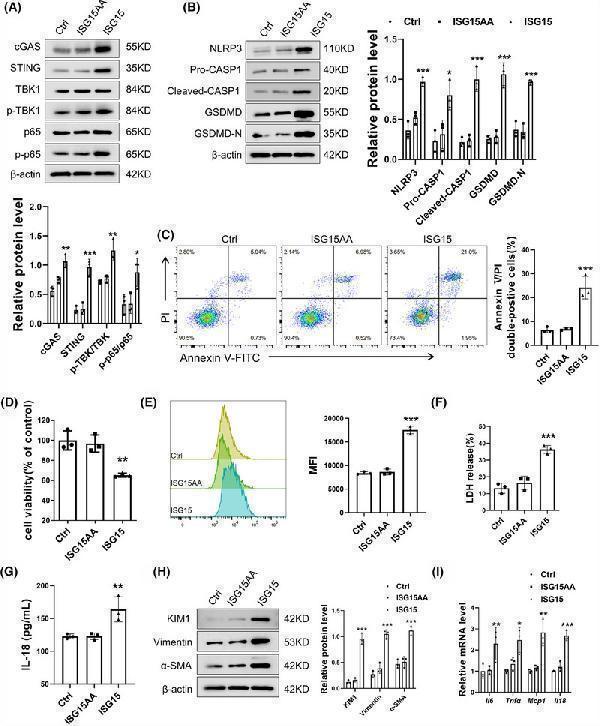
ISG15 contributed to TECs injury in an ISGylation‐dependent manner. (A) Western blot analysis and densitometric quantification of cGAS, STING, TBK1, p‐TBK1, p65, p‐p65 expression in TECs ( n = 3). (B) Western blot analysis and densitometric quantification of NLRP3, Pro‐CASP1, Cleaved‐CASP1, GSDMD, GSDMD‐N expression in TECs ( n = 3). (C) Flow cytometry analysis and quantitative data depicting the Annexin V/PI double‐positive cells rate ( n = 3). (D) CCK‐8 activity assay quantified cell viability ( n = 3). (E–G) Levels of ROS (E), LDH (F), IL‐18 (G) in TECs ( n = 3). (H) Western blot analysis and densitometric quantification of KIM1, α‐SMA and Vimentin expression in TECs ( n = 3). (I) Relative mRNA level of pro‐inflammatory factors ( Il6 , Tnfa , Mcp1 and Il18 ) in TECs ( n = 3). TECs were transfected with empty vector, ISG15AA or ISG15 (4 µg). Results are expressed as the mean ± SD. * p < .05; ** p < .01; *** p < .001.
Index in PubMed under a CC BY license. PMID: 40462493
Click image to see more details
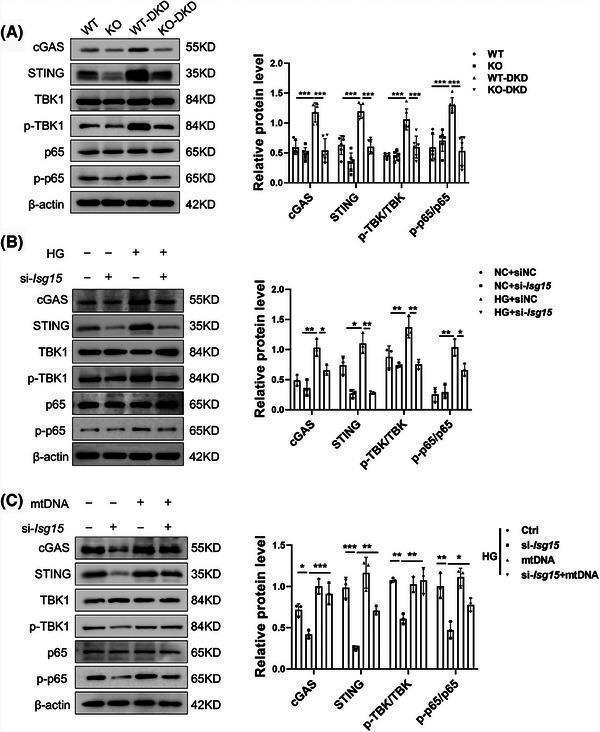
ISG15 promoted STING signalling via cytosolic mtDNA and established a positive feedback loop. (A) Western blot analysis and densitometric quantification of cGAS, STING, TBK1, p‐TBK1, p65, p‐p65 expression in WT and KO mice treated with vehicle or STZ ( n = 6). (B and C) Western blot analysis and densitometric quantification of cGAS, STING, TBK1, p‐TBK1, p65, p‐p65 expression in TECs ( n = 3). TECs were transfected with mtDNA (4 µg) or si‐ Isg15 (50 nM), and then cultured in HG medium for 48 h. Results are expressed as the mean ± SD. * p < .05; ** p < .01; *** p < .001.
Index in PubMed under a CC BY license. PMID: 40462493
Click image to see more details
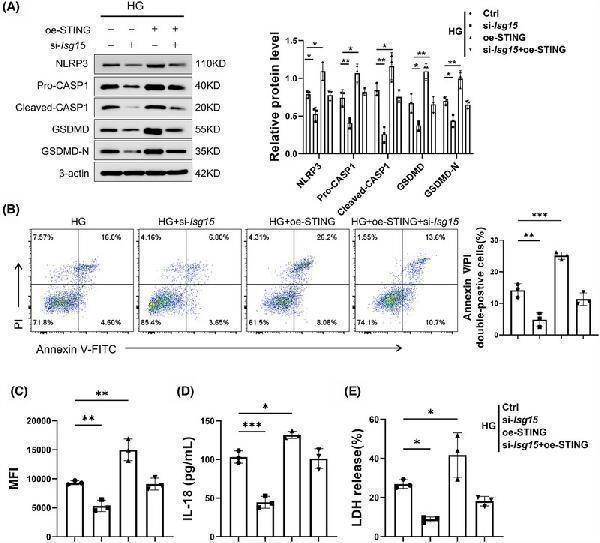
ISG15–STING loop‐maintained HG‐induced injury in TECs. (A) Western blot analysis and densitometric quantification of NLRP3, Pro‐CASP1, Cleaved‐CASP1, GSDMD and GSDMD‐N expression in TECs ( n = 3). (B) Flow cytometry analysis and quantitative data depicting the Annexin V/PI double‐positive cells rate ( n = 3). (C–E) Levels of ROS (C), IL‐18 (D), LDH (E) in TECs ( n = 3). TECs were transfected with oe‐STING (4 µg) or si‐ Isg15 (50 nM), and then cultured in HG medium for 48 h. Results are expressed as the mean ± SD. * p < .05; ** p < .01; *** p < .001.
Index in PubMed under a CC BY license. PMID: 40462493
Click image to see more details
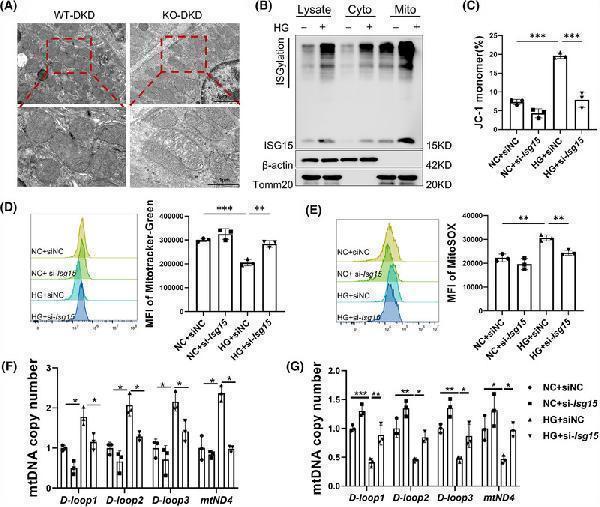
ISG15 was involved in HG‐induced mitochondrial impairment and mtDNA release. (A) Representative TEM images of kidney tissues from WT and KO mice treated with STZ ( n = 6). (B) Western blot analysis ISG15/ISGylation expression in TECs treated with vehicle or HG ( n = 3). (C–E) Flow cytometry analysis and quantitative data depicting the mitochondrial membrane potential (C), mitochondrial mass (D) and mtROS (E) ( n = 3). (F and G) qPCR analysis the mtDNA ( Loop1‐3 and mt‐Nd4 ) copy number in the cytosolic compartments (F) and mitochondria (G) ( n = 3). TECs were treated with vehicle or C‐176 (10 µM), and then cultured in HG medium for 48 h. Results are expressed as the mean ± SD. * p < .05; ** p < .01; *** p < .001; ns, not significant.
Index in PubMed under a CC BY license. PMID: 40462493
Click image to see more details
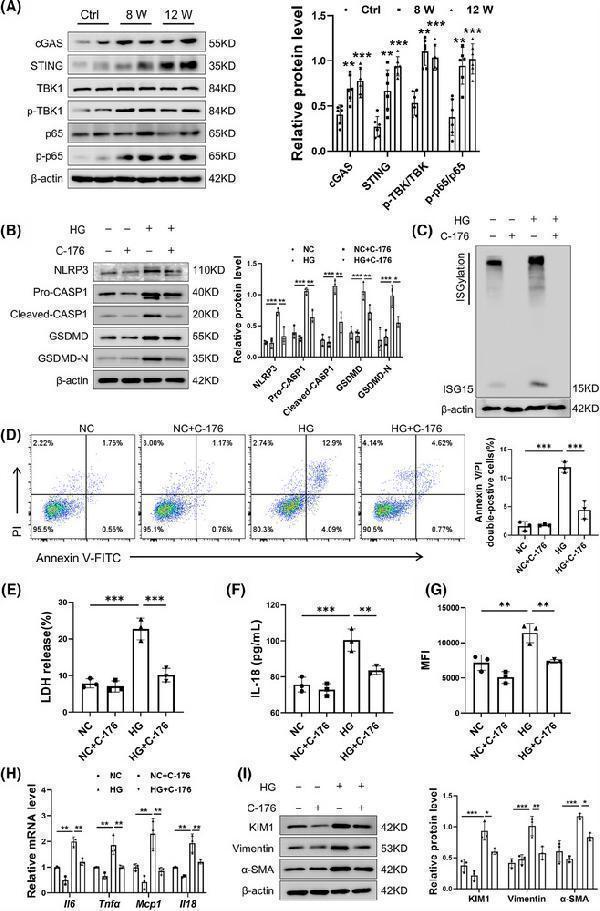
The cGAS–STING pathway was activated in the DKD mice. (A) Western blot analysis and densitometric quantification of cGAS, STING, TBK1, p‐TBK1, p65, p‐p65 expression in DKD mice ( n = 6). (B) Western blot analysis and densitometric quantification of NLRP3, Pro‐CASP1, Cleaved‐CASP1, GSDMD, GSDMD‐N expression in TECs ( n = 3). (C) Western blot analysis ISG15/ISGylation expression in TECs ( n = 3). (D) Flow cytometry analysis and quantitative data depicting the Annexin V/PI double‐positive cells rate ( n = 3). (E–G) Levels of LDH (E), IL‐18 (F), ROS (G) in TECs ( n = 3). (H) Relative mRNA level of pro‐inflammatory factors ( Il6 , Tnfa , Mcp1 , Il18 ) in TECs ( n = 3). (I) Western blot analysis and densitometric quantification of KIM1, α‐SMA and Vimentin expression in TECs ( n = 3). TECs were transfected with vehicle or C‐176 (10 µM), and then cultured in HG medium for 48 h. Results are expressed as the mean ± SD. * p < .05; ** p < .01; *** p < .001.
Index in PubMed under a CC BY license. PMID: 40462493
Click image to see more details
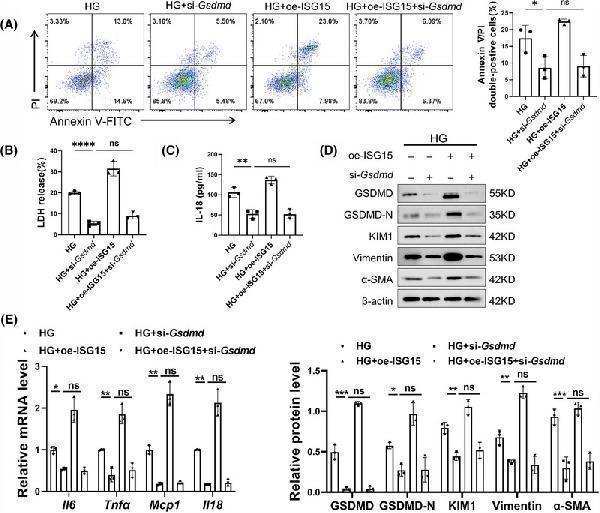
Inhibition of pyroptosis blocked TECs damage and fibrosis induced by ISG15. (A) Flow cytometry analysis and quantitative data depicting the Annexin V/PI double‐positive cells rate ( n = 3). (B and C) Levels of LDH (B), IL‐18 (C) in TECs ( n = 3). (D) Western blot analysis and densitometric quantification of GSDMD, GSDMD‐N, KIM1, α‐SMA and Vimentin expression in TECs ( n = 3). (E) Relative mRNA level of pro‐inflammatory factors ( Il6 , Tnfa , Mcp1 and Il18 ) in TECs ( n = 3). TECs were transfected with si‐ Gsdmd (50 nM) or oe‐ISG15 (4 µg), and then cultured in HG medium for 48 h. Results are expressed as the mean ± SD. * p < .05; ** p < .01; *** p < .001.
Index in PubMed under a CC BY license. PMID: 40462493
Click image to see more details
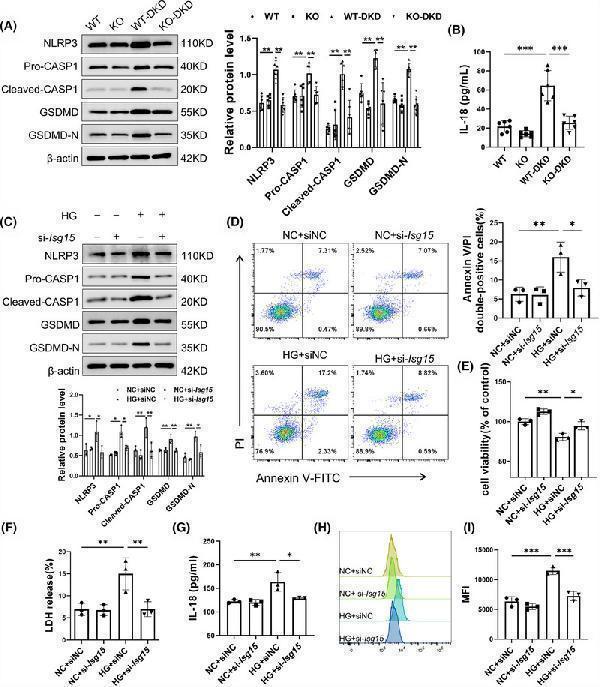
Ablation of ISG15 decreased pyroptosis of TECs under HG stimulation. (A) Western blot analysis and densitometric quantification of pyroptosis‐related proteins (NLRP3, Pro‐CASP1, Cleaved‐CASP1, GSDMD, GSDMD‐N) expression in kidney tissues from WT and KO mice treated with vehicle or STZ ( n = 6). (B) Level of IL‐18 in the serum from WT and KO mice treated with vehicle or STZ ( n = 6). (C) Western blot analysis of pyroptosis‐related proteins (NLRP3, Pro‐CASP1, Cleaved‐CASP1, GSDMD, GSDMD‐N) expression in TECs ( n = 3). (D) Flow cytometry analysis and quantitative data depicting the TECs Annexin V/PI double‐positive cells rate ( n = 3). (E) CCK‐8‐kit activity assay quantified cell viability ( n = 3). (F–I) Level of LDH (F), IL‐18 (G), ROS (H and I) in TECs ( n = 3). TECs were transfected with sinc (50 nM) or si‐ Isg15 (50 nM), and then cultured in HG medium for 48 h. Results are expressed as the mean ± SD. * p < .05; ** p < .01; *** p < .001.
Index in PubMed under a CC BY license. PMID: 40462493
Click image to see more details
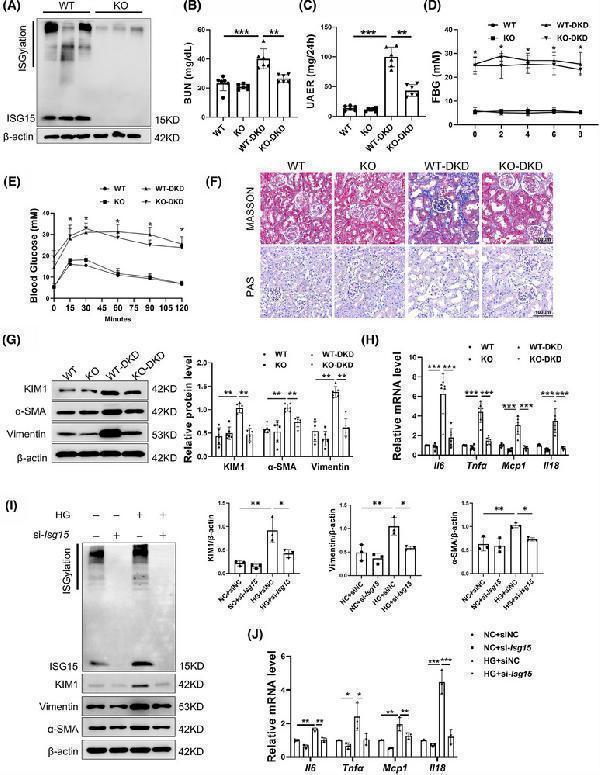
ISG15 deletion was protective against renal injury. (A) Western blot analysis and densitometric quantification of ISG15 expression in kidney tissues from WT and KO mice ( n = 6). (B–E) BUN (B), UAER (C), FBG (D) and OGTT (E) levels in WT and KO mice treated with vehicle or STZ ( n = 6). (F) Representative images of MASSON and PAS staining of the kidney ( n = 6). (G) Western blot analysis and densitometric quantification of KIM1, α‐SMA and Vimentin expression in kidney tissues from WT and KO mice treated with vehicle or STZ ( n = 6). (H) Relative mRNA level of pro‐inflammatory factors ( Il6 , Tnfa, Mcp1 and Il18 ) in the kidney tissues from WT and KO mice treated with vehicle or STZ ( n = 6). (I) Western blot analysis and densitometric quantification of ISG15/ISGylation, KIM1, α‐SMA and Vimentin expression in TECs ( n = 3). (J) Relative mRNA level of pro‐inflammatory factors ( Il6, Tnfa, Mcp1 and Il18 ) in TECs ( n = 3). TECs were transfected with sinc (50 nM) or si‐ Isg15 (50 nM), and then cultured in HG medium for 48 h. BUN, blood urea nitrogen; UAER, urinary albumin excretion rates; FBG, fasted blood; OGTT, oral glucose tolerance. Results are expressed as the mean ± SD. * p < .05; ** p < .01; *** p < .001.
Index in PubMed under a CC BY license. PMID: 40462493
Click image to see more details
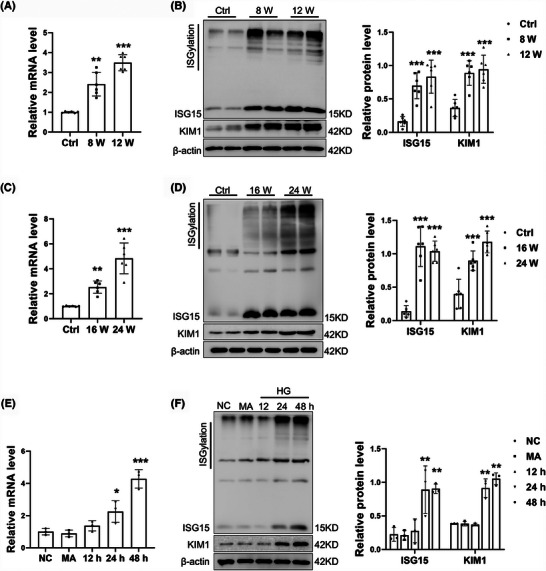
High ISG15 expression in DKD mice. (A) Relative mRNA level of Isg15 in the kidney cortical tissues from WT mice and STZ/HFD‐induced DKD mice ( n = 6). (B) Western blot analysis and quantification of ISG15/ISGylation and KIM‐1 expression in kidney cortical tissues from WT mice and STZ/HFD‐induced DKD mice ( n = 6). (C) Relative mRNA level of Isg15 in the kidney from db/m, 16 W db/db and 24 W db/db mice ( n = 6). (D) Western blot analysis and quantification of ISG15/ISGylation and KIM‐1 expression in kidney cortical tissues from db/m, 16 W db/db and 24 W db/db mice ( n = 6). (E) Relative mRNA level of Isg15 in the TECs cultured in normal medium, MA or HG for 48 h ( n = 3). (F) Western blot analysis and quantification of ISG15/ISGylation and KIM‐1 expression in the TECs ( n = 3). DKD, diabetic kidney disease; HFD, high‐fat diet; HG, high glucose; STZ, streptozotocin; MA, mannitol. Results are expressed as the mean ± SD. * p < .05; ** p < .01; *** p < .001.
Index in PubMed under a CC BY license. PMID: 40462493
Specific Publications For Anti-ISG15 Antibody Picoband® (PB9951)
Loading publications
Recommended Resources
Here are featured tools and databases that you might find useful.
- Boster's Pathways Library
- Protein Databases
- Bioscience Research Protocol Resources
- Data Processing & Analysis Software
- Photo Editing Software
- Scientific Literature Resources
- Research Paper Management Tools
- Molecular Biology Software
- Primer Design Tools
- Bioinformatics Tools
- Phylogenetic Tree Analysis
Customer Reviews
Have you used Anti-ISG15 Antibody Picoband®?
Share your experimental results or join a short interview to earn up to $1,000 in product credits or other rewards.
0 Reviews For Anti-ISG15 Antibody Picoband®
Customer Q&As
Have a question?
Find answers in Q&As, reviews.
Can't find your answer?
Submit your question
4 Customer Q&As for Anti-ISG15 Antibody Picoband®
Question
Will anti-ISG15 antibody PB9951 work on canine IHC with liver?
Verified Customer
Verified customer
Asked: 2019-12-31
Answer
Our lab technicians have not validated anti-ISG15 antibody PB9951 on canine. You can run a BLAST between canine and the immunogen sequence of anti-ISG15 antibody PB9951 to see if they may cross-react. If the sequence homology is close, then you can perform a pilot test. Keep in mind that since we have not validated canine samples, this use of the antibody is not covered by our guarantee. However we have an innovator award program that if you test this antibody and show it works in canine liver in IHC, you can get your next antibody for free.
Boster Scientific Support
Answered: 2019-12-31
Question
Do you have a BSA free version of anti-ISG15 antibody PB9951 available?
J. Parker
Verified customer
Asked: 2019-11-15
Answer
We appreciate your recent telephone inquiry. I can confirm that some lots of this anti-ISG15 antibody PB9951 are BSA free. For now, these lots are available and we can make a BSA free formula for you free of charge. It will take 3 extra days to prepare. If you require this antibody BSA free again in future, please do not hesitate to contact me and I will be pleased to check which lots we have in stock that are BSA free.
Boster Scientific Support
Answered: 2019-11-15
Question
Will PB9951 anti-ISG15 antibody work on parafin embedded sections? If so, which fixation method do you recommend we use (PFA, paraformaldehyde, other)?
Verified Customer
Verified customer
Asked: 2019-08-22
Answer
You can see on the product datasheet, PB9951 anti-ISG15 antibody as been tested on IHC. It is best to use PFA for fixation because it has better tissue penetration ability. PFA needs to be prepared fresh before use. Long term stored PFA turns into formalin, as the PFA molecules congregate and become formalin.
Boster Scientific Support
Answered: 2019-08-22
Question
We are currently using anti-ISG15 antibody PB9951 for mouse tissue, and we are content with the WB results. The species of reactivity given in the datasheet says mouse. Is it likely that the antibody can work on canine tissues as well?
M. Johnson
Verified customer
Asked: 2013-01-10
Answer
The anti-ISG15 antibody (PB9951) has not been tested for cross reactivity specifically with canine tissues, though there is a good chance of cross reactivity. We have an innovator award program that if you test this antibody and show it works in canine you can get your next antibody for free. Please contact me if I can help you with anything.
Boster Scientific Support
Answered: 2013-01-10