Anti-Aquaporin 3/AQP3 Antibody Picoband®

AQP3 antibody

Boster Bio Anti-Aquaporin 3/AQP3 Antibody catalog # PA1488. Tested in Flow Cytometry, IF, IHC, ICC, WB applications. This antibody reacts with Human, Mouse, Rat. The brand Picoband indicates this is a premium antibody that guarantees superior quality, high affinity, and strong signals with minimal background in Western blot applications. Only our best-performing antibodies are designated as Picoband, ensuring unmatched performance. Cited in 13 publication(s). Independently reviewed in 1 review(s).

Product Info Summary

SKU: PA1488
Size: 100 μg/vial
Reactive Species: Human, Mouse, Rat
Host: Rabbit
Application: Flow Cytometry, IF, IHC, ICC, WB

Customers Who Bought This Also Bought

Product Name

Anti-Aquaporin 3/AQP3 Antibody Picoband®

View all AQP3 Antibodies

SKU/Catalog Number

PA1488
BA1559 is an alternative SKU for this antibody, used in previous lots.

Size

100 μg/vial

Form

Lyophilized

Description

Boster Bio Anti-Aquaporin 3/AQP3 Antibody catalog # PA1488. Tested in Flow Cytometry, IF, IHC, ICC, WB applications. This antibody reacts with Human, Mouse, Rat. The brand Picoband indicates this is a premium antibody that guarantees superior quality, high affinity, and strong signals with minimal background in Western blot applications. Only our best-performing antibodies are designated as Picoband, ensuring unmatched performance.

Storage & Handling

Store at -20˚C for one year from date of receipt. After reconstitution, at 4˚C for one month. It can also be aliquotted and stored frozen at -20˚C for six months. Avoid repeated freeze-thaw cycles.

Cite This Product

Anti-Aquaporin 3/AQP3 Antibody Picoband® (Boster Biological Technology, Pleasanton CA, USA, Catalog # PA1488)

Host

Rabbit

Contents

Each vial contains 4mg Trehalose, 0.9mg NaCl and 0.2mg Na2HPO4.

Clonality

Polyclonal

Isotype

Rabbit IgG

Immunogen

A synthetic peptide corresponding to a sequence at the C-terminus of human Aquaporin 3, different from the related rat and mouse sequences by one amino acid.

Cross-reactivity

No cross-reactivity with other proteins

Reactive Species

PA1488 is reactive to AQP3 in Human, Mouse, Rat

Observed Molecular Weight

61 kDa

Calculated molecular weight

31.5 kDa

Background of AQP3

This gene encodes the water channel protein aquaporin 3. Aquaporins are a family of small integral membrane proteins related to the major intrinsic protein, also known as aquaporin 0. Aquaporin 3 is localized at the basal lateral membranes of collecting duct cells in the kidney. In addition to its water channel function, aquaporin 3 has been found to facilitate the transport of nonionic small solutes such as urea and glycerol, but to a smaller degree. It has been suggested that water channels can be functionally heterogeneous and possess water and solute permeation mechanisms. Alternative splicing of this gene results in multiple transcript variants encoding different isoforms.

Antibody Validation

Boster validates all antibodies on WB, IHC, ICC, Immunofluorescence, and ELISA with known positive control and negative samples to ensure specificity and high affinity, including thorough antibody incubations.

View more details

Applications

PA1488 is guaranteed for Flow Cytometry, IF, IHC, ICC, WB Boster Guarantee

Assay Dilutions Recommendation

The recommendations below provide a starting point for assay optimization. The actual working concentration varies and should be decided by the user.

Western blot, 0.1-0.5μg/ml, Human, Mouse, Rat
Immunohistochemistry (Paraffin-embedded Section), 2-5μg/ml, Human, Mouse, Rat
Immunocytochemistry/Immunofluorescence, 5μg/ml, Human
Flow Cytometry (Fixed), 1-3μg/1x106 cells, Human

Positive Control

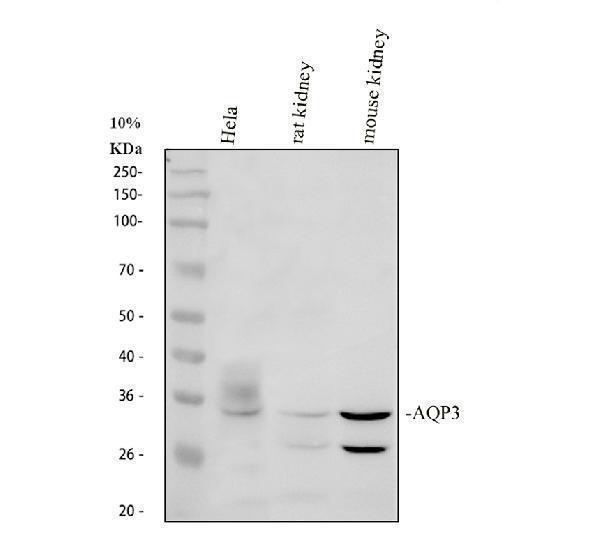
WB: human Hela whole cell, rat kidney tissue, mouse kidney tissue
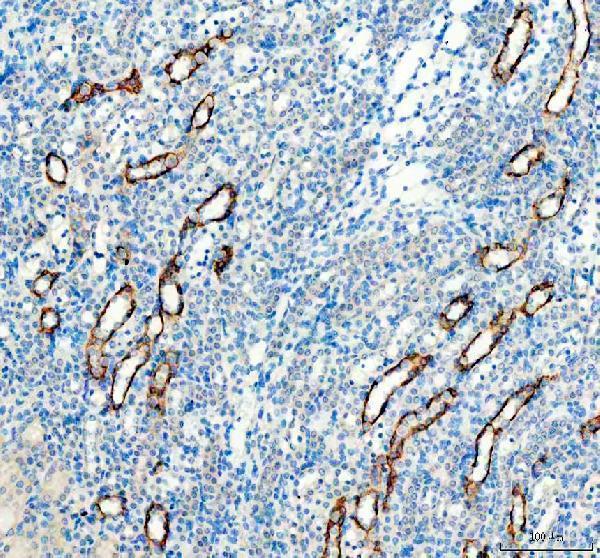
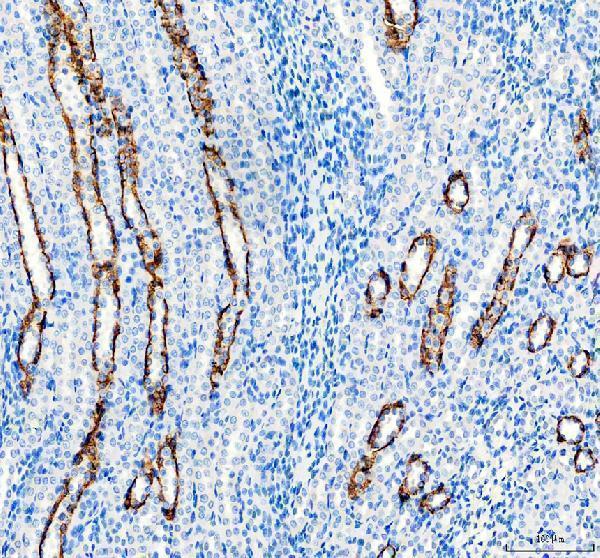
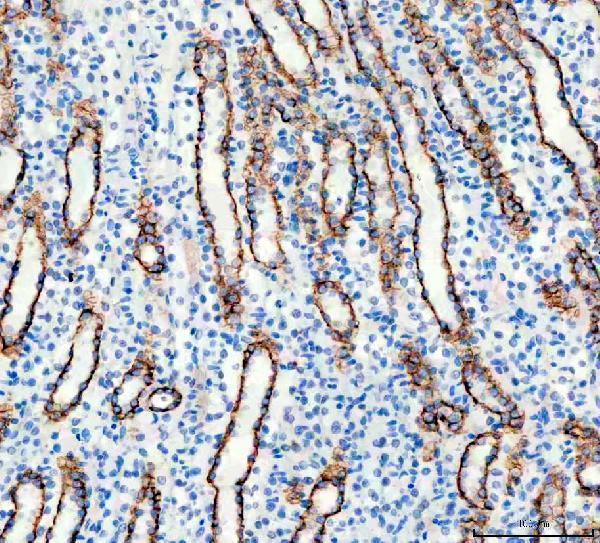
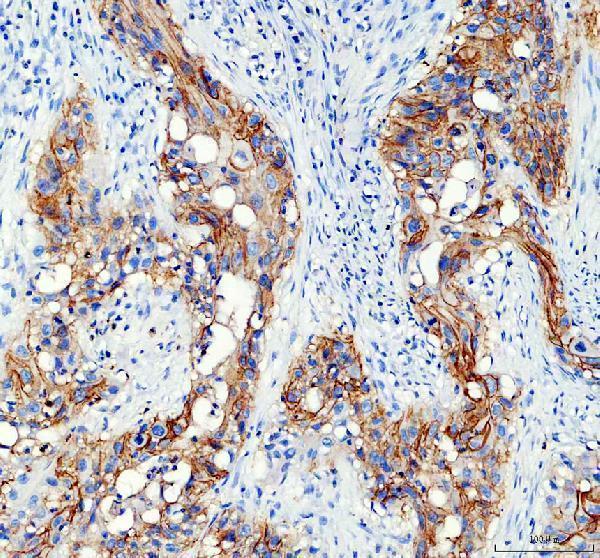
IHC: mouse kidney tissue, rat kidney tissue, human bladder cancer tissue
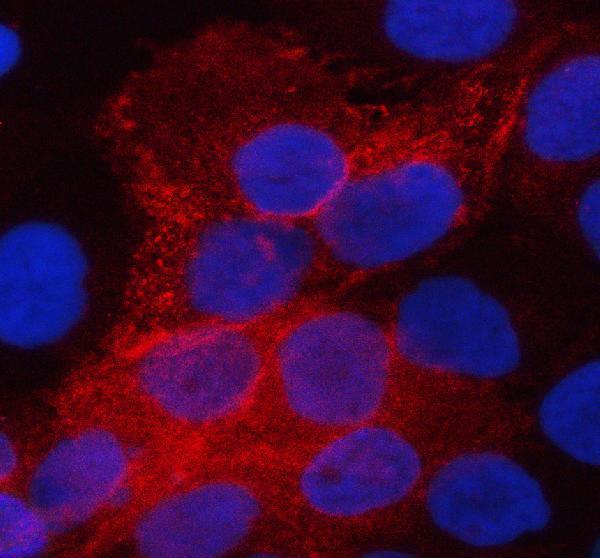
ICC/IF: A431 cell
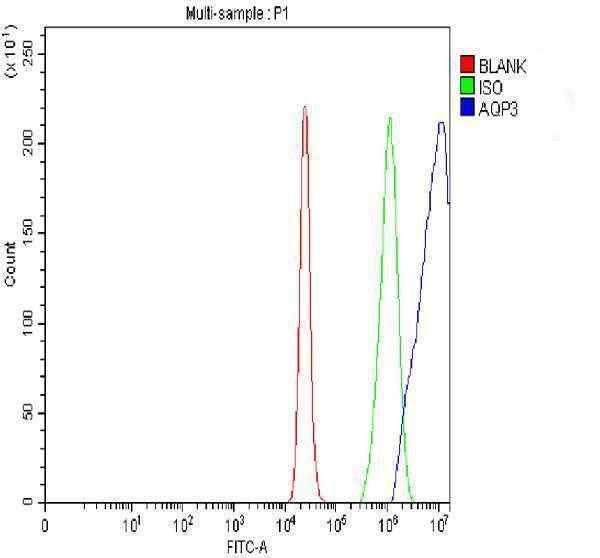
FCM: RT4 cell

Validation Images & Assay Conditions

Loading publications

No publications found

Do you have publications using this product? Share with us and receive a reward. Contact us for more information.

Publications not available. Please try again later.

Product has been cited in publications

No results found matching your query

  • Published: --- Journal: --- Application: --- Impact Factor: --- Species: --- PMID: --- View Article

Have you used Anti-Aquaporin 3/AQP3 Antibody Picoband®?

Share your experimental results or join a short interview to earn up to $1,000 in product credits or other rewards.

1 Reviews For Anti-Aquaporin 3/AQP3 Antibody Picoband®

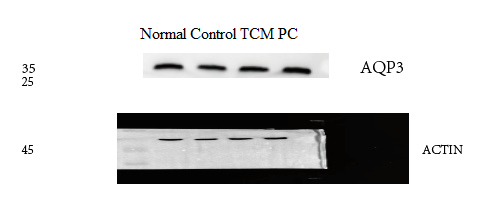
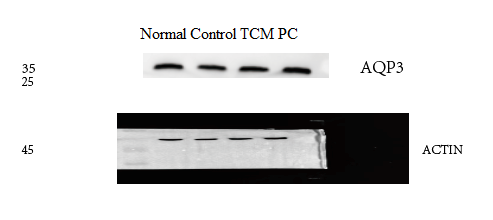
This antibody is highly specific and efficient, suitable for Western blot detection of AQP3 protein in rat colon, with only minor nonspecific bands.

Excellent

SKU PA1488
Application Western Blot
Sample rat colon tissue
Sample Processing Description RIPA lysis buffer: cells/tissues were lysed with PMSF protease inhibitor (100:1) for 10 min, followed by centrifugation at 12,000 rpm for 15 min. The supernatant was collected, mixed with 5× loading buffer, denatured at 100 °C for 10 min, and then loaded onto SDS-PAGE.
Other Reagents Blocking buffer
Primary Antibody Aquaporin 3/AQP3 Antibody Picoband®
Primary Incubation 1:1000, overnight at 4 ℃
Secondary Antibody HRP Conjugated AffiniPure Goat Anti-Rabbit IgG (H+L)
Secondary Incubation 1:5000, 1 hour in room temperature
Detection Substrate: ECL, Imaging system:ChemiDoc MP
Results Summary The figure shows representative Western blot results of the target protein AQP3 and the internal control Actin in rat colon across different groups. AQP3 expression was decreased in the model group and increased in all treatment groups, with the Western medicine group (PC)showing higher levels than the traditional Chinese medicine group (TCM). The target bands are clear and distinct, and the experimental results are satisfactory.

Verified customer

Submitted

Have a question?

Find answers in Q&As, reviews.

Can't find your answer?

Submit your question

6 Customer Q&As for Anti-Aquaporin 3/AQP3 Antibody Picoband®

Question

Could you please recommend staining protocol for flow? Is surface staining recommended? Many thanks.

Verified customer

Asked: 2022-12-06

Answer

Thank you for your question. Surface staining is recommended. Please see the following FCM protocol for PA1488. Permeabilization step isn't involved. 1. Centrifugation: Centrifuge prepared single cell suspension at 3000rpm for 2 minutes and aspirate supernatant to collect cells. 2. Fixation: Resuspend cells in 1ml of 4% Paraformaldehyde. Transfer 4% Paraformaldehyde containing cells into a 1.5ml centrifuge tube. Fix at 4°C for 20 minutes. 3. Washing: Centrifugate the cells at 3000rpm for 2 minutes. Discard supernatant in appropriate waste container. Resuspend and wash cells in 1 ml DPBS. Repeat the washing step twice. 4. Prepare tubes for samples and indicate sample type, control and antibody information on the tubes. 5. Add DPBS to cells. The volume of the DPBS is 100μl x number of tubes for samples, which is adding 100μl of DPBS to each tube (1x10⁶ cells per tube). 6. Blocking: Do not add any antibody into the Blank tube. Aliquot 100 μl of the cell suspension into each sample tube. Add 5μl of concentrated goat serum into every other tube and mix thoroughly. Incubate at 37°C for 10 minutes. 6. Primary antibody incubation: Add 1μg of rabbit IgG to the Isotype control tube. Add 1μg of rabbit anti-AQP3 Antibody (PA1488,1μg/1x106 cells) into each tube. Mix well and incubate at 20°C for 30 minutes. Centrifuge at 3000rpm for 2 minutes and discard the supernatant. Resuspend cells in 1ml DPBS twice and add 100μl DPBS. 7. Seconday antibody incubation: Do not add any antibody into the Blank tube. Add 5μl DyLight®488 conjugated goat anti-rabbit IgG (BA1127, 5-10μg/1x106 cells) into every other tube. Mix well and incubate at 20°C for 30 minutes, avoiding direct light. Centrifuge at 3000rpm for 2 minutes and discard the supernatant. Resuspend cells in 1ml DPBS twice and add 100μl DPBS, mix well. 8. Acquire data by Flow Cytometry. Notes: 1. DPBS (without containing calcium and magnesium) 2. 4% Paraformaldehyde (containing DEPC)

Boster Scientific Support

Answered: 2022-12-06

Question

What is the concentration of the permeabilization buffer for the PA1488 for Flow?

Verified customer

Asked: 2020-12-18

Answer

For the Anti-Aquaporin 3/AQP3 Antibody (PA1488), the permeabilization buffer contains saponin, BSA, NaN3 and PBS. We could not disclose the exact concentration.

Boster Scientific Support

Answered: 2020-12-18

Question

Do you have any protocols for staining red blood cells for Flow with the PA1488?

Verified customer

Asked: 2019-12-18

Answer

Our lab hasn't worked on red blood cells for Flow with the Anti-Aquaporin 3/AQP3 Antibody (PA1488) and we have't got a specific protocol for it.

Boster Scientific Support

Answered: 2019-12-18

Question

Do you have the composition or detergent concentration for the permeabilization buffer used with PA1488 antibody and what protocol was used?

Verified customer

Asked: 2019-12-18

Answer

Permeabilization buffer used for the Anti-Aquaporin 3/AQP3 Antibody (PA1488) didn't contain 1% triton. The 1% triton was only added into permeabilization buffer to permeabilize nuclear membrane. There was no need to permeabilize nuclear membrane for the samples used for FCM with PA1488. For PA1488, permeabilization buffer our lab used to perform FCM didn't contain any detergent.

Boster Scientific Support

Answered: 2019-12-19

Question

We are currently using anti-Aquaporin 3/AQP3 antibody PA1488 for rat tissue, and we are well pleased with the WB results. The species of reactivity given in the datasheet says human, mouse, rat. Is it true that the antibody can work on primate tissues as well?

Verified Customer

Verified customer

Asked: 2019-07-08

Answer

The anti-Aquaporin 3/AQP3 antibody (PA1488) has not been tested for cross reactivity specifically with primate tissues, but there is a good chance of cross reactivity. We have an innovator award program that if you test this antibody and show it works in primate you can get your next antibody for free. Please contact me if I can help you with anything.

Boster Scientific Support

Answered: 2019-07-08

Question

What is the volume and concentration of the 100ug vial of PA1488?

Verified customer

Asked: 2019-03-20

Answer

The Anti-Aquaporin 3/AQP3 Antibody (PA1488) comes in a 100μg vial in lyophilized form. So, when it is reconstituted: Adding 0.2ml of distilled water will yield a concentration of 500ug/ml.

Boster Scientific Support

Answered: 2019-03-20

Order DetailsPrice
PA1488

100μg

$370
PA1488-Fluoro488

100 μg Fluoro488 conjugated (liquid)

$570
PA1488-Fluoro550

100 μg Fluoro550 conjugated (liquid)

$570
PA1488-Fluoro594

100 μg Fluoro594 conjugated (liquid)

$570
PA1488-Fluoro647

100 μg Fluoro647 conjugated (liquid)

$670
PA1488-APC

100 μg APC conjugated (liquid)

$820
PA1488-FITC

100 μg FITC conjugated (liquid)

$570
PA1488-Cy3

100 μg Cy3 conjugated (liquid)

$570
PA1488-Biotin

100 μg Biotin conjugated (liquid)

$570
PA1488-HRP

100 μg HRP conjugated (liquid)

$570
PA1488-PE

100 μg PE conjugated (liquid)

$820
PA1488-carrier-free

Carrier Free

$370
Rainbow Button View conjugates

Free Secondary Antibody

FREE  $95.00
FREE  $95.00
$40.00  $80.00
$65.00  $130.00
$67.50  $135.00
$75.00  $150.00
$30.00  $60.00
$75.00  $150.00
$55.00  $110.00
Choose an option to show lead time.
Get A Quote
In stock
Order Product
PA1488
Buy one primary antibody get one 0.5ml HRP or Biotin secondary antibody for free.
*Sample sizes are prepared on demand and will take extra lead time. (cannot be conjugated)
$370.00

Troubleshooting

troubleshooting-box-image

Download troubleshooting handbooks for IHC, Western blot and ELISA for FREE.

Download Free PDFs Now

Boster Guarantee

Guaranteed product quality

Guaranteed product quality

We promise all of our products perform as described in datasheets.

This product is for Research Use Only. Not for use in diagnostic procedures.

Update date: Apr 7, 2026